On foot · May 2026 · Canary Islands
Lanzarote, the island still smouldering
Four sunny days to celebrate a retirement after forty-seven years of working life. Volcanoes, vines buried in ash, an island without roads… and not a single swim.
- Duration
- 4 days
- Hike
- Caldera Blanca · 10.3 km · 388 m ascent
- By bike
- La Graciosa · 20 km
- High point
- Peñas del Chache · 670 m
Day 1
Arrecife and the south
It had to be celebrated. After a long winter up in the mountains, we longed for guaranteed warmth, an island, volcanoes, gambas al ajillo and tinto de verano. Lanzarote ticked every box.
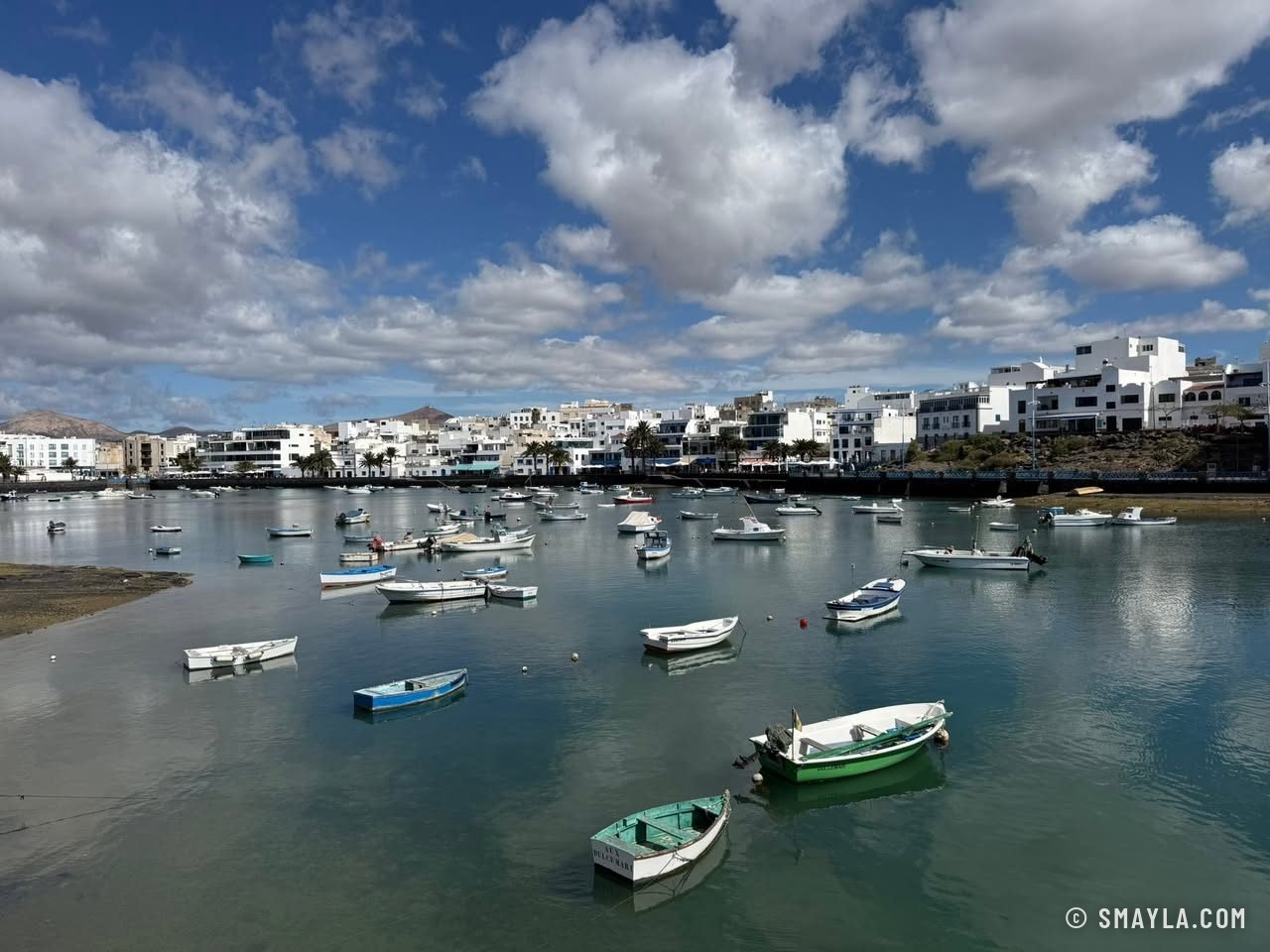
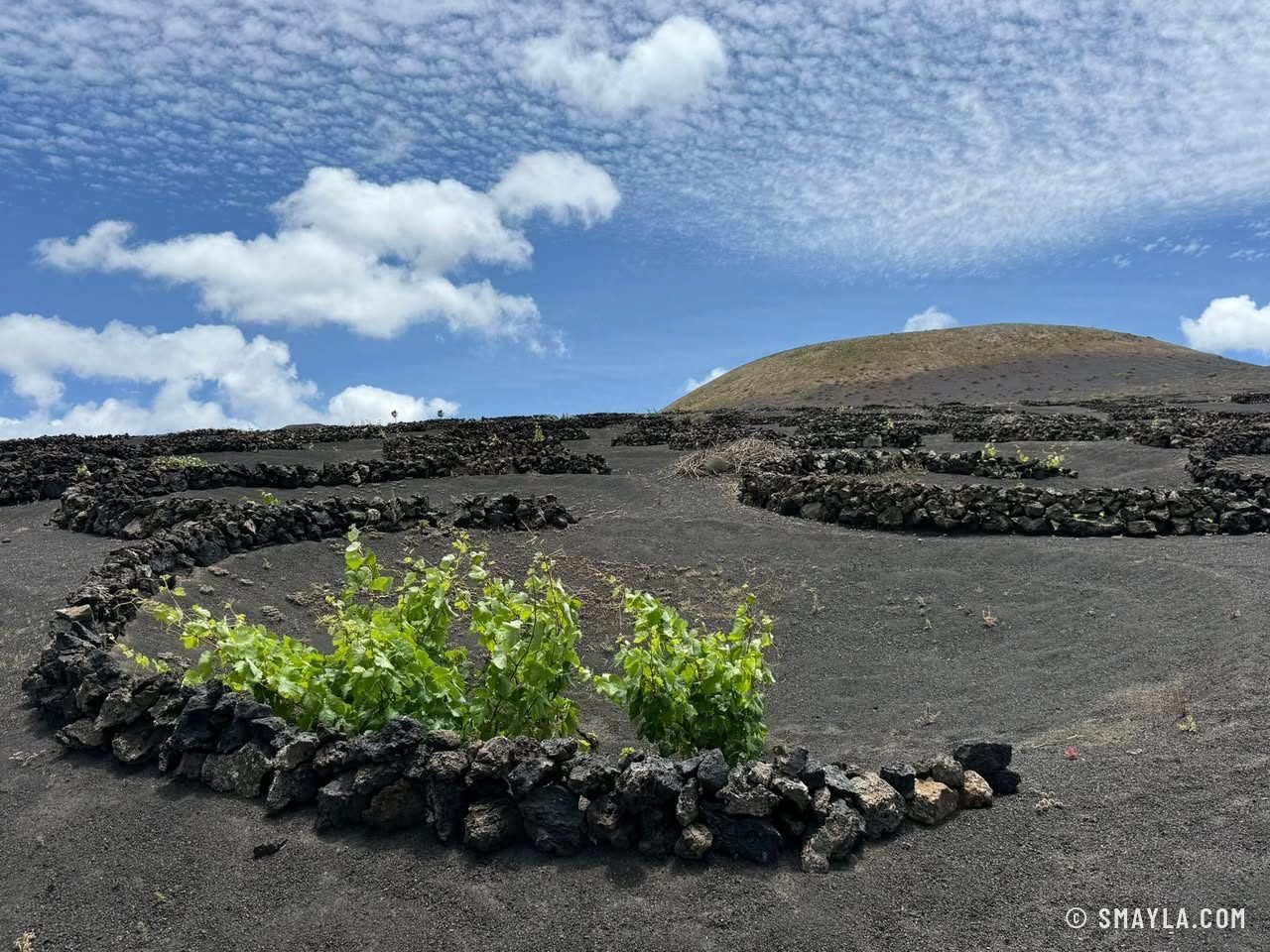
Arrecife pleasantly surprised us: an unpretentious little capital, the inner harbour of El Charco with its painted boats, a cheerful tangle of streets. Then the south, and the valley of La Geria. Every vine is planted at the bottom of a funnel dug into the ash, sheltered by a crescent of black stones. A whole landscape shaped for a few bunches of Malvasía, and what Malvasía it is.
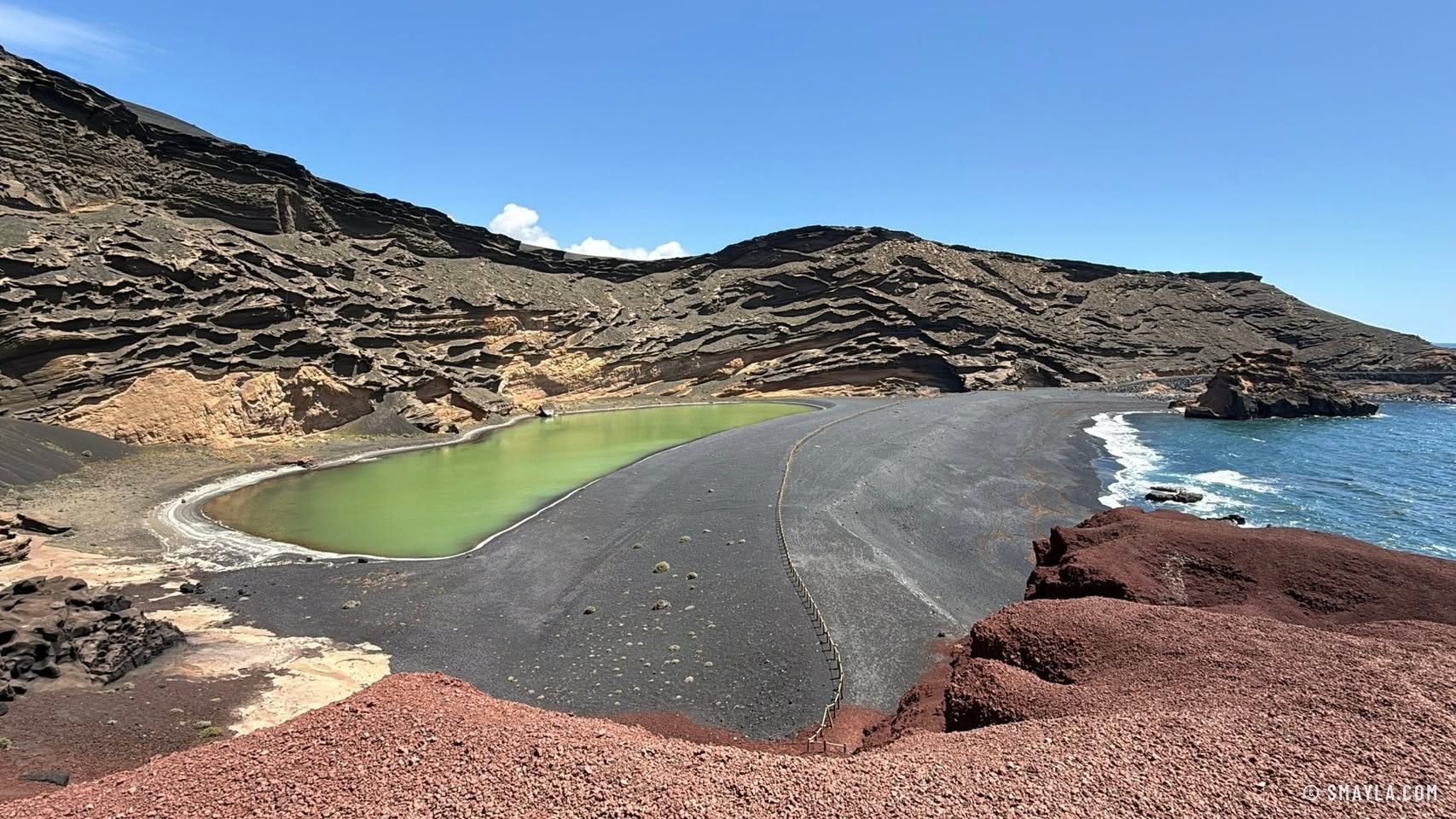
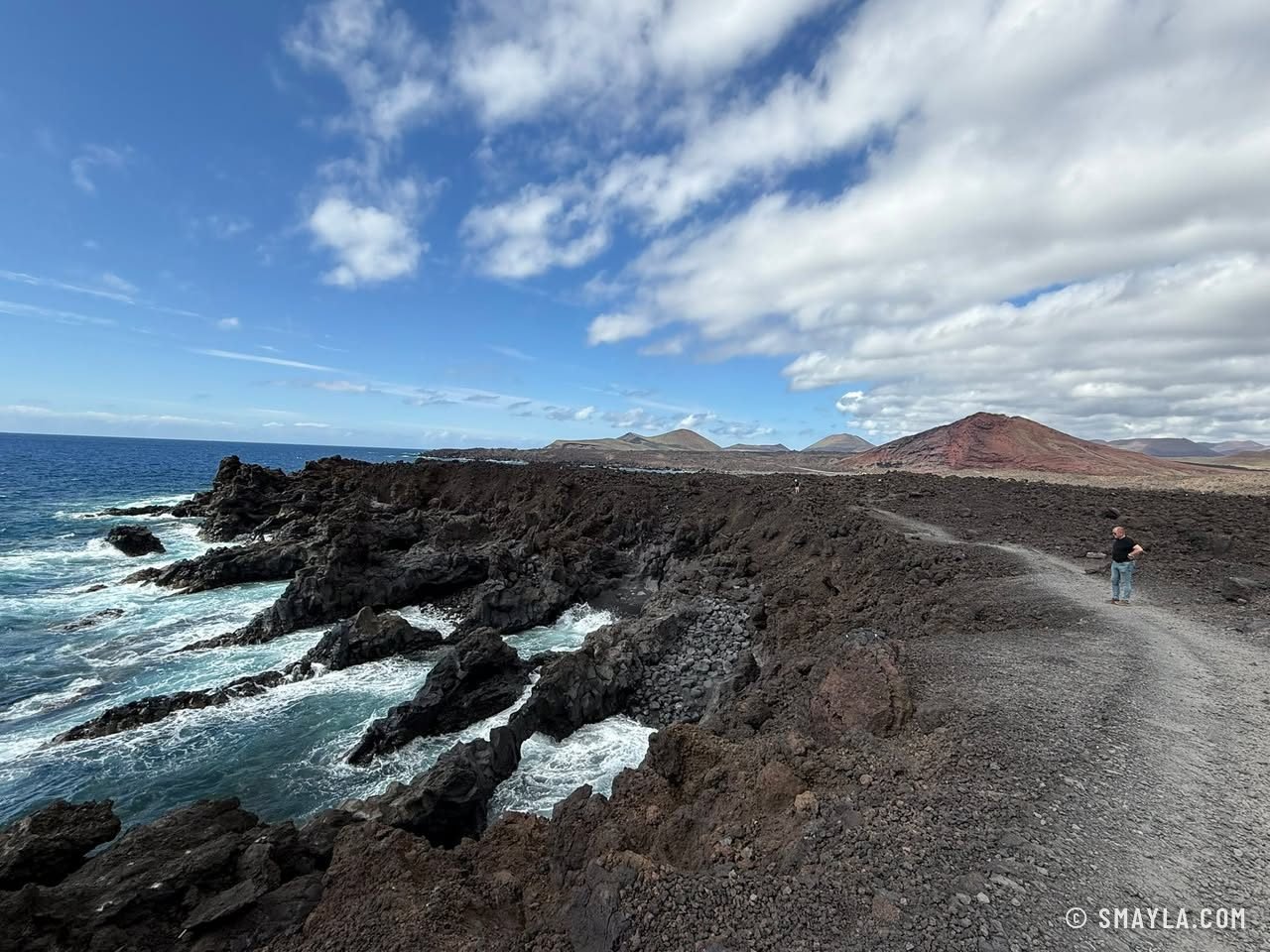
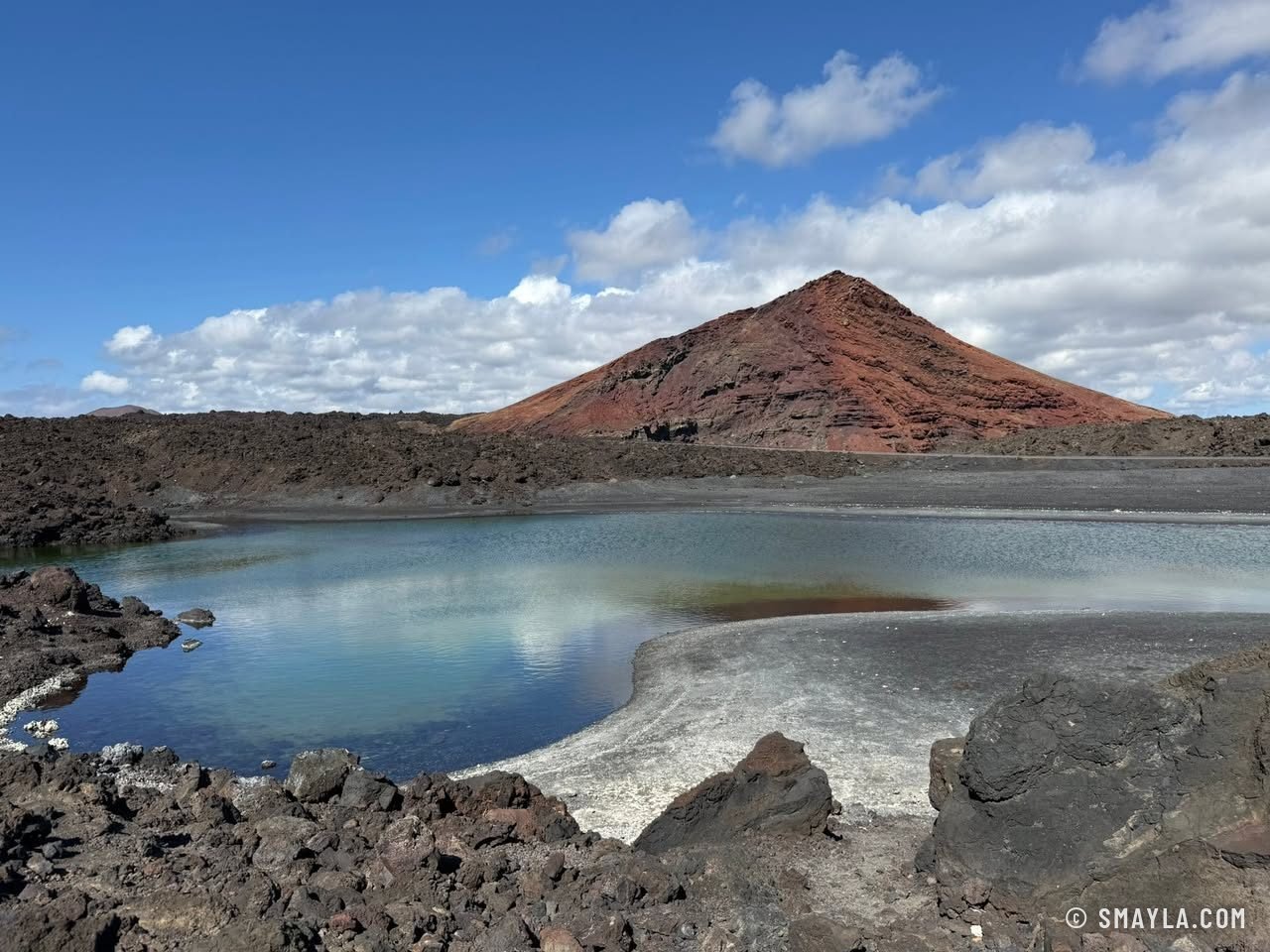
The coast then strings together one marvel after another: the green lagoon of El Charco de los Clicos, Los Hervideros where lava froze into caves the ocean pounds, Fuego Verde where the volcano gazes at its reflection. The sun sets over Papagayo, glass in hand, with Fuerteventura just fourteen kilometres away.
Day 2
The north, Manrique and the cliffs
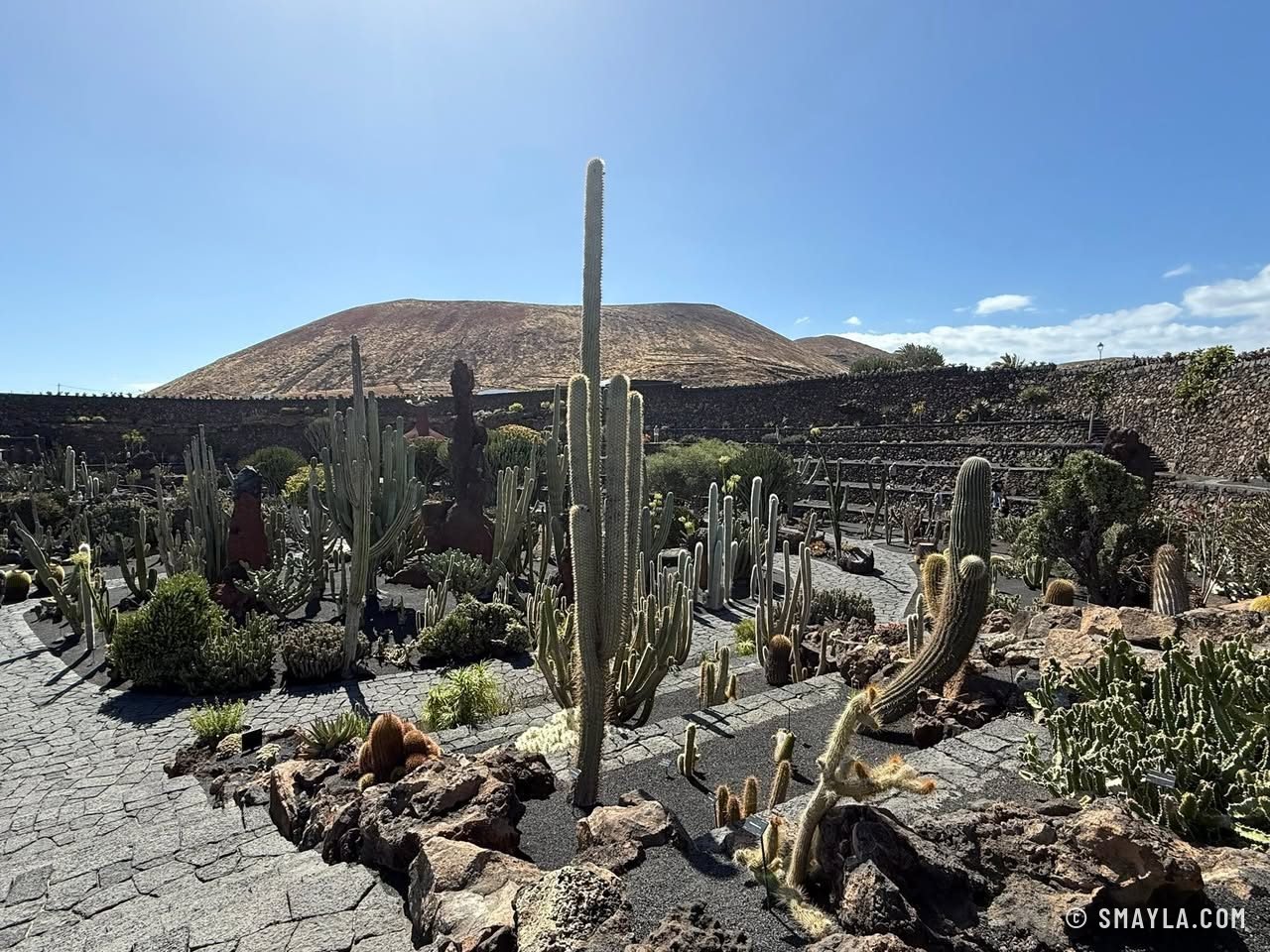
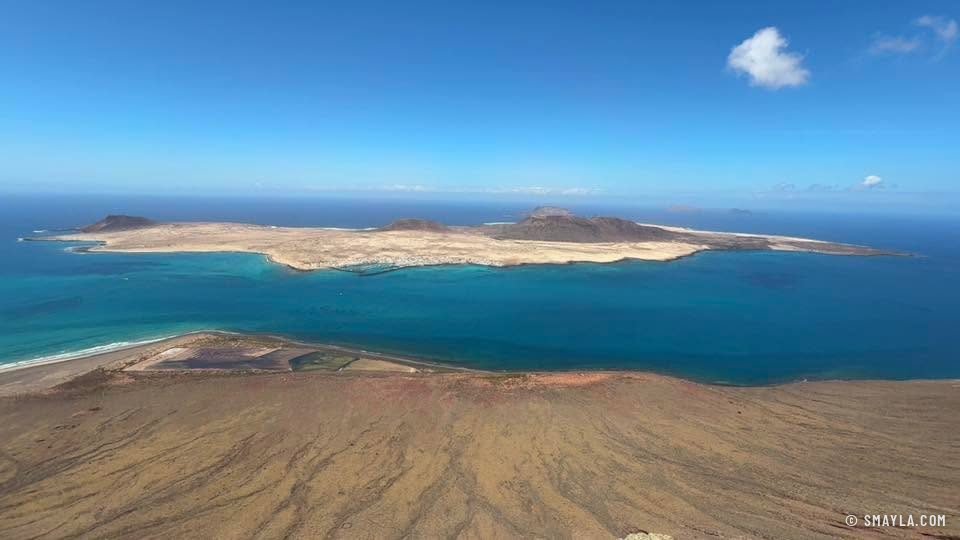
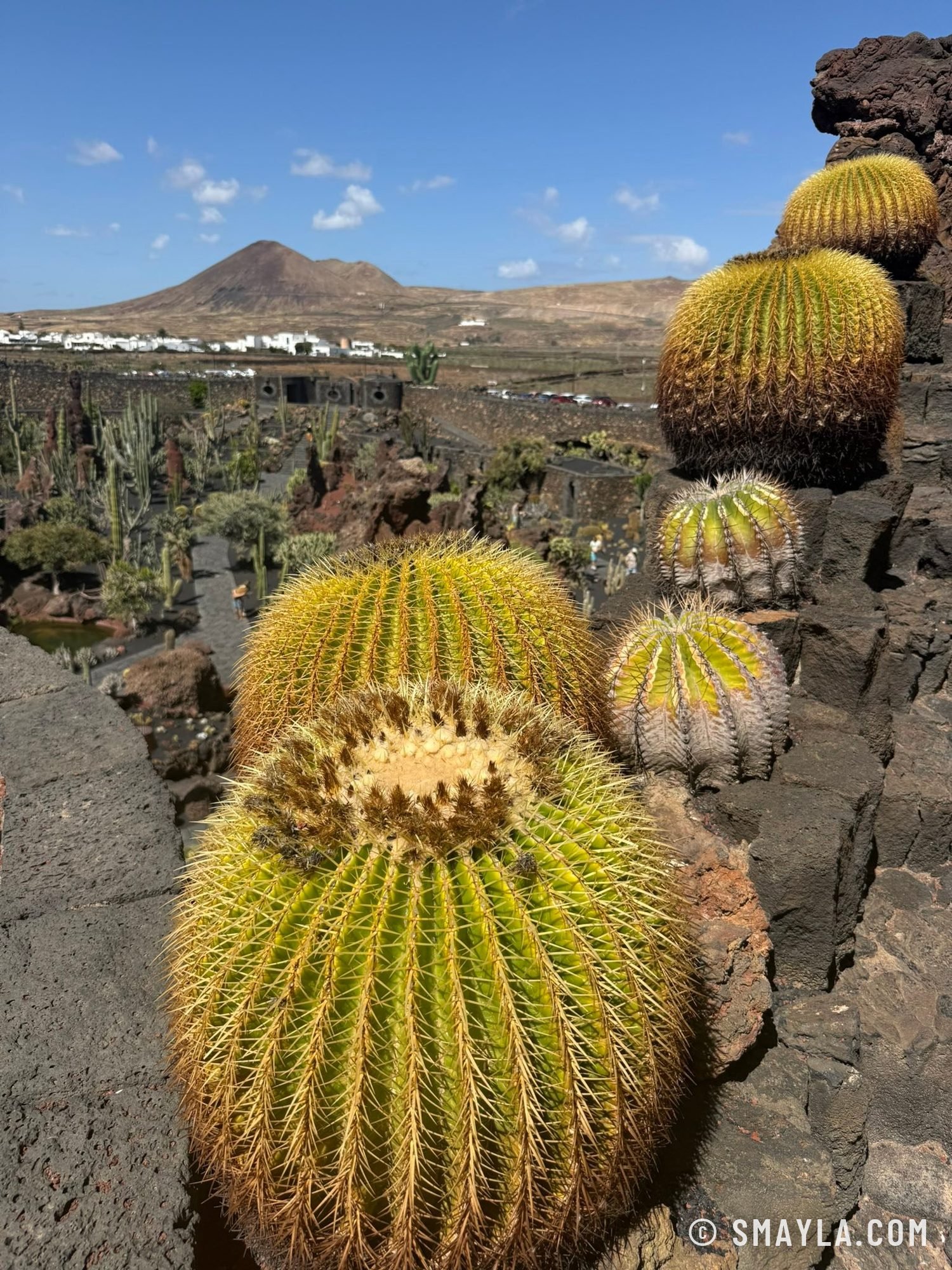
César Manrique is everywhere on the island, so much so that he became our favourite running joke. Yet credit where it is due. His Jardín de Cactus, set in a former quarry, is an amphitheatre of improbable shapes. His Mirador del Río, built into the cliff five hundred metres above the sea, blends so well into the rock that it is invisible from across the strait.
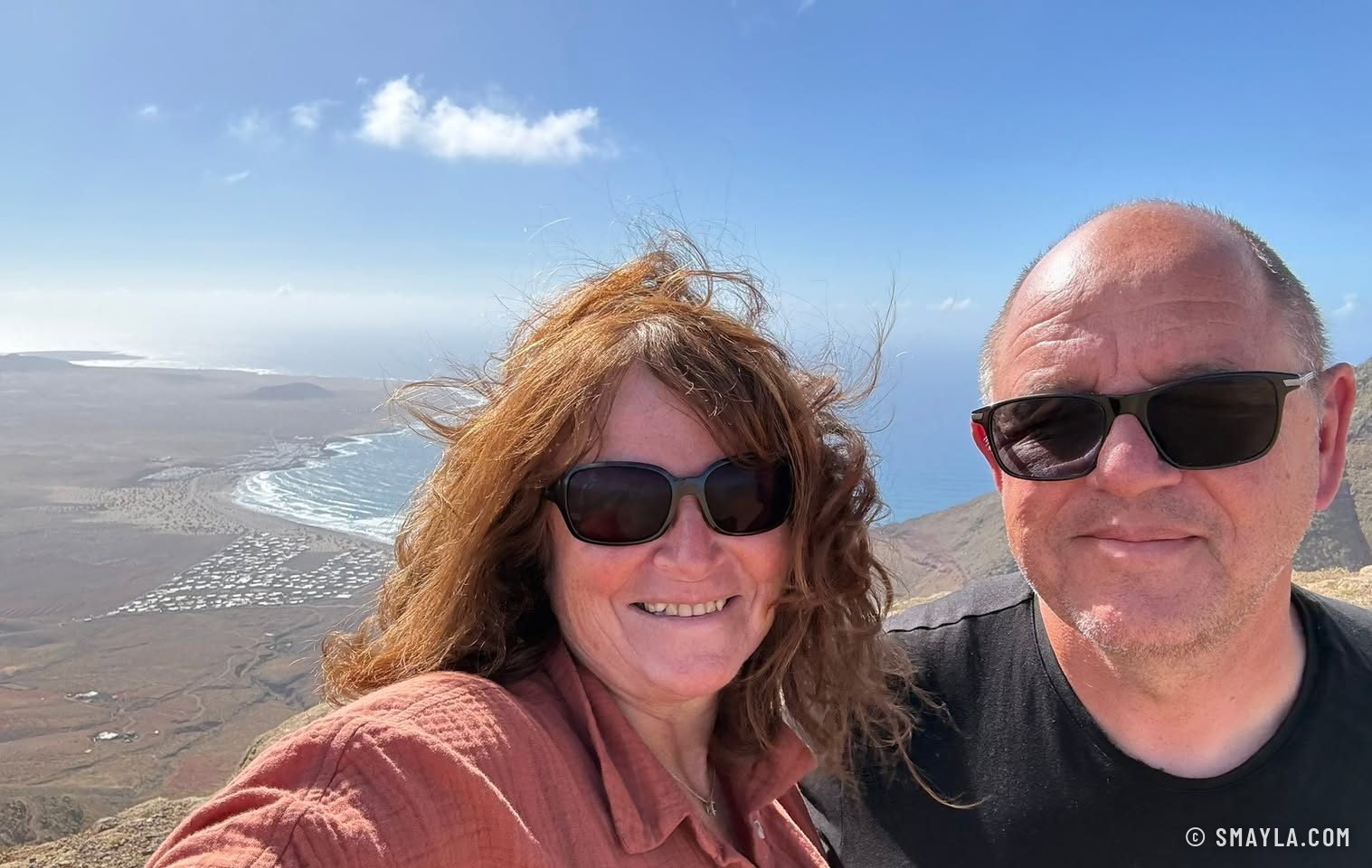
From up there, La Graciosa floats on an unreal blue. The Corona volcano, billed as two or three hours, was done in barely one: we would need something better. A pause in the shade of real trees in Haría, then Las Peñas del Chache, the roof of the island.
Day 3
Timanfaya and the Caldera Blanca
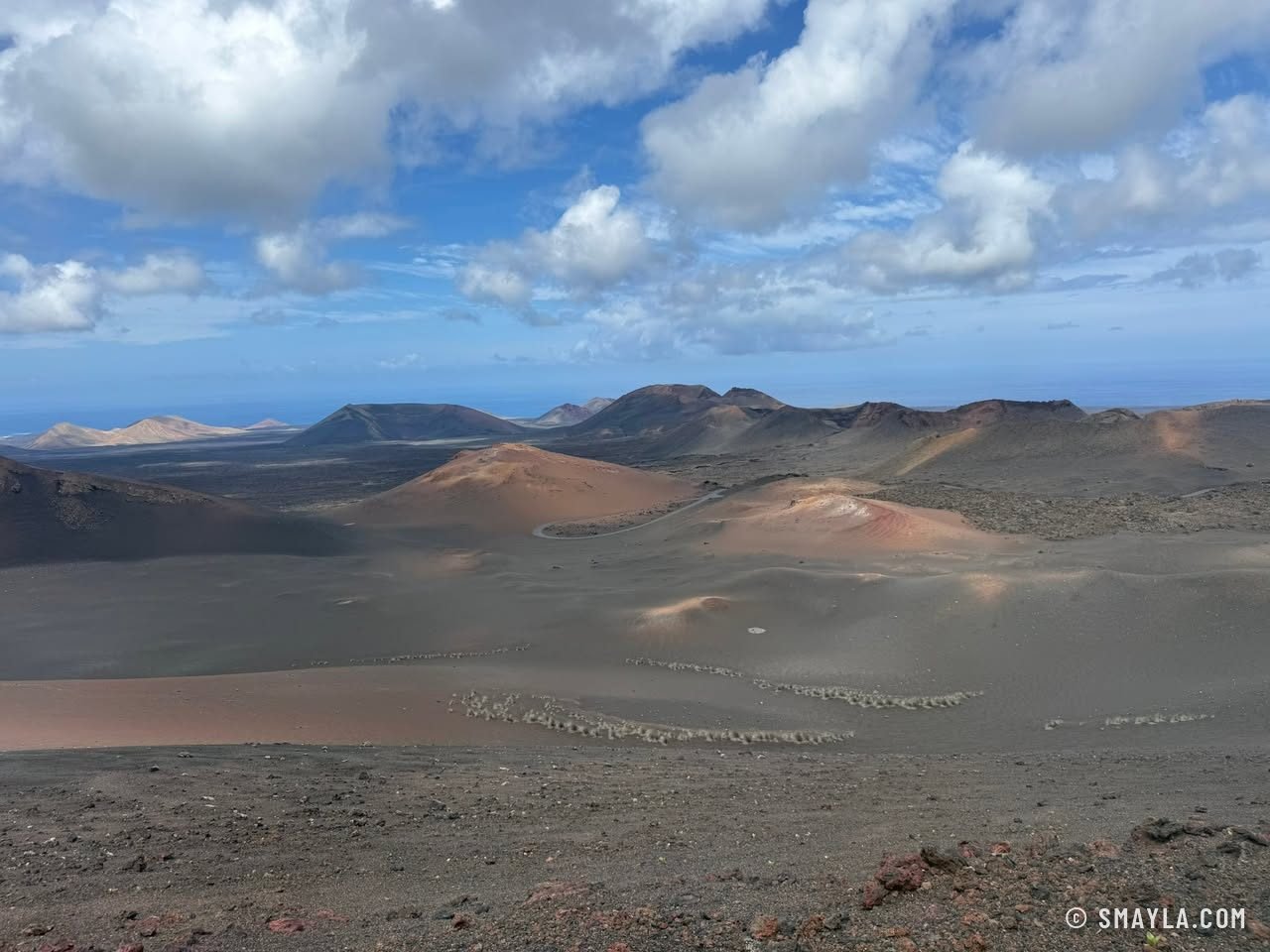
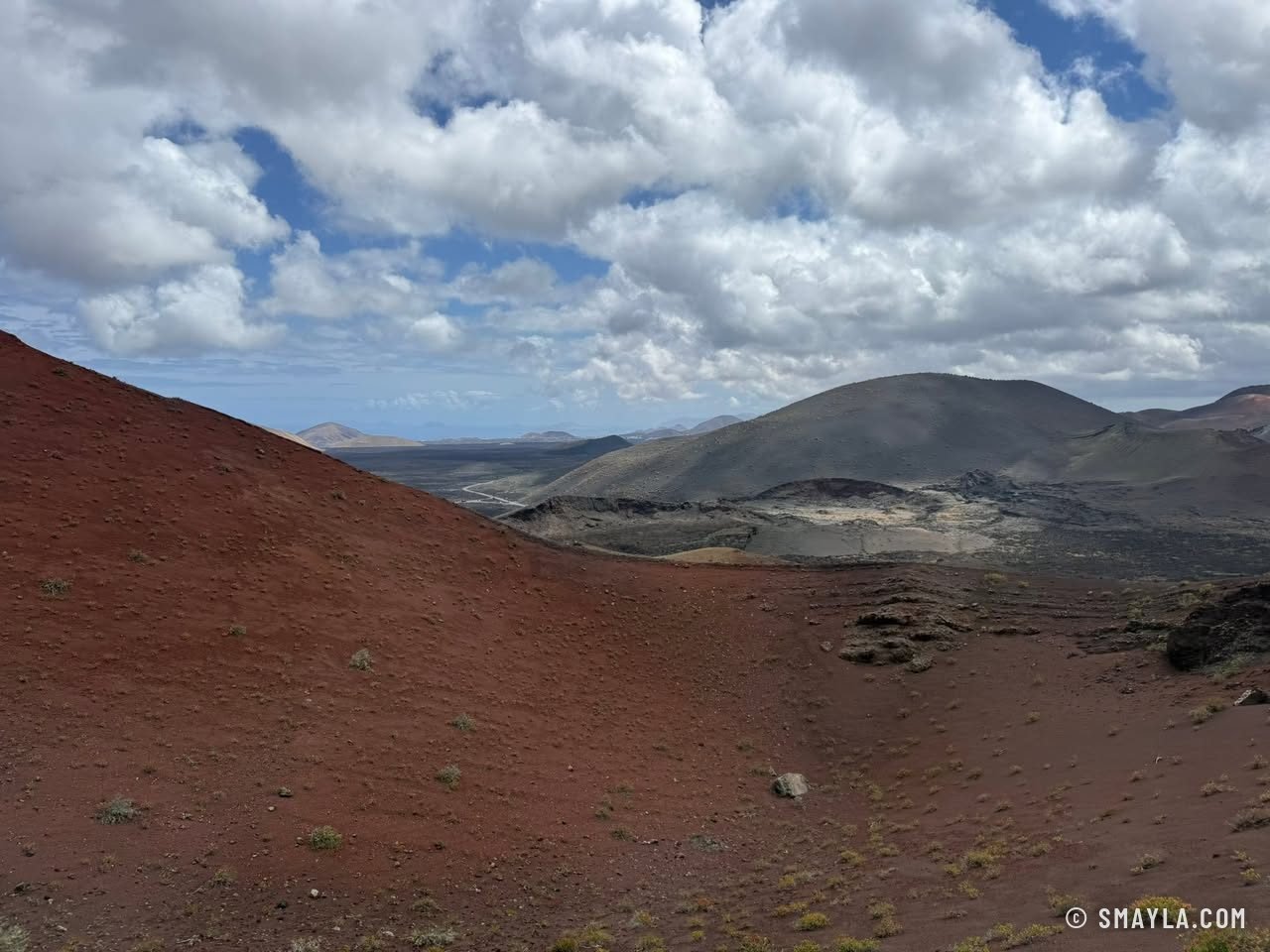
Between 1730 and 1736 the earth rumbled for six years. The Montañas del Fuego bear the memory: red craters, frozen flows, a sea of lava bristling with twenty-five craters. The volcano route can only be travelled by bus. Lovers of freedom and old friends of Iceland's volcanoes, we grumbled at first, then understood: such a landscape deserves protection.
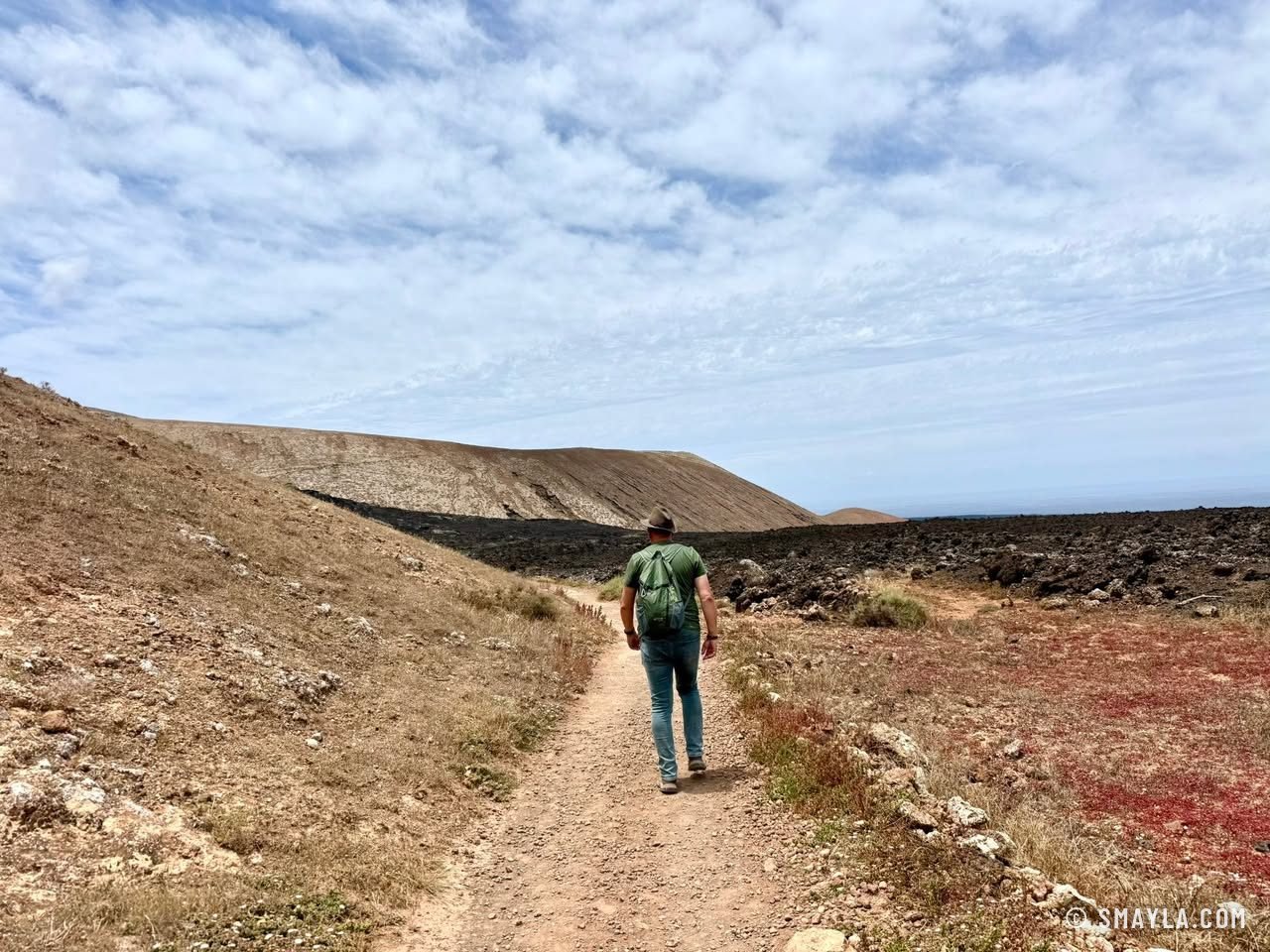
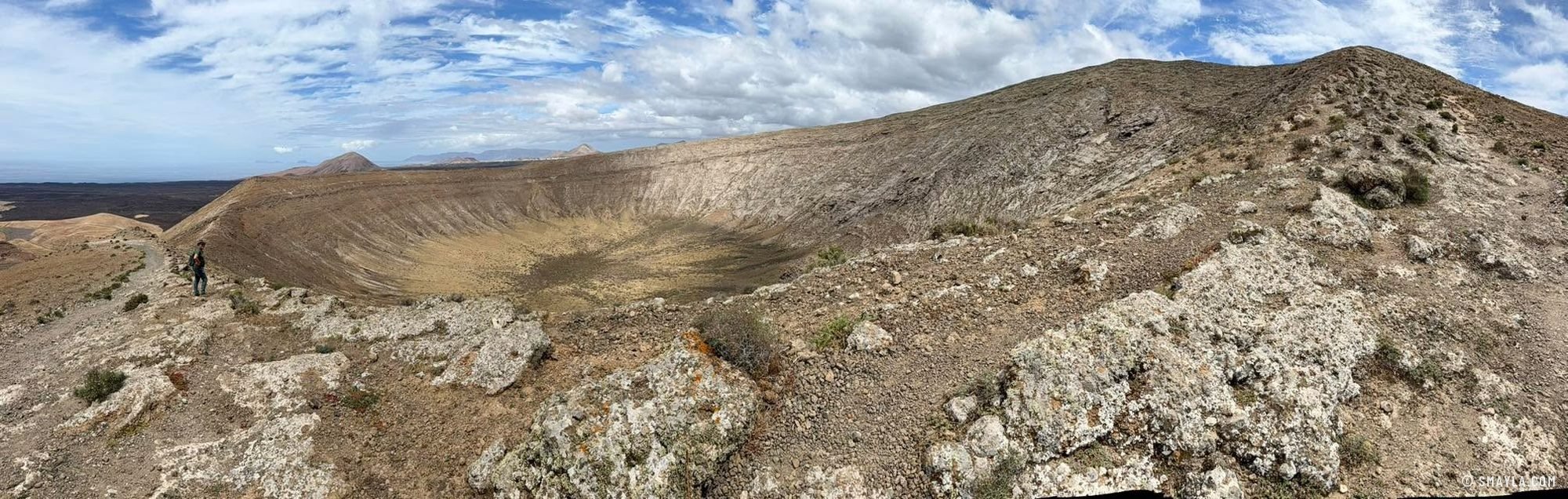
In the afternoon, the real hike. A black, chaotic path across the eighteenth-century lava fields, a few lichens for vegetation, then the small crater of Montaña Caldereta where you feel tiny. The climb to the Caldera Blanca is gentle; you follow the rim of the cone to the summit at 534 metres, the ocean on one side, the lava on the other.
10.3 kilometres, 388 metres of ascent, three hours of almost perfect happiness. Almost: lava is hard on the feet.
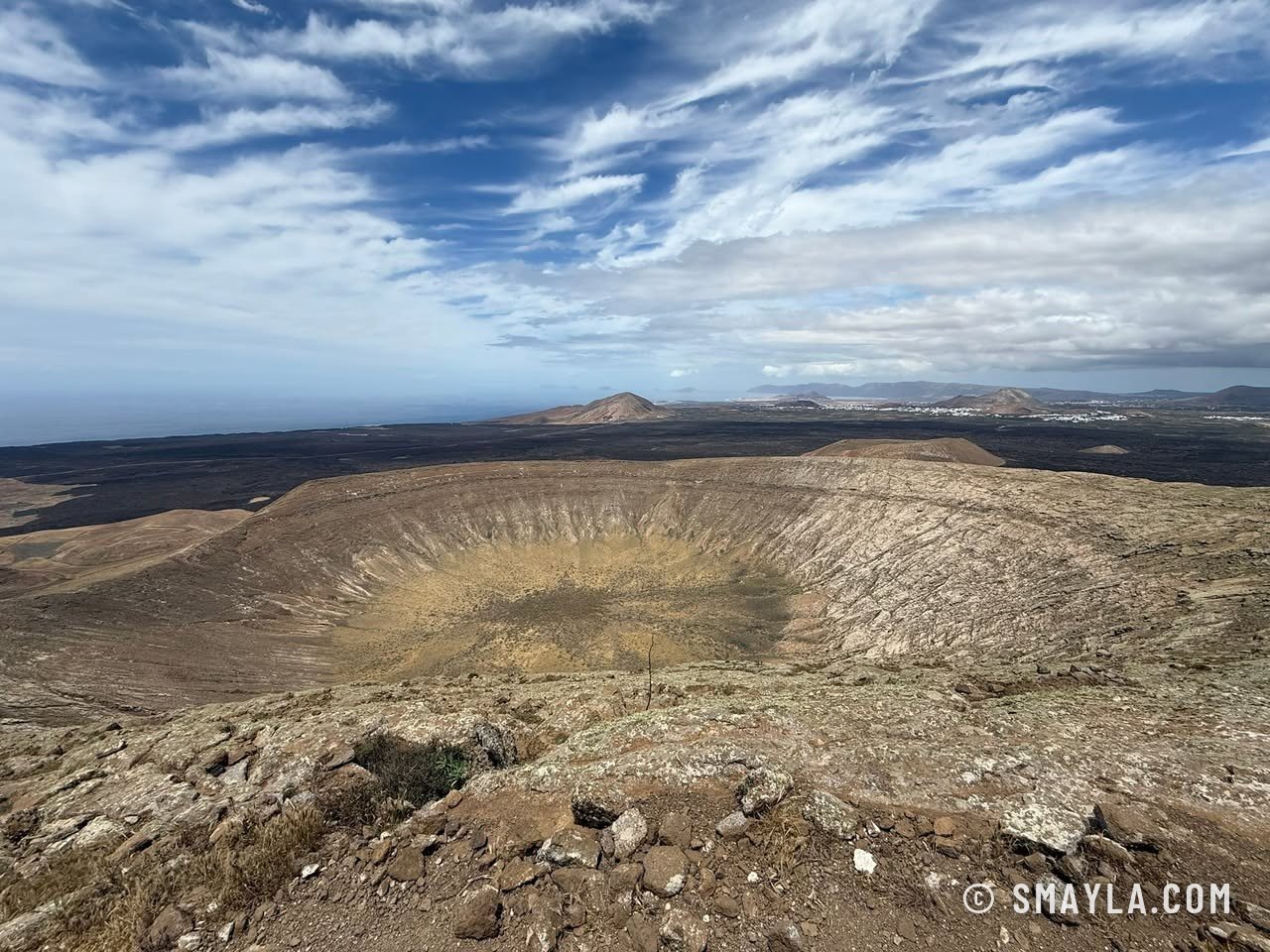 On foot · The hikeCaldera Blanca, walking on lava10.3 km · 388 m ascentMap, figures and photos →
Day 4
La Graciosa, the island without roads
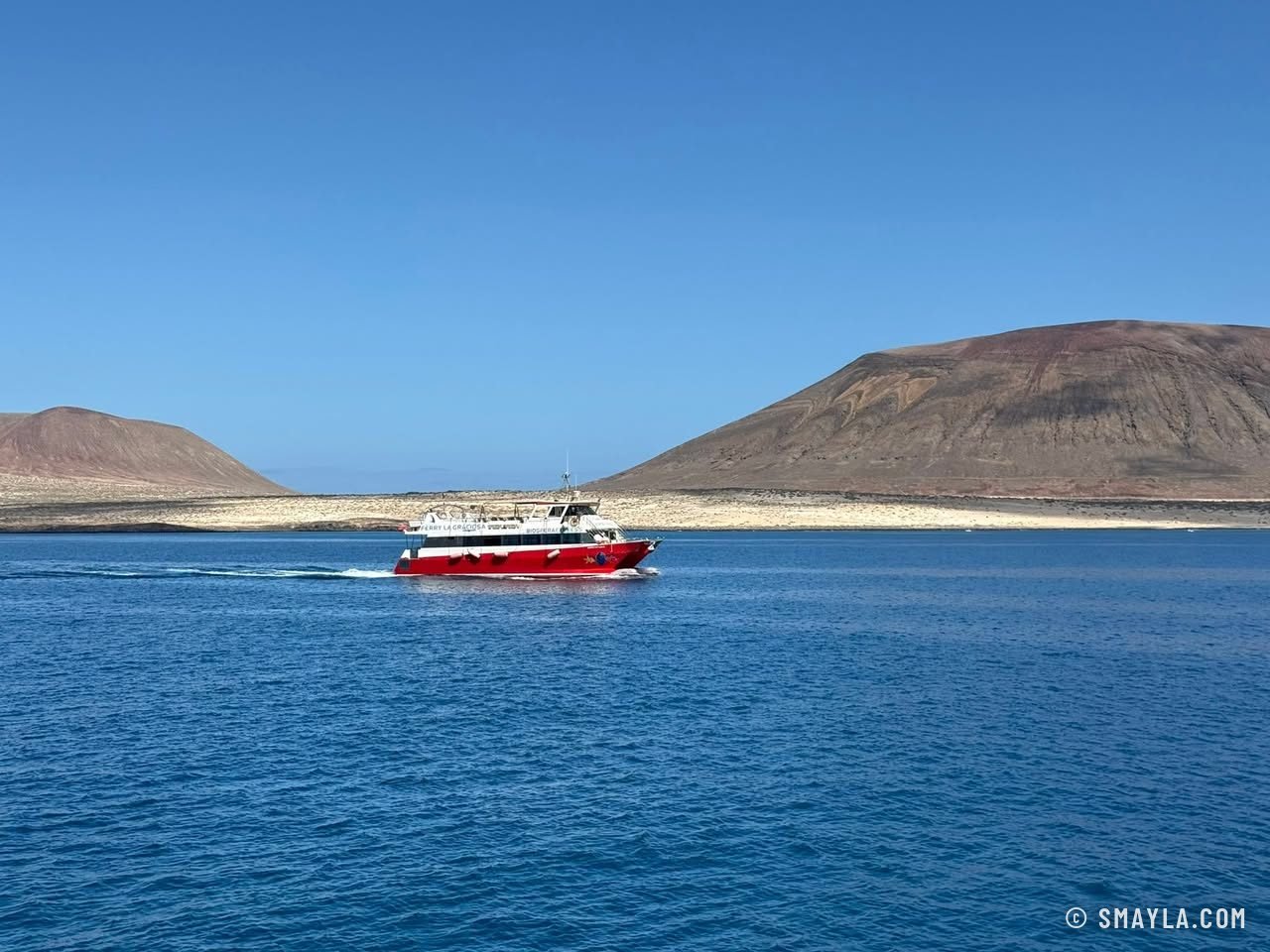
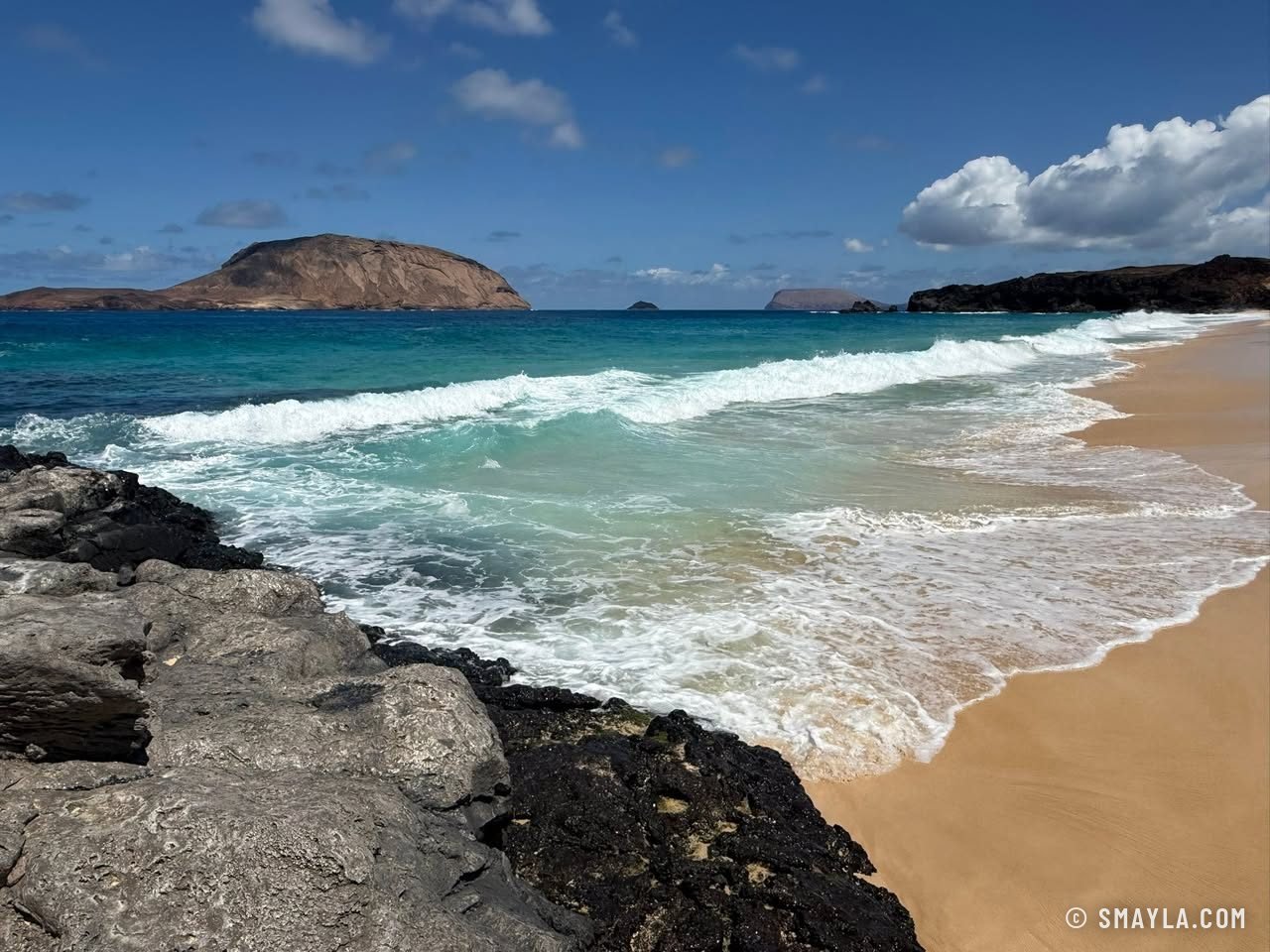
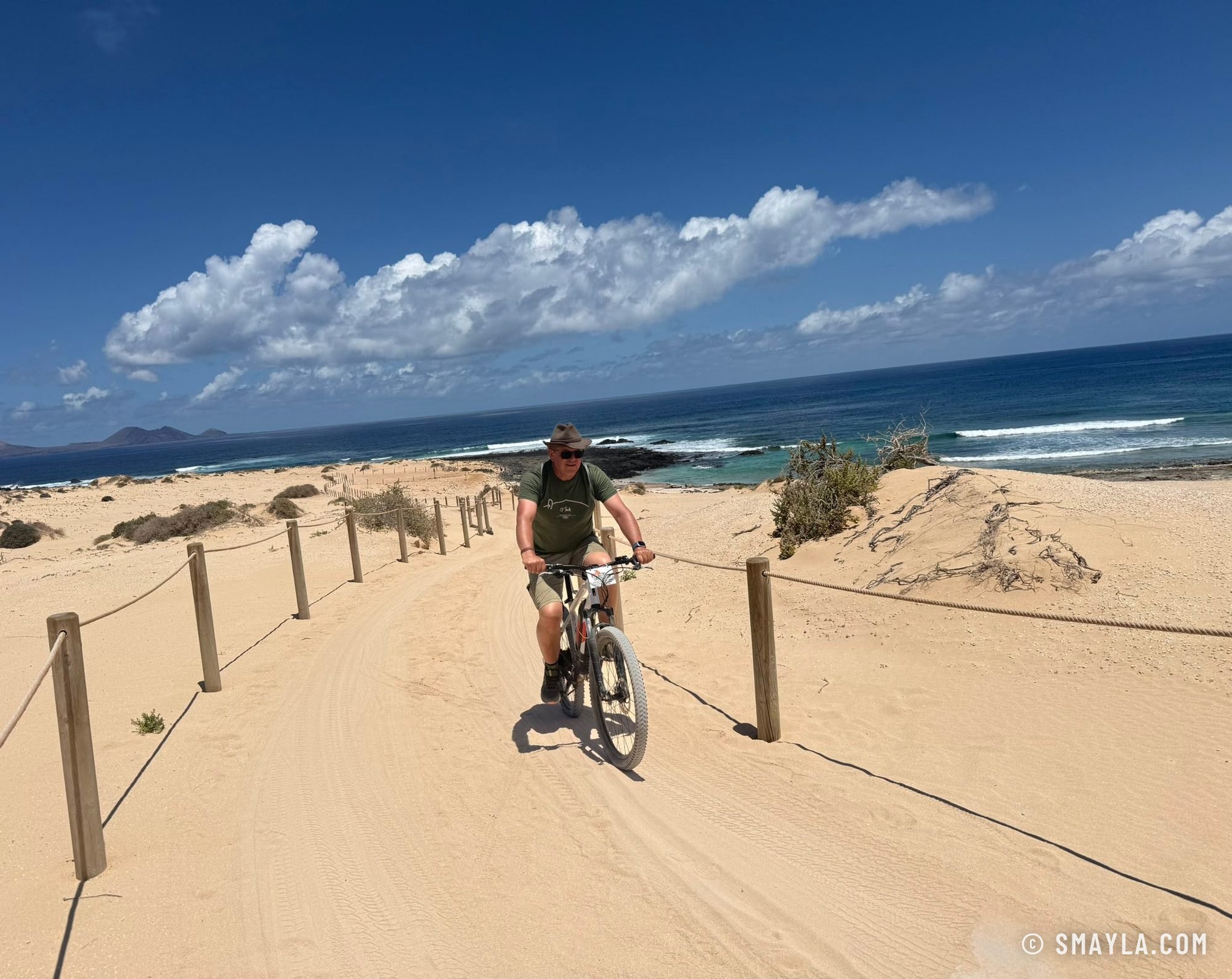
A thirty-minute ferry from Órzola to the eighth Canary Island: twenty-seven square kilometres, not one paved road, only sand and silence. Twenty kilometres by bike over washboard tracks and through dunes, empty beaches, a white light. An island for slow travellers.
The last lines of this journal were written on the plane, then on the train. Home to Switzerland, our heads full of warmth and images.