Abroad · By 4×4 · August and September 2025
Iceland 2025, the C30 and the Laugavegur
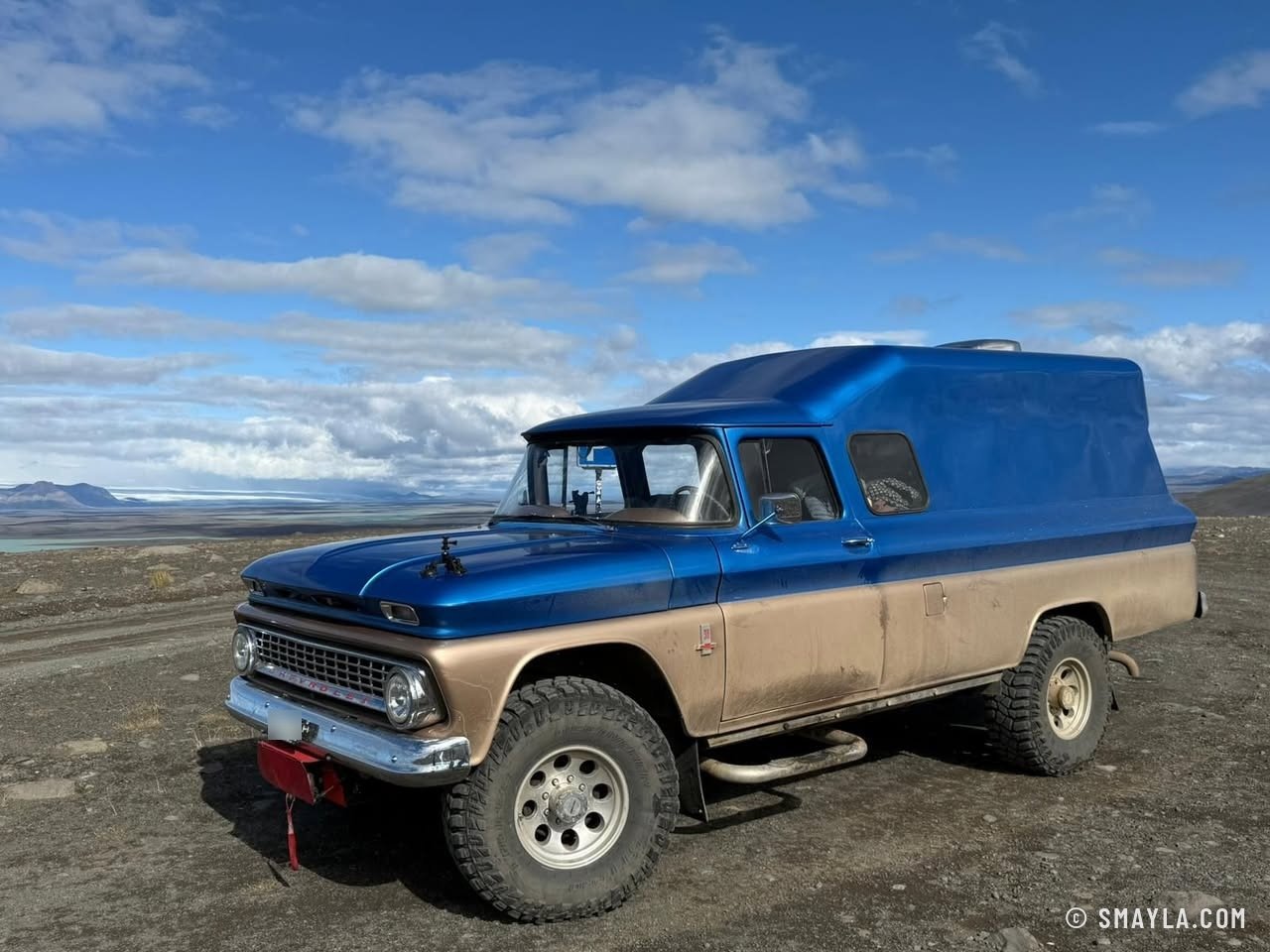
Our fourth trip to the island, the second for the old Chevrolet. The Westfjords, Þakgil, 55 km on foot along the Laugavegur, a drive shaft broken at the end of the world, and the weather as our compass throughout.
- Duration
- 36 days on the island · August and September 2025
- In numbers
- 5,500 km in the C30 · 120 km on foot
- Crossing
- Germany · Denmark · Sweden · Faroes
- Vehicle
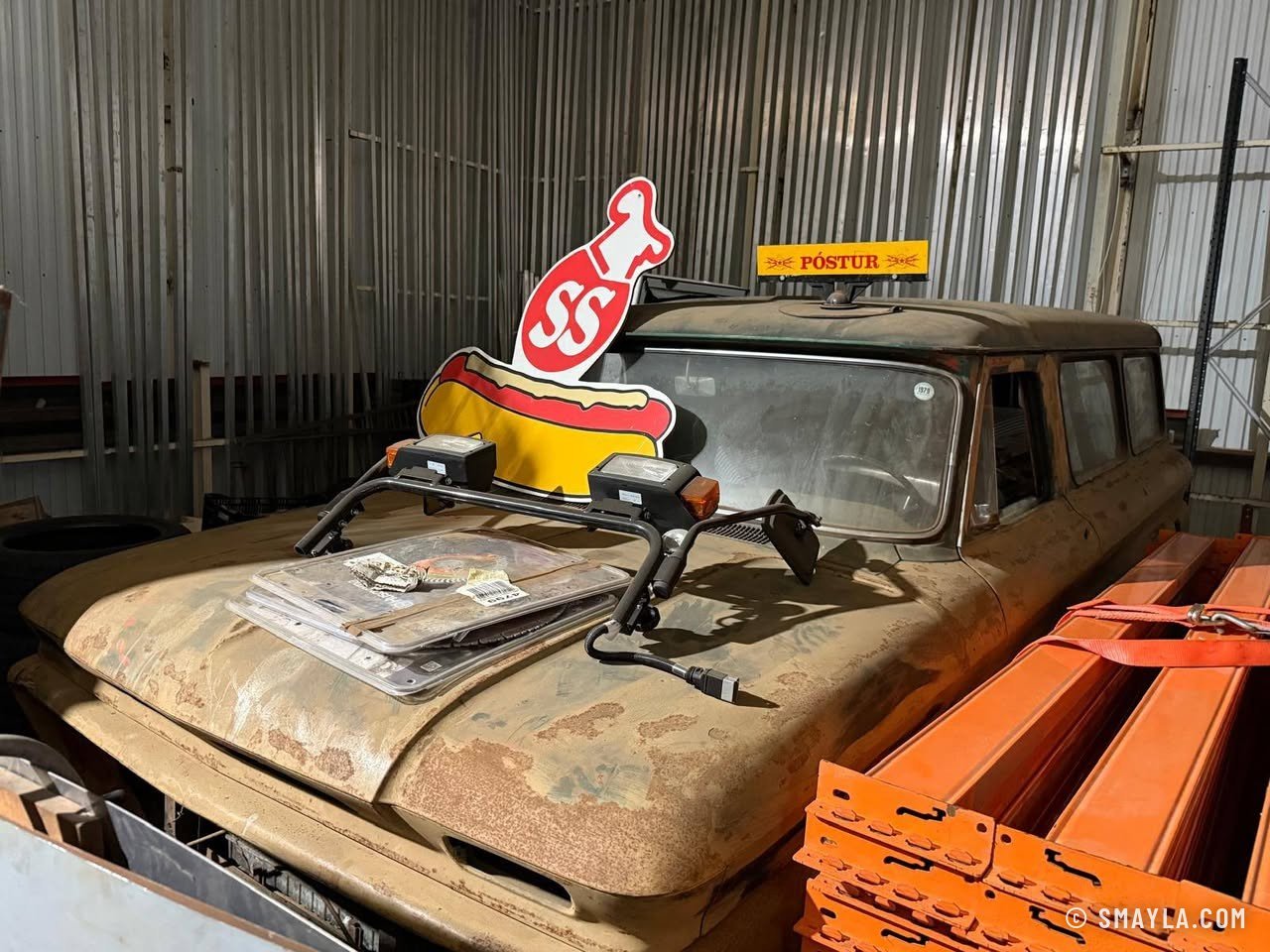
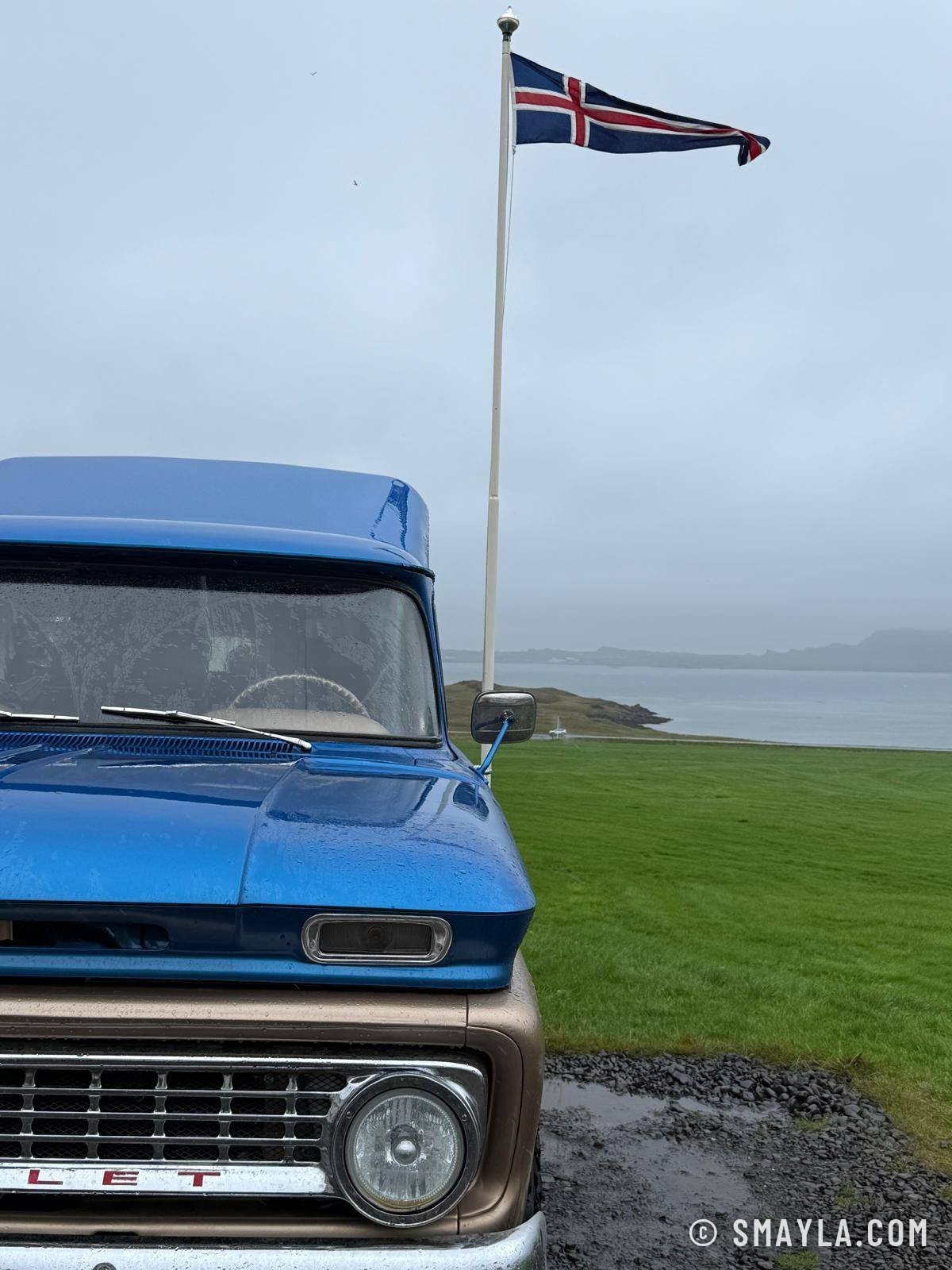
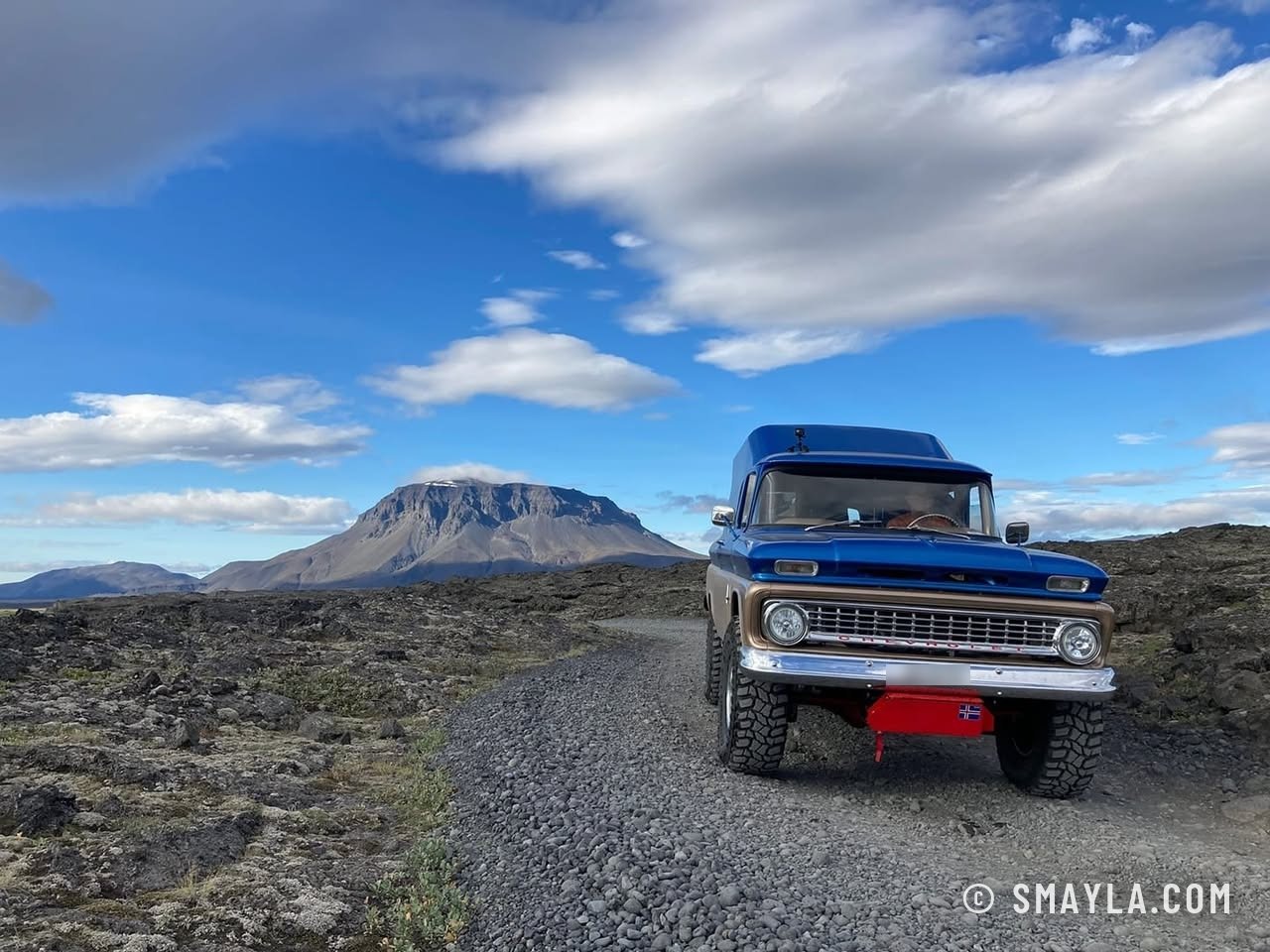
- 1963 Chevrolet C30
28 July – 8 August
The scenic route, then the storm
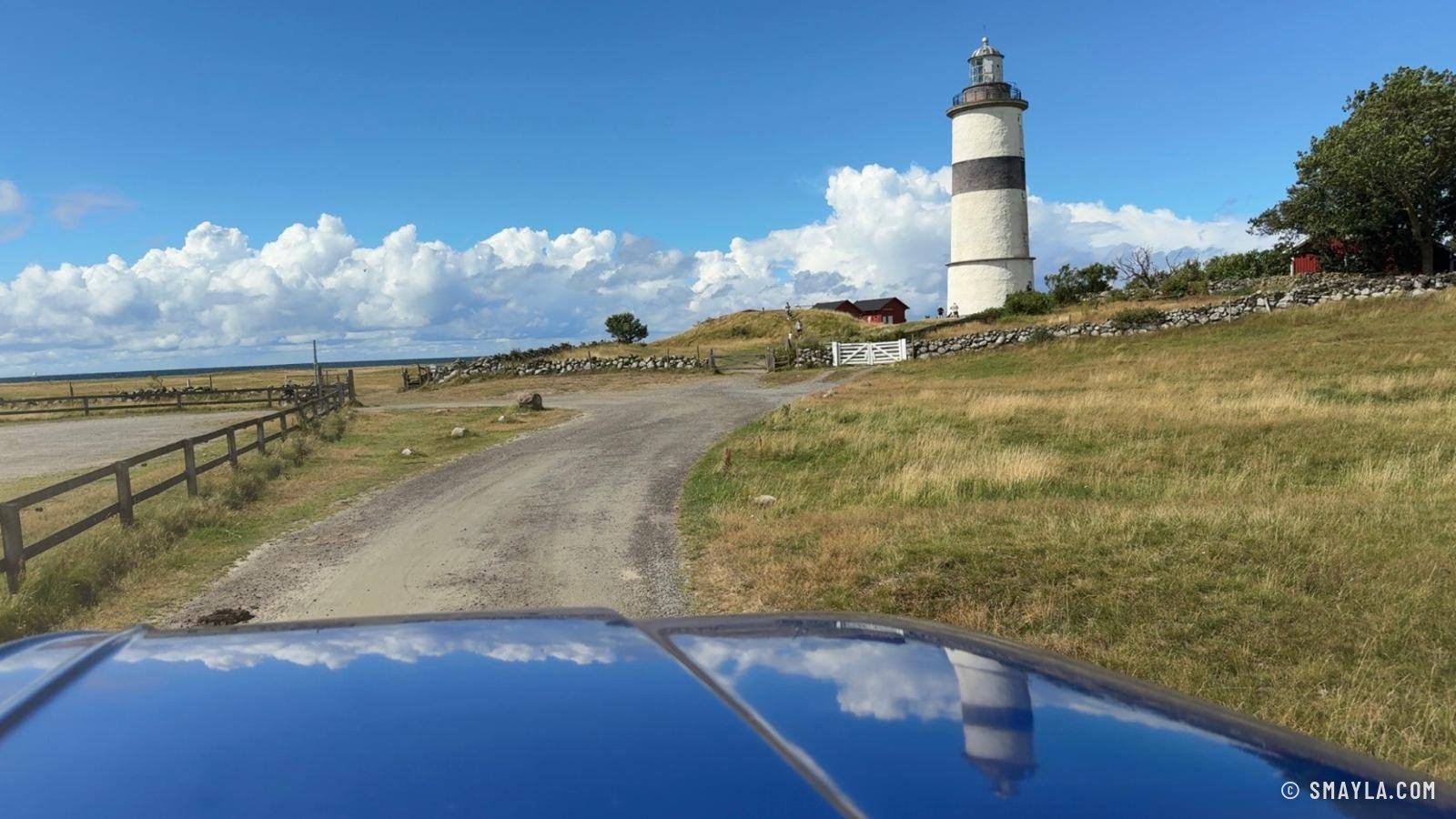
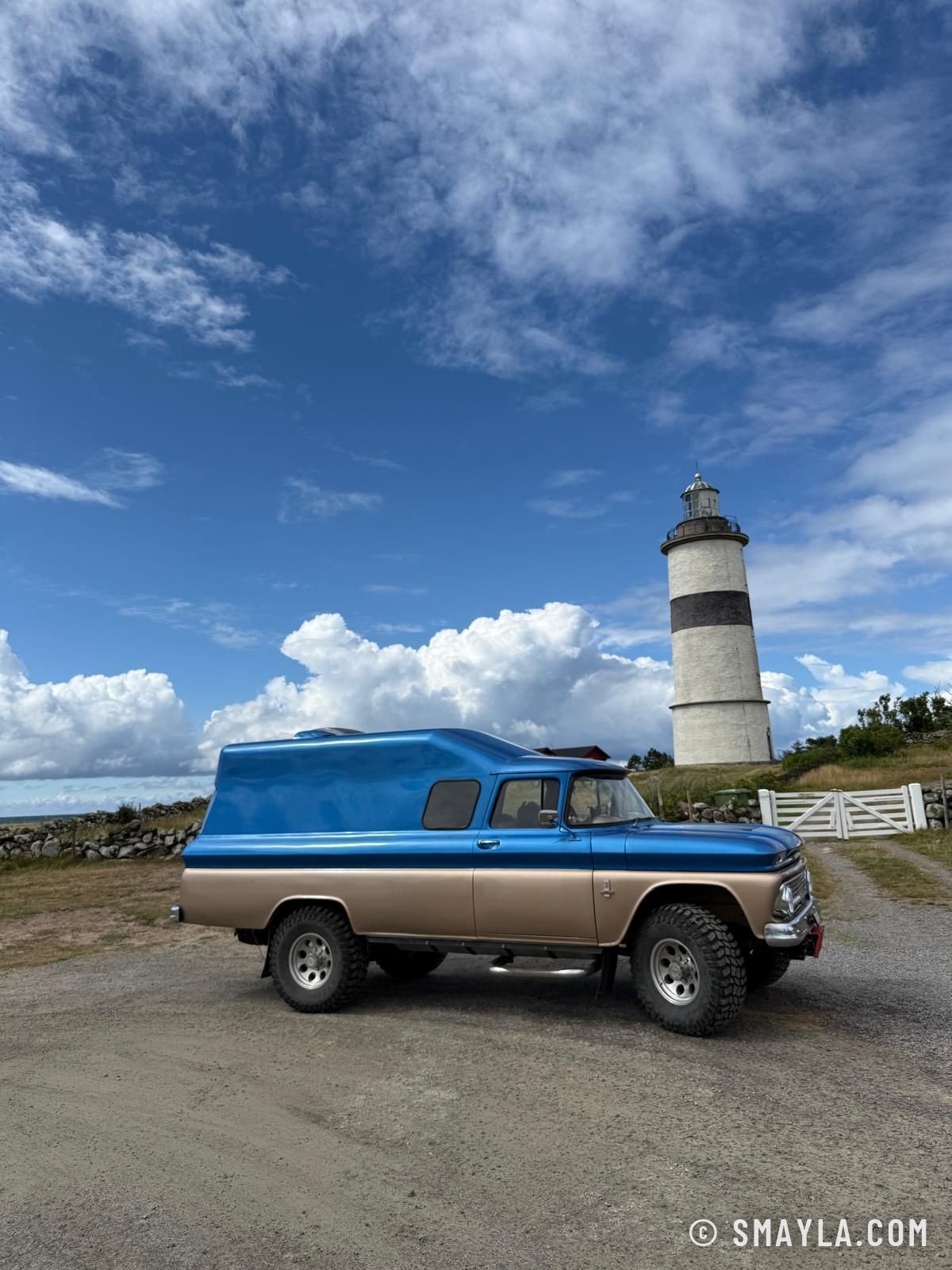
We head north the long way round. Germany and its half-timbered houses, Schwäbisch Hall, Rothenburg ob der Tauber, cobbled Quedlinburg, then Lübeck and its Gänge. The first ferry to Denmark, Copenhagen, Helsingør and Kronborg castle, a bivouac by a small Swedish lake, a lighthouse on the coast near Gothenburg.
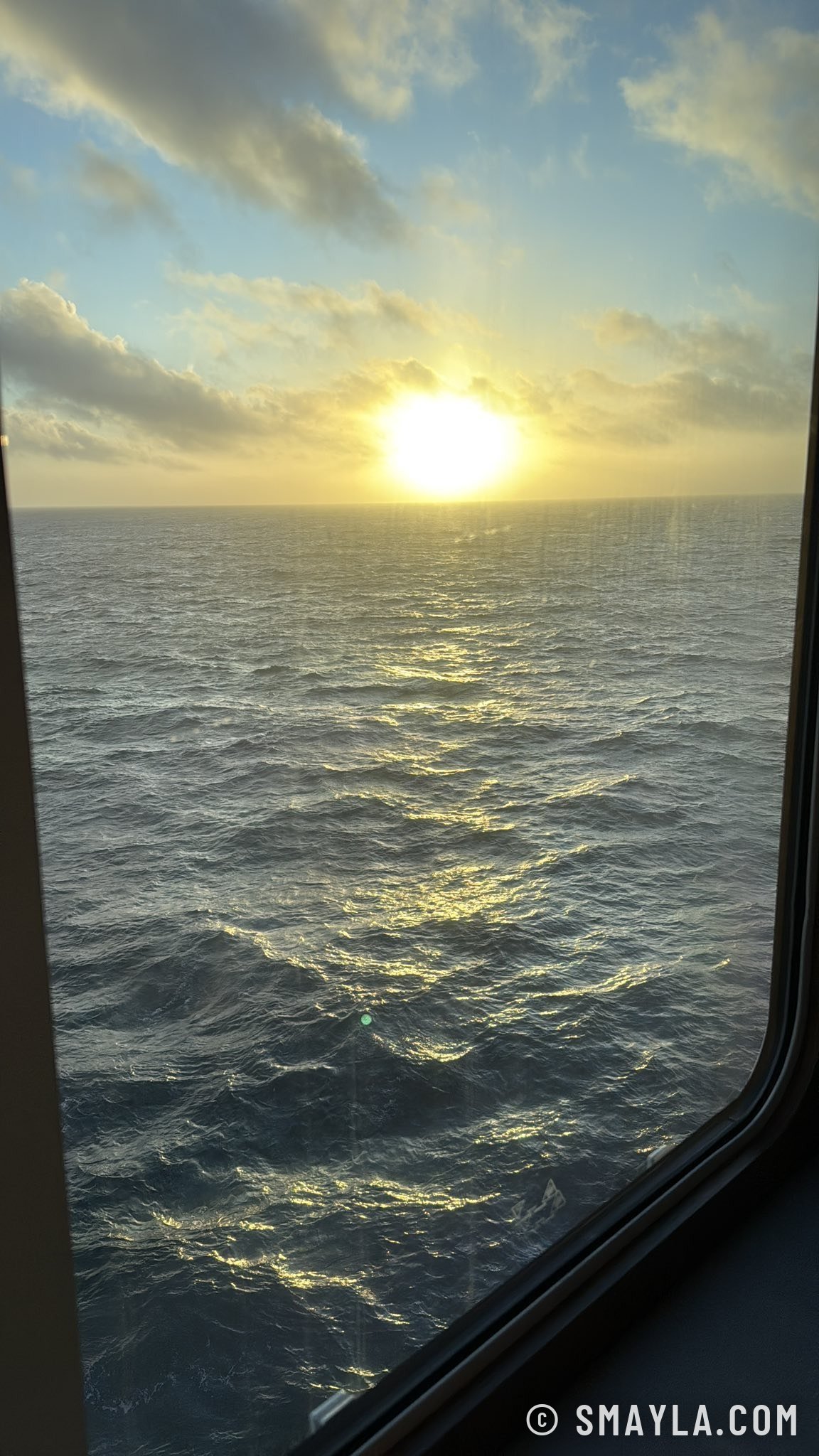
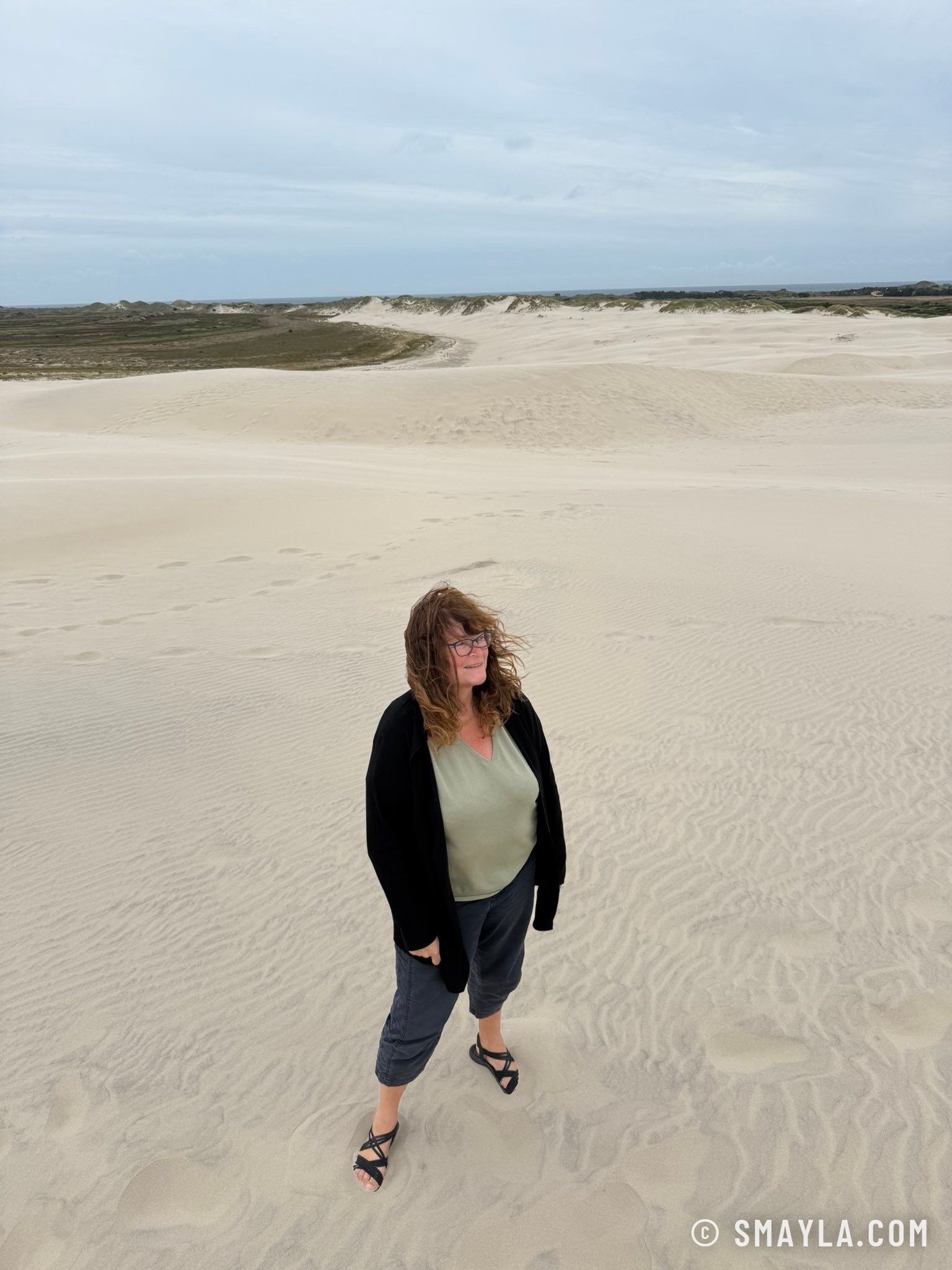
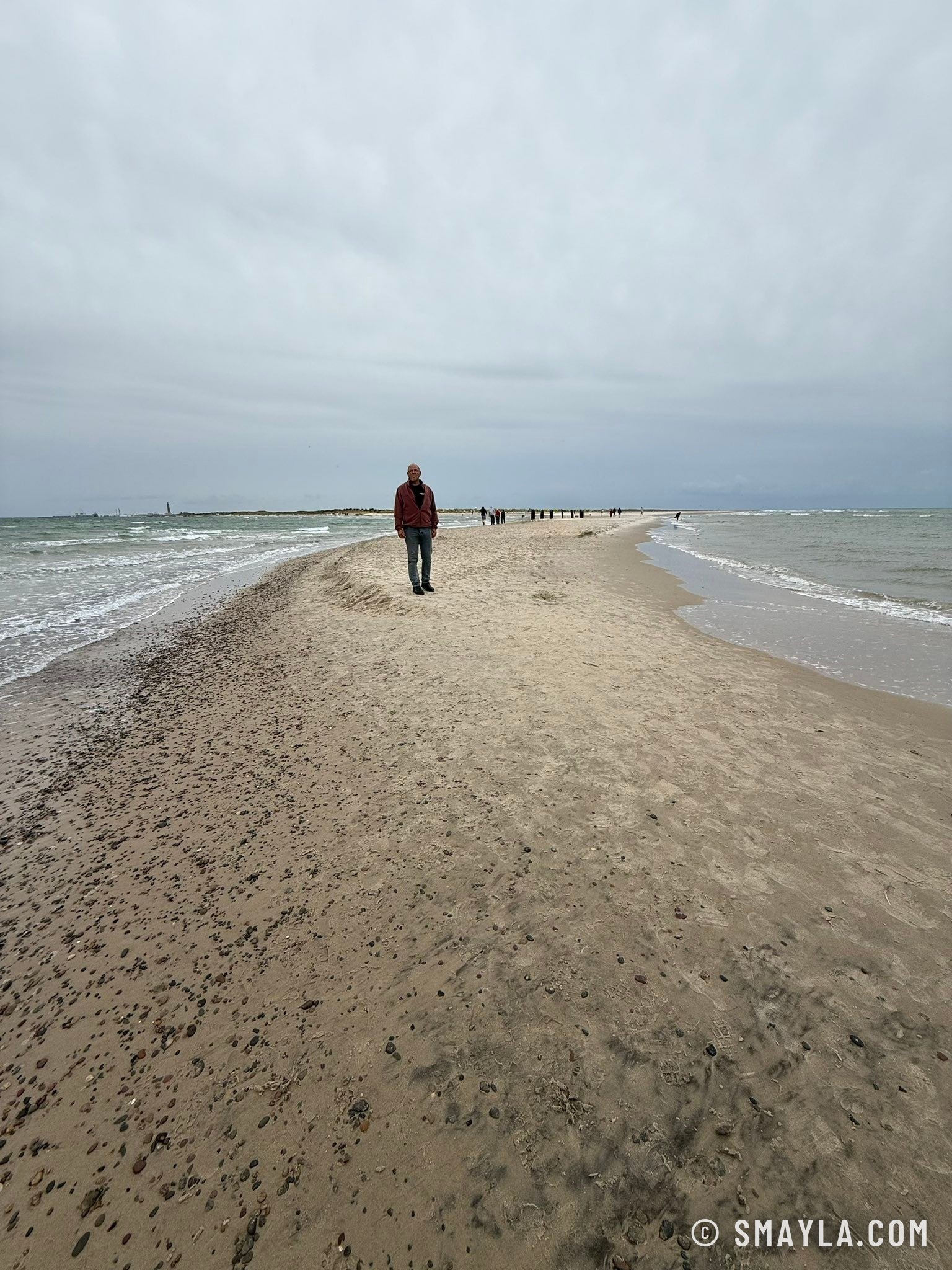
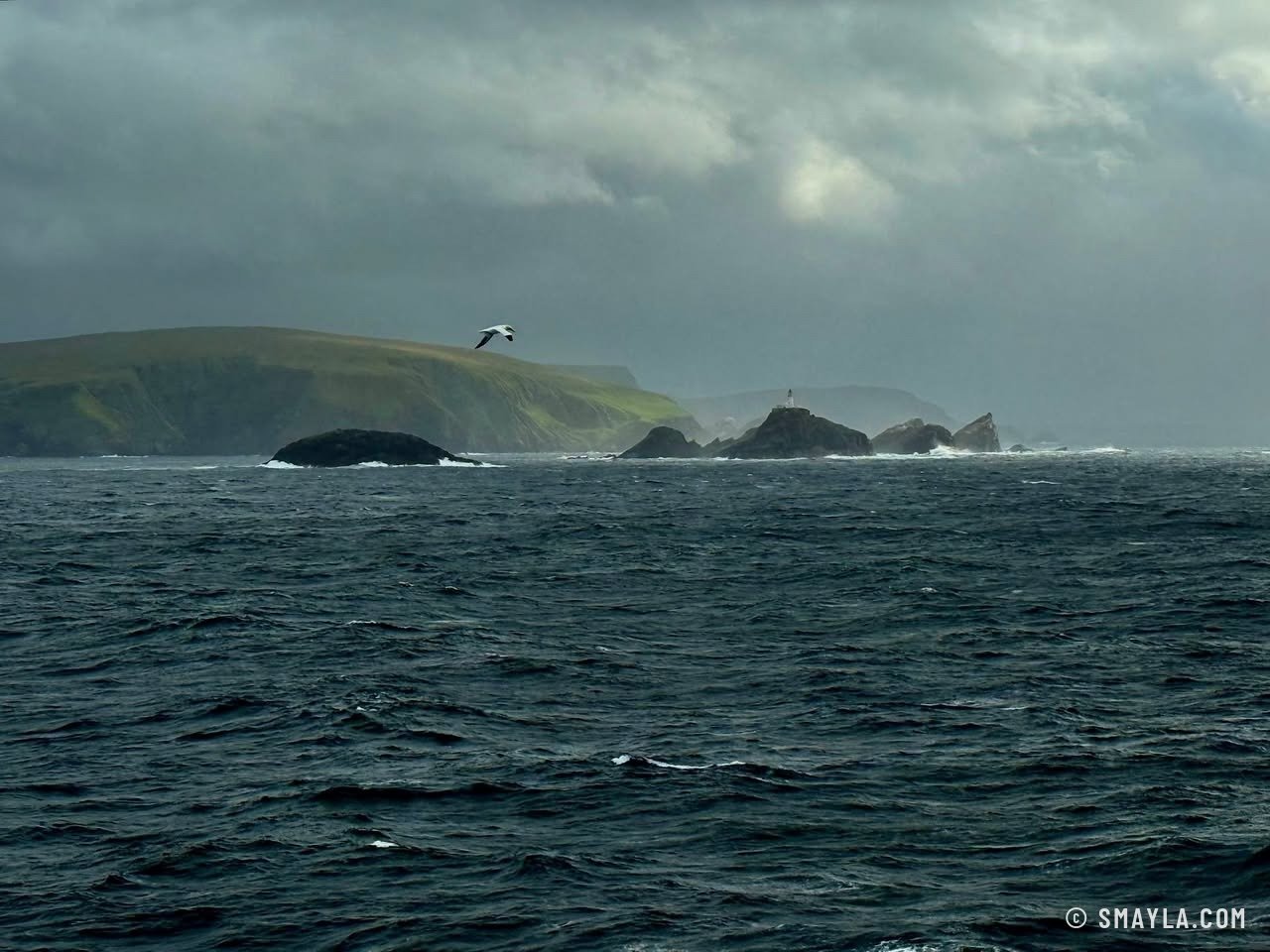
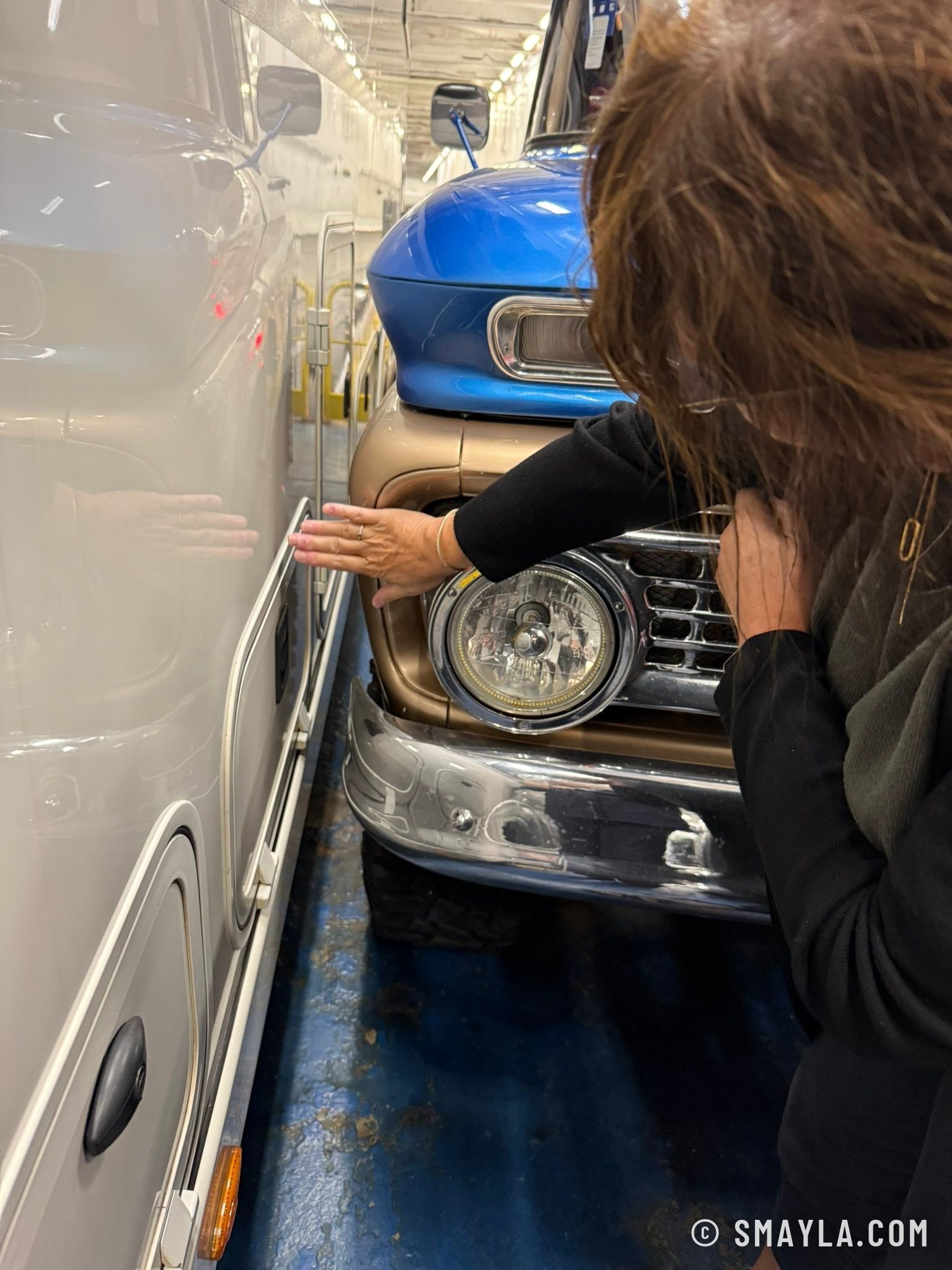
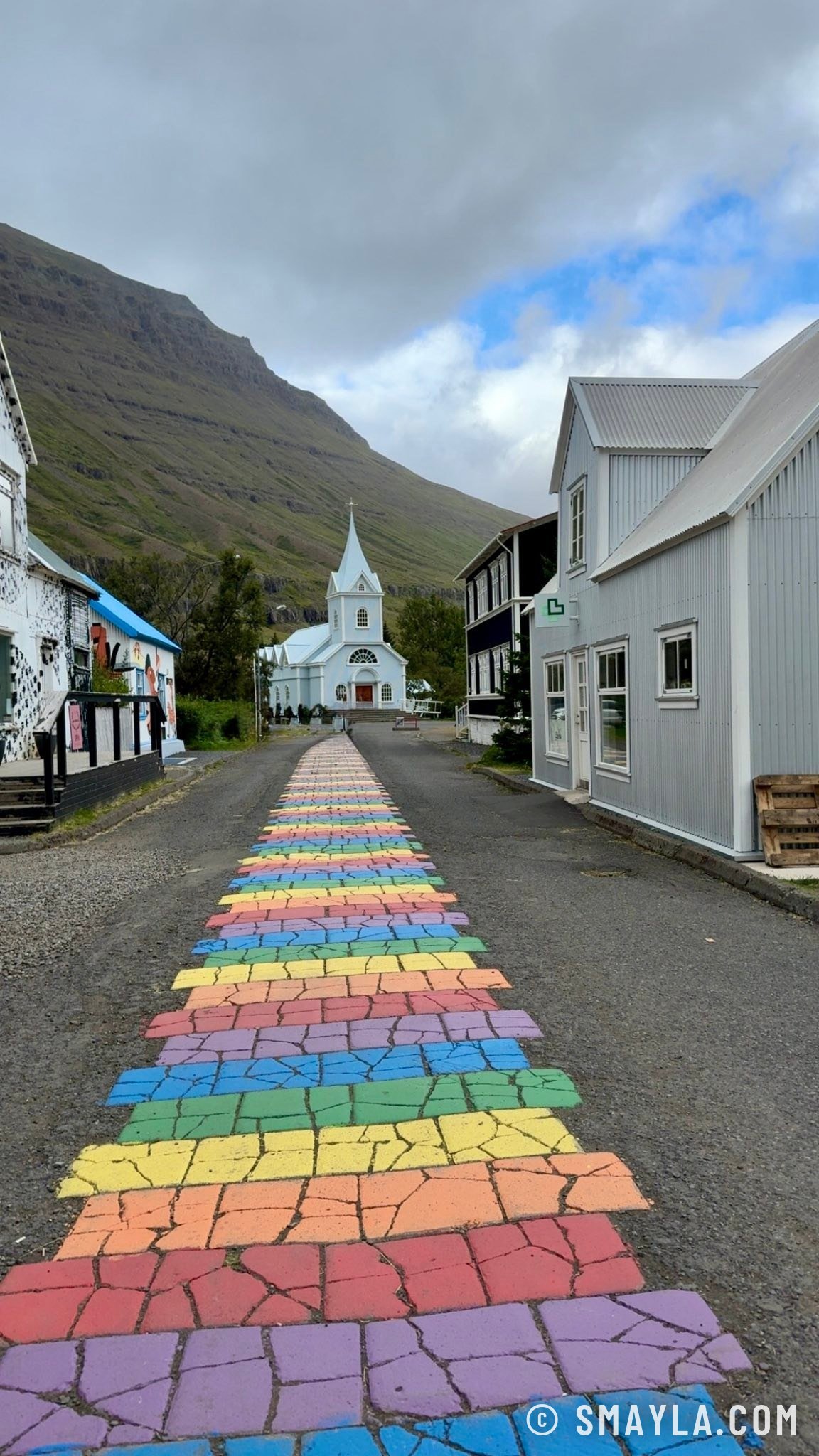
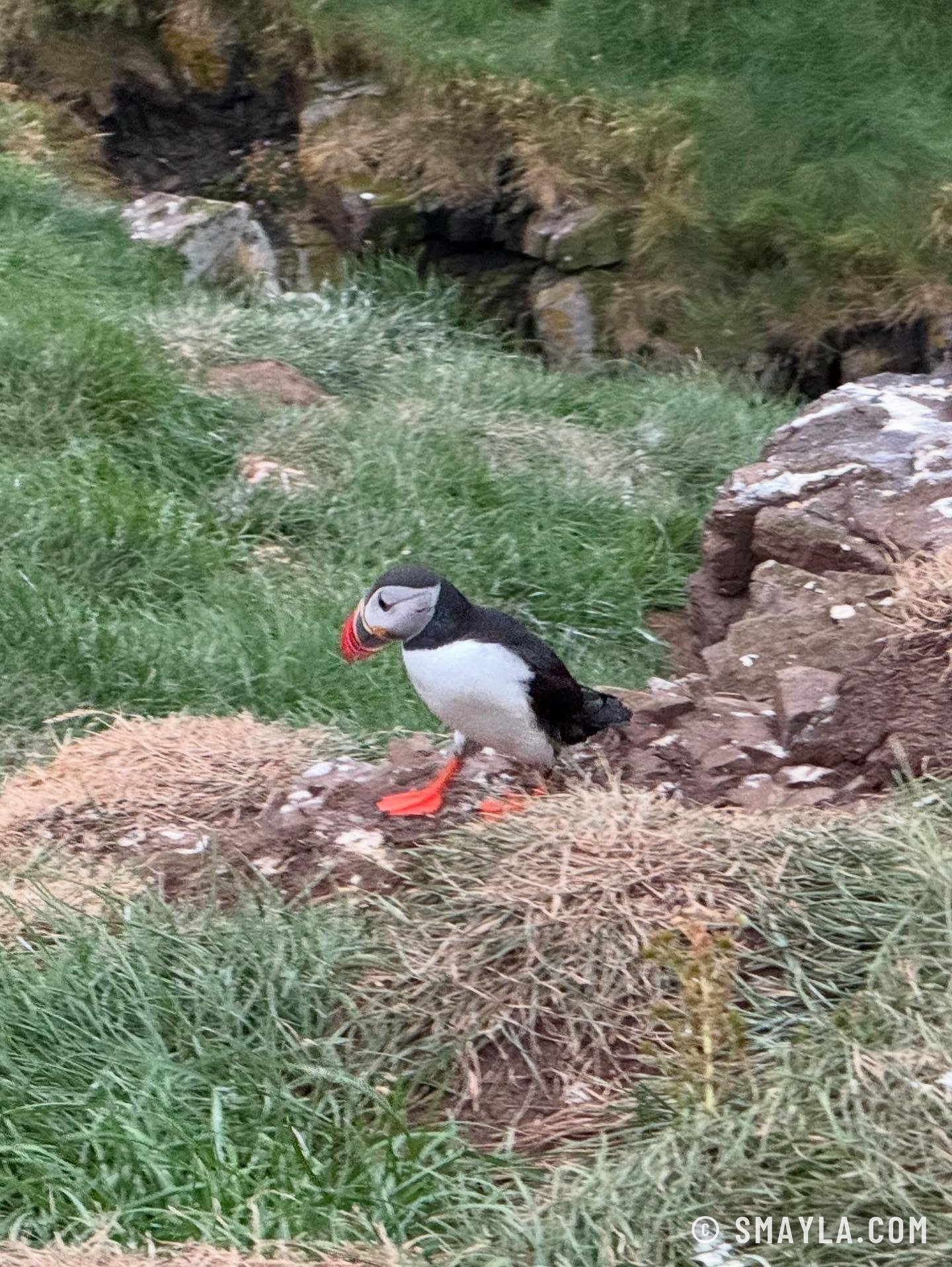
Denmark's far north: the shifting dune of Råbjerg Mile, Grenen where the North Sea and the Baltic clash, Skagen. A text message brings the sailing forward to 3 a.m. because of storm Floris. A rough crossing, the C30 slides to within a whisker of the next camper, no damage. In Seyðisfjörður, a drink on a terrace to celebrate, then the last puffins at Hafnarhólmi.
 The journal1963 Chevrolet C30, the workshop journalThe garage · 1963Read the journal →
9–13 August
The Westfjords
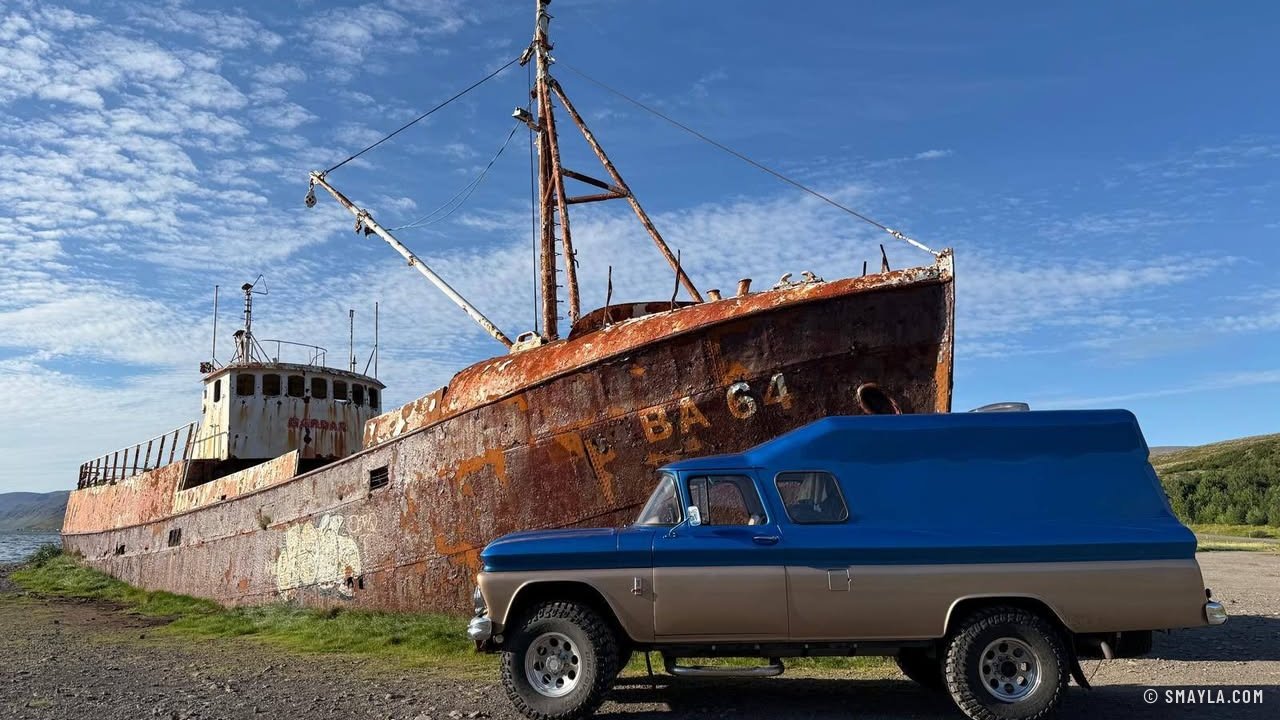
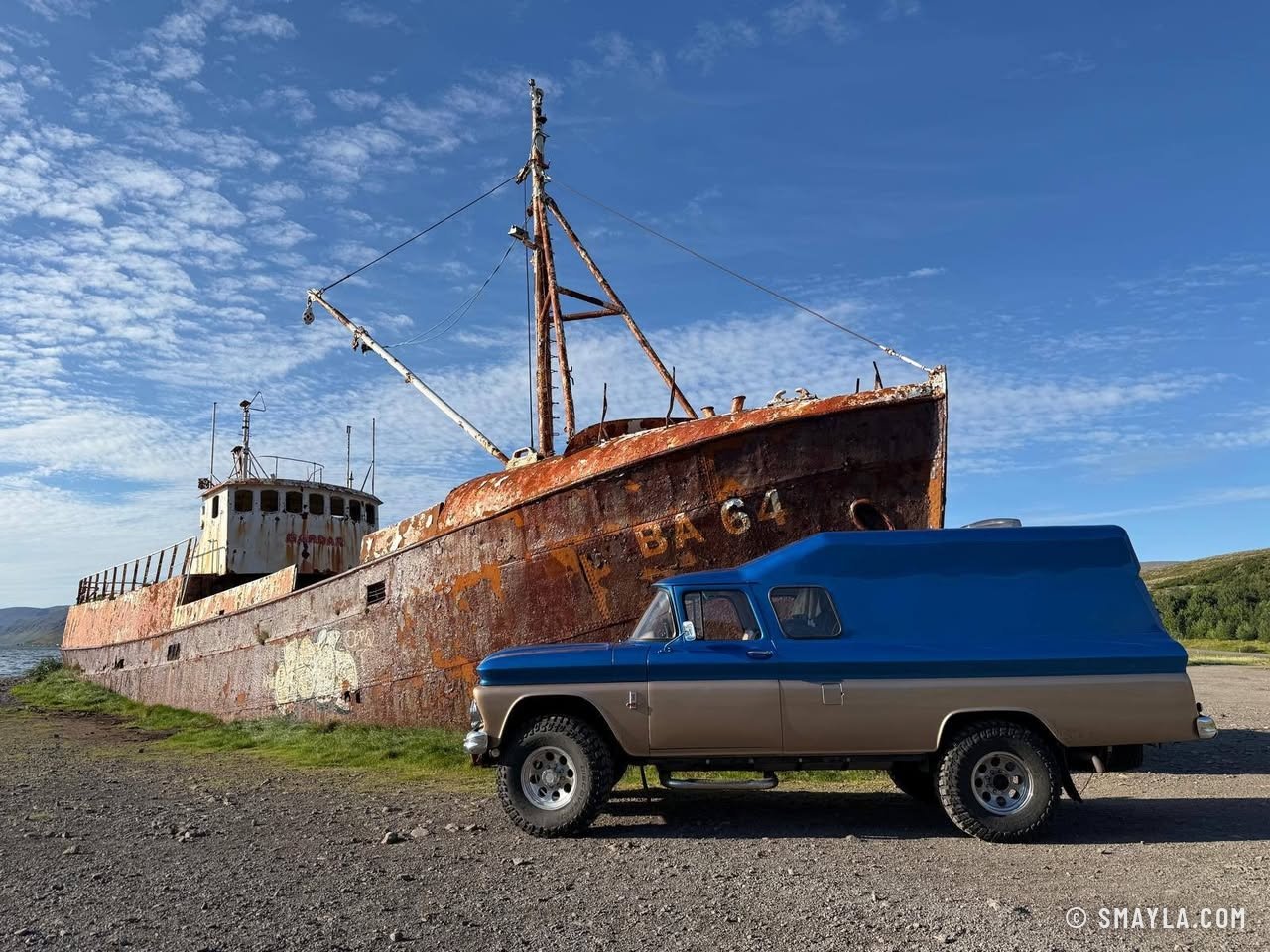
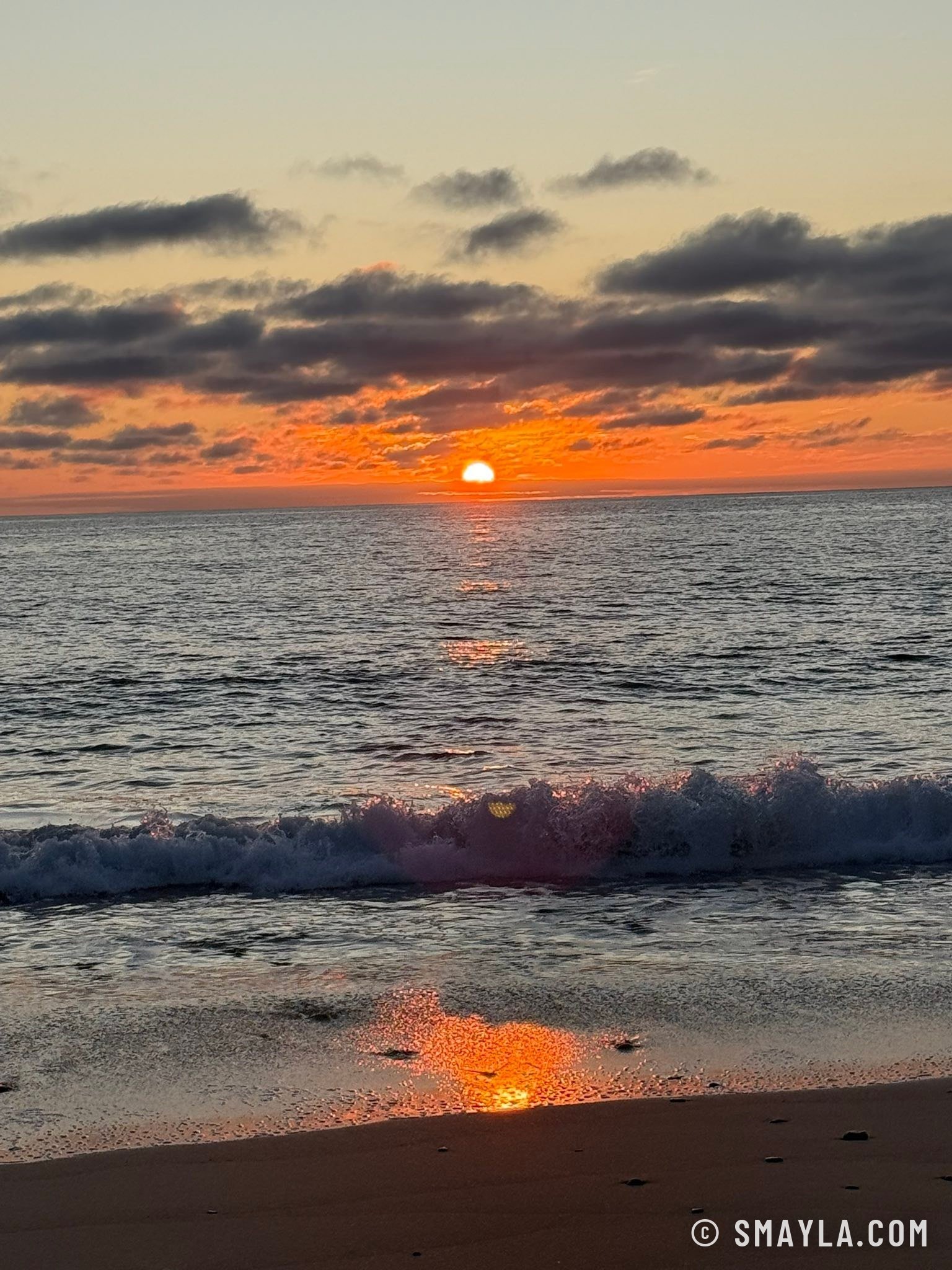
We follow the weather west. A heaven-sent day: a first hot pot, a small hot pool by the sea, the wreck of the Garðar honoured to pose next to the Chevy, and a night at the end of the world, with a sunset as the last gift.
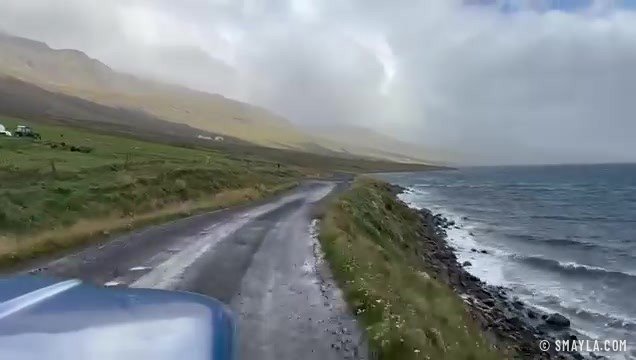
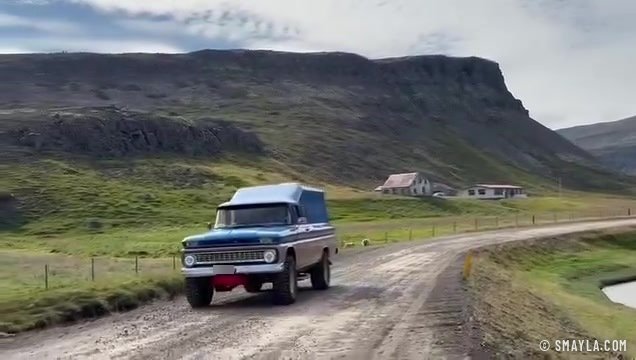
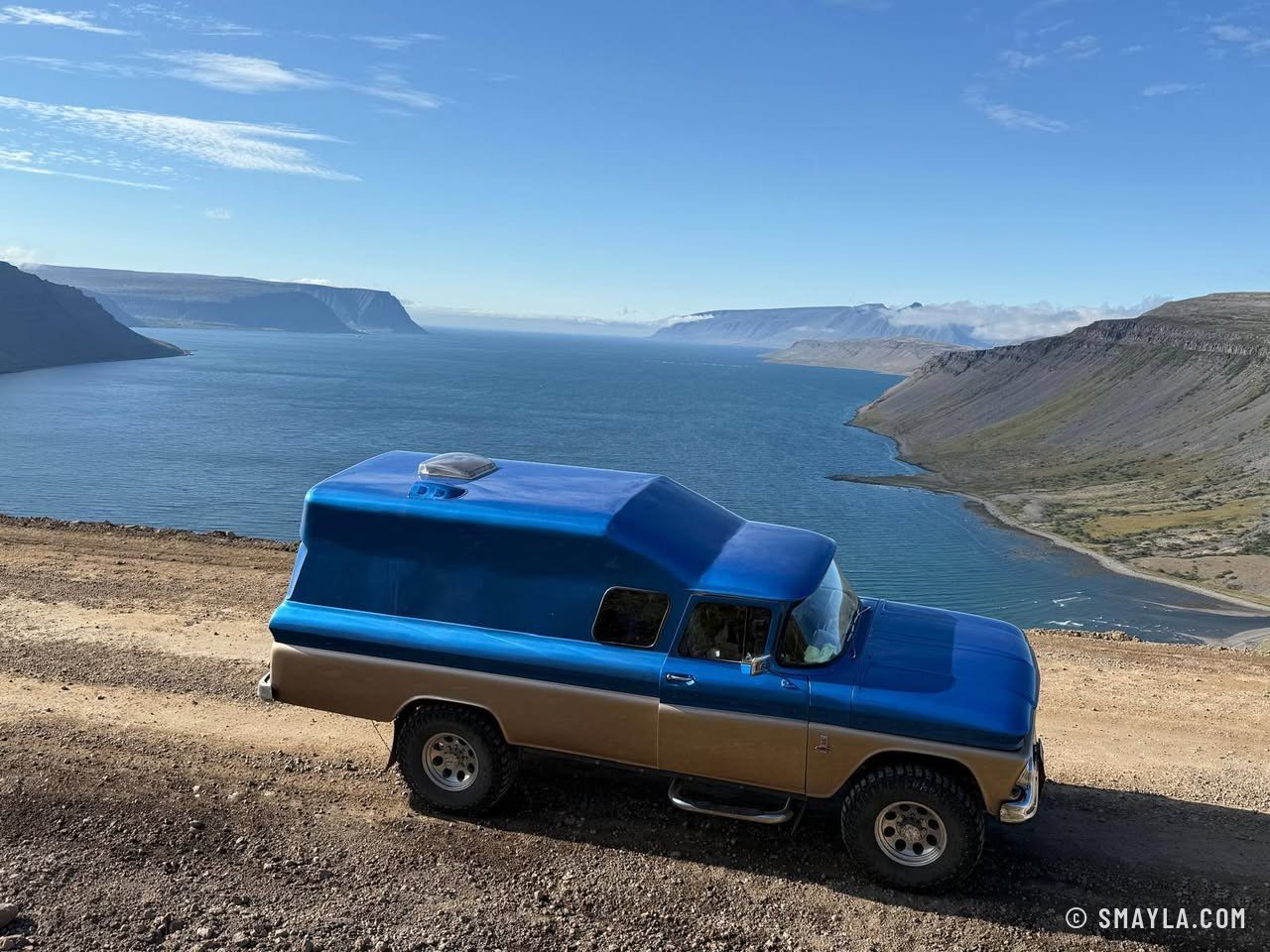
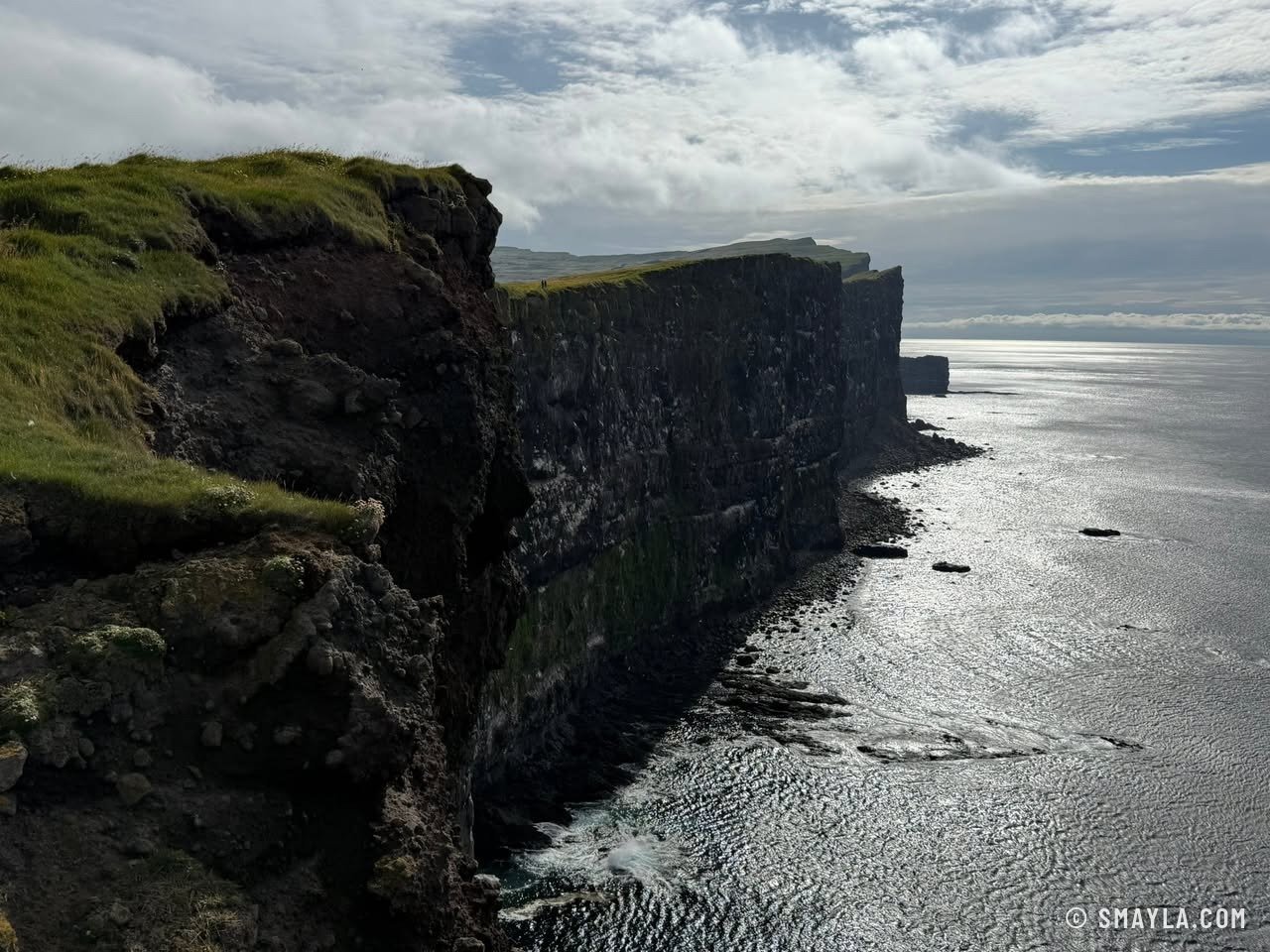
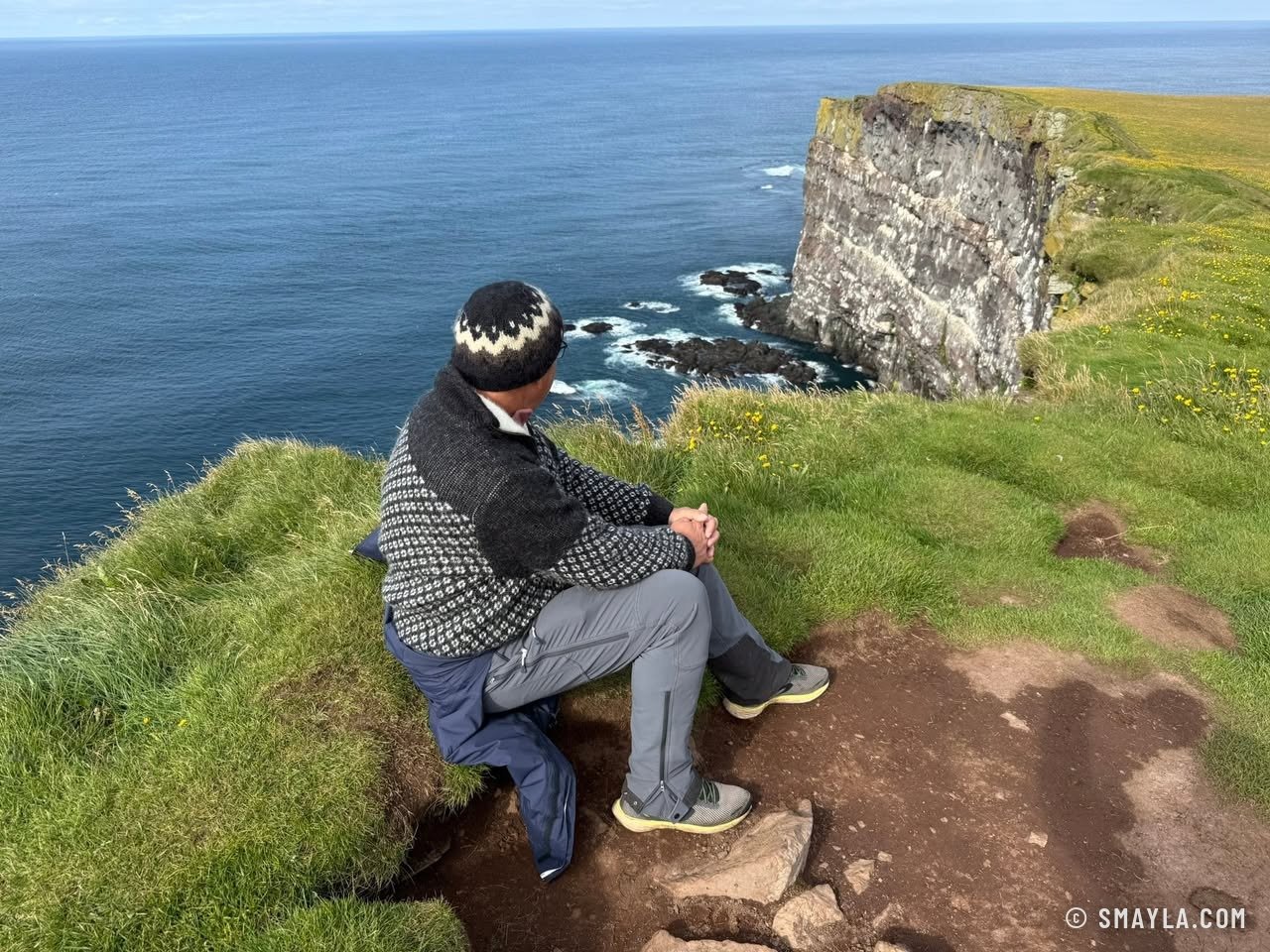
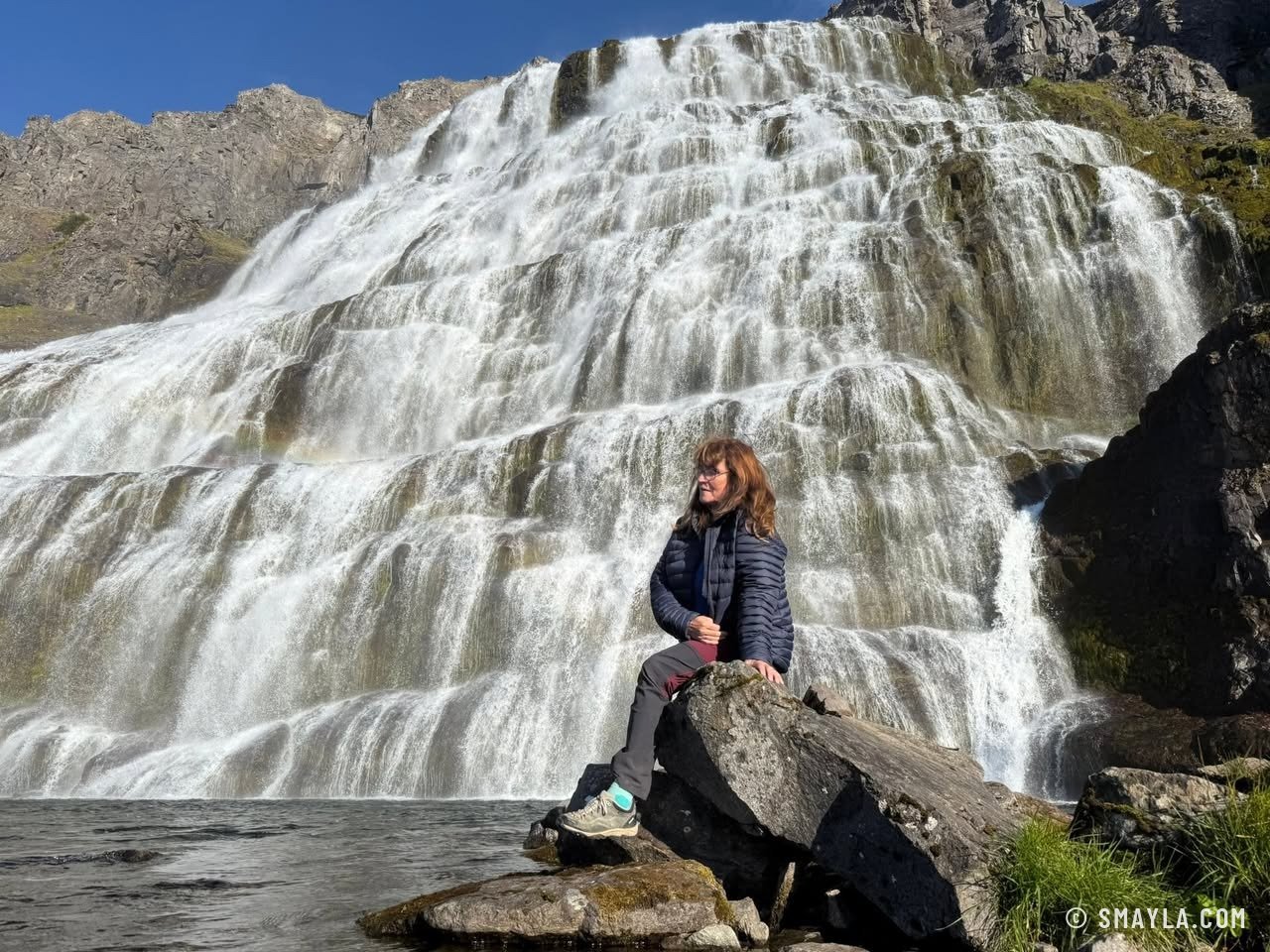
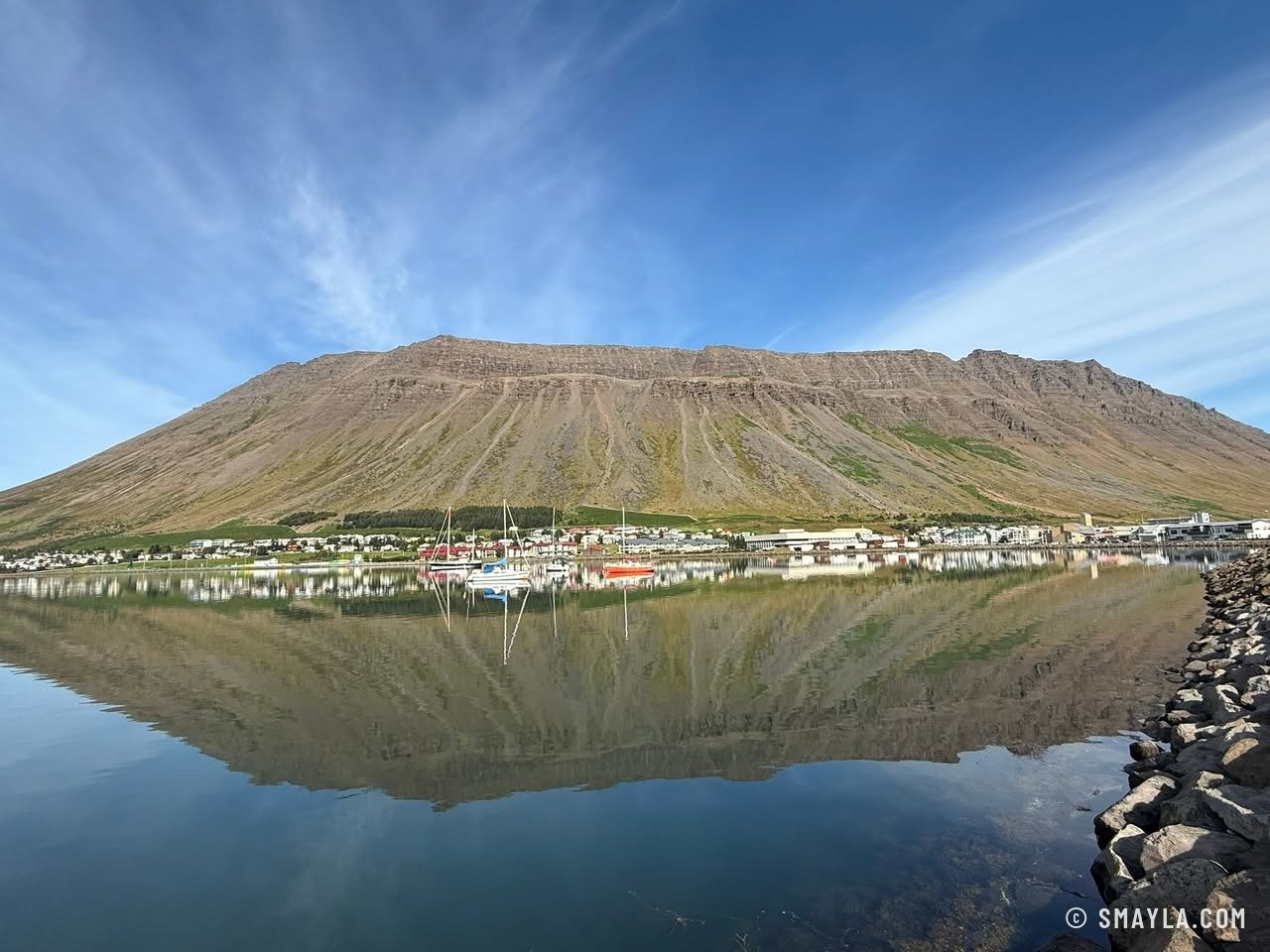
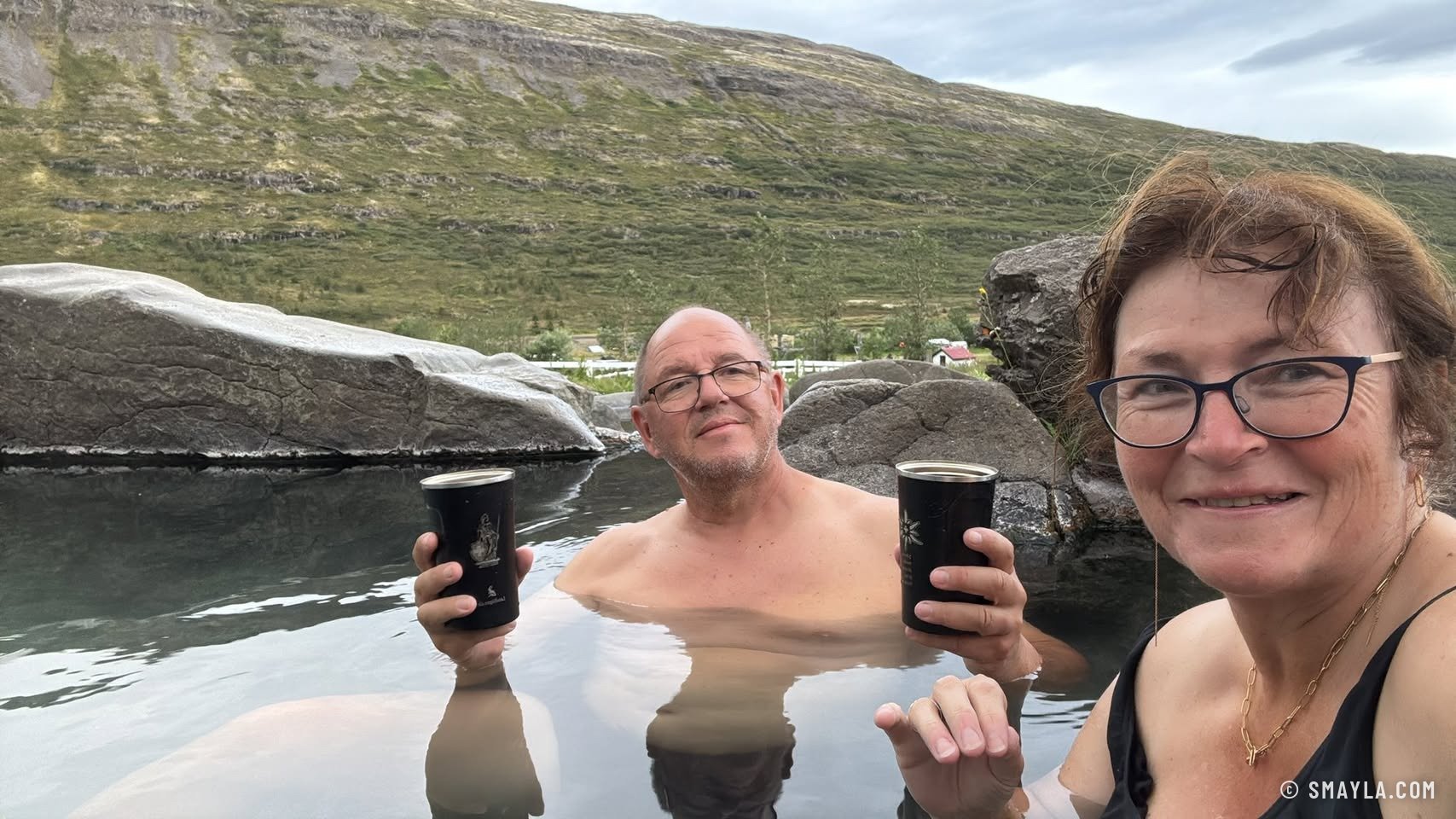
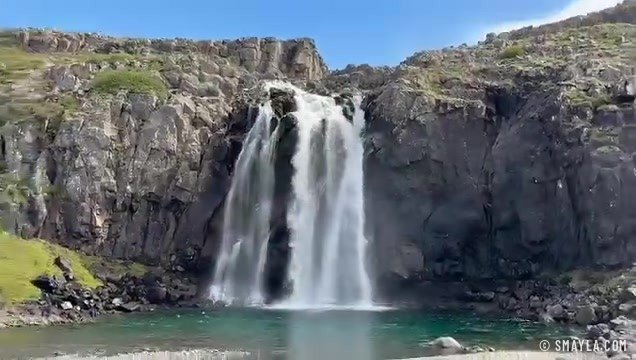
The next day, the cliffs of Europe's far west, not for the faint-hearted, with puffins and kittiwakes and their chicks. Roads that climb and drop again, and Dynjandi, approached as close as we could. A hose gives way: a mechanic offers a new one, a blue one, and we tackle 136 km of road for 36 as the crow flies, thank you three fjords, to a small hotel lost at the end of a valley, with its hot pot by the river.
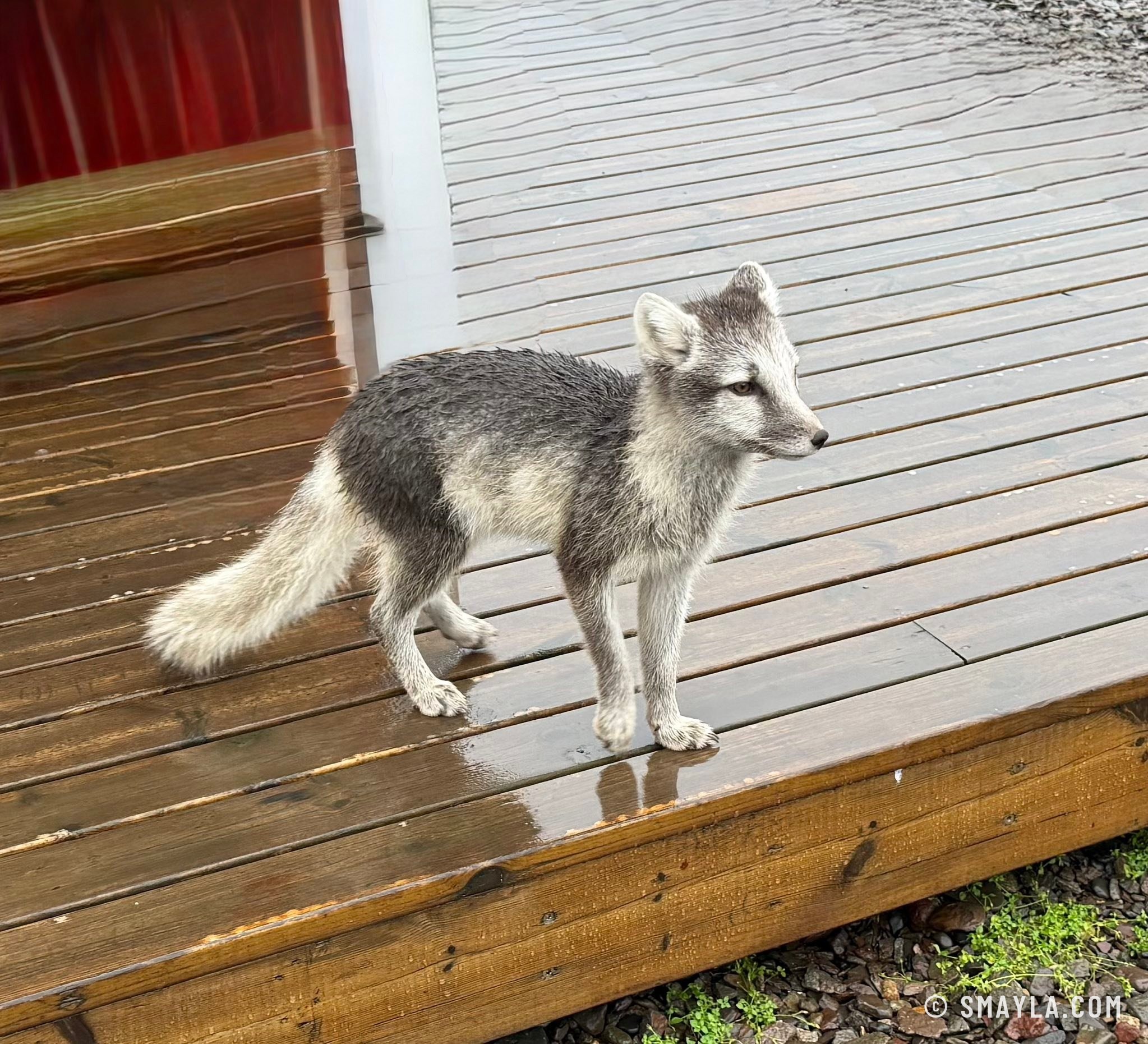
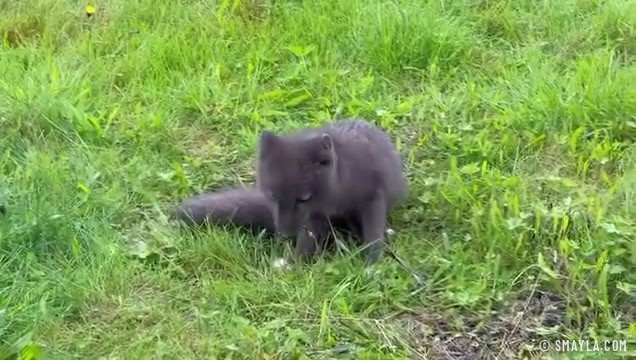
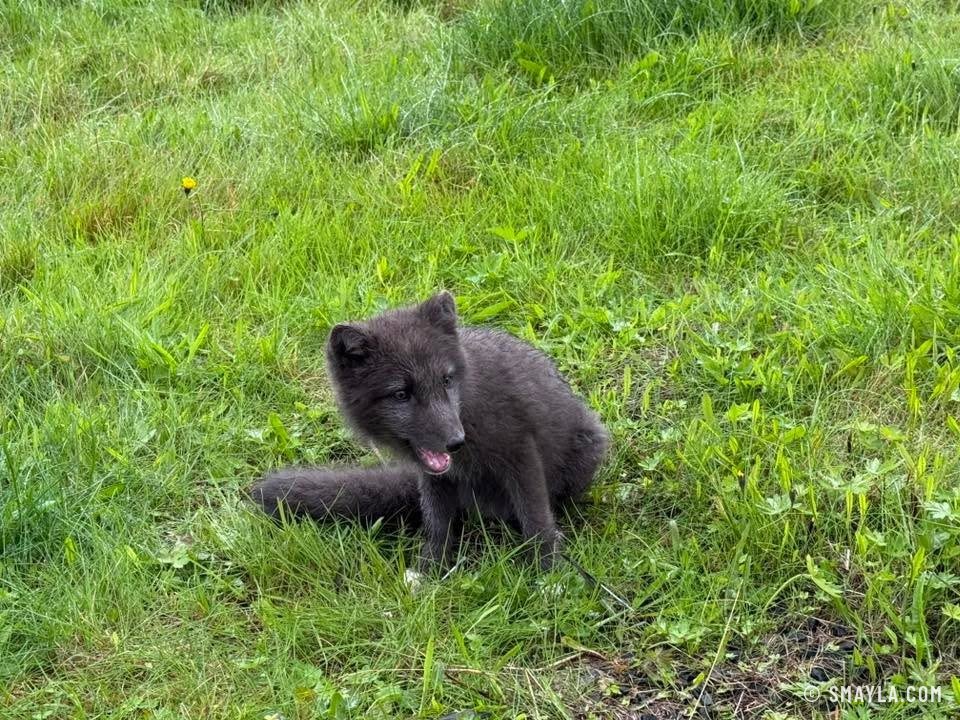
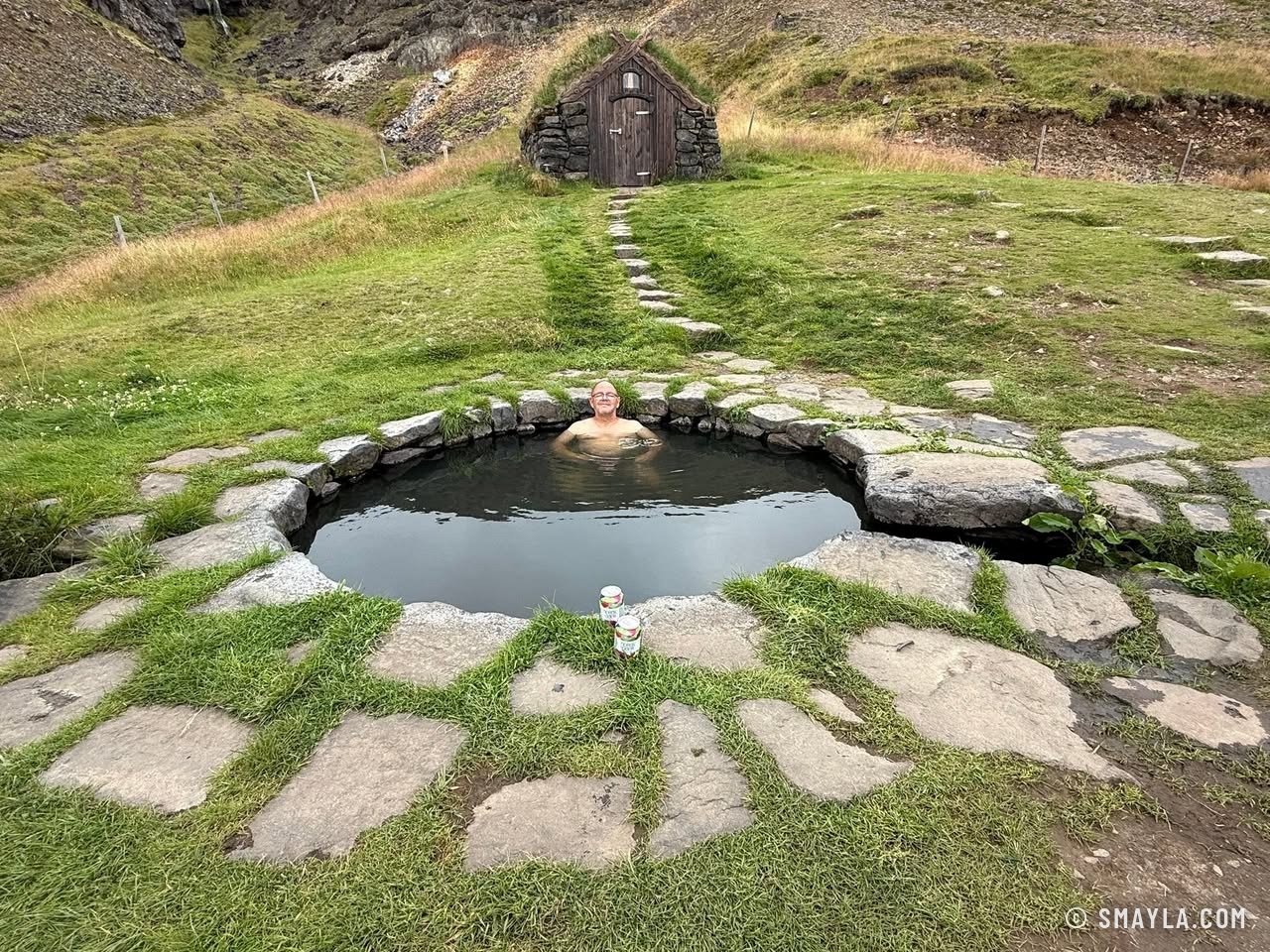
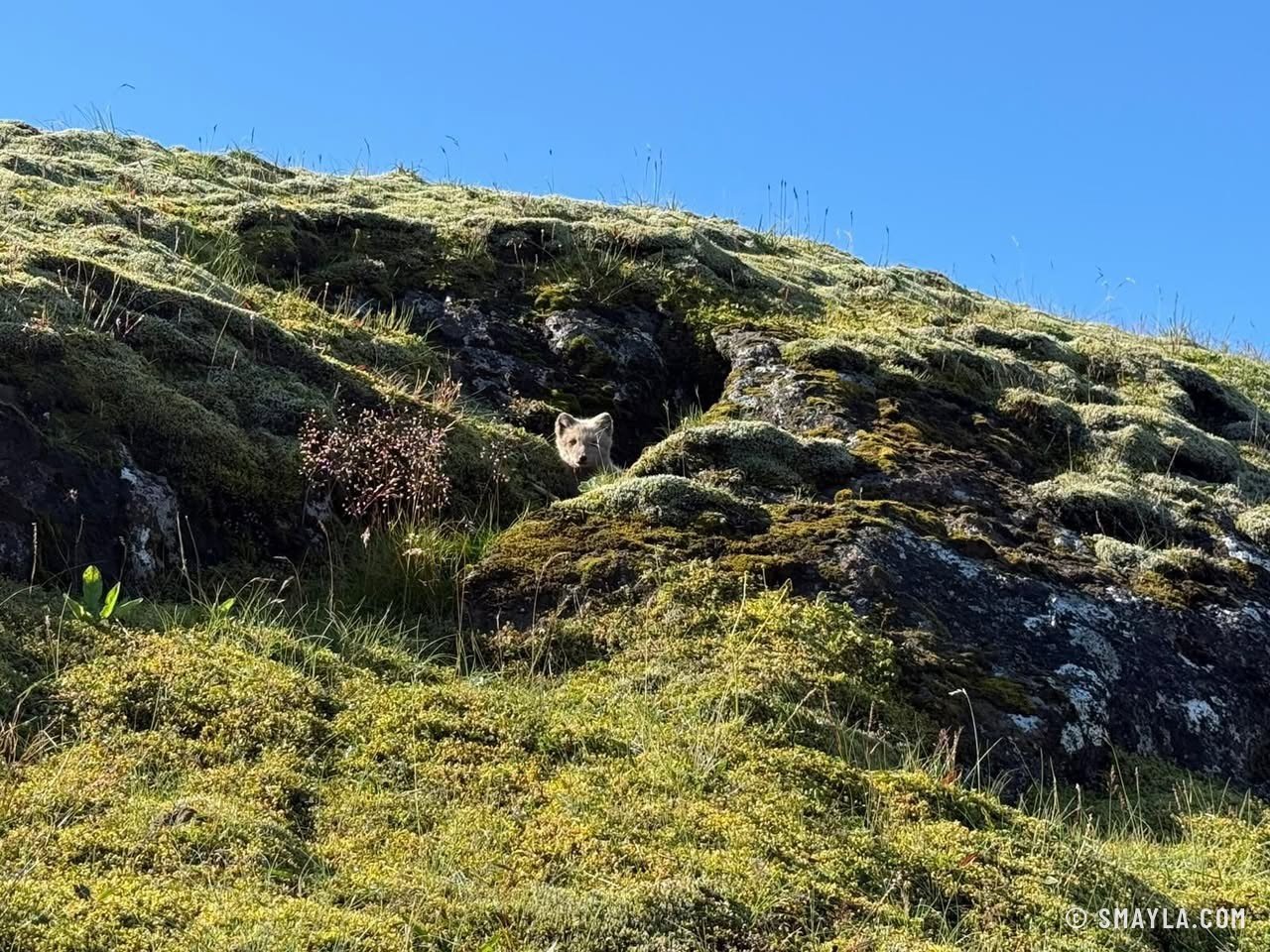
A fearless arctic fox cub lets us photograph it, an empty pool by a fjord is the bath of the day. Hornstrandir stays under the clouds, but Djúpavík, its seven houses and the ruins of its herring factory tell the story of the place. We end in the sun, with a hot pot all to ourselves.
15–18 August
Fire, ice, water, then Þakgil
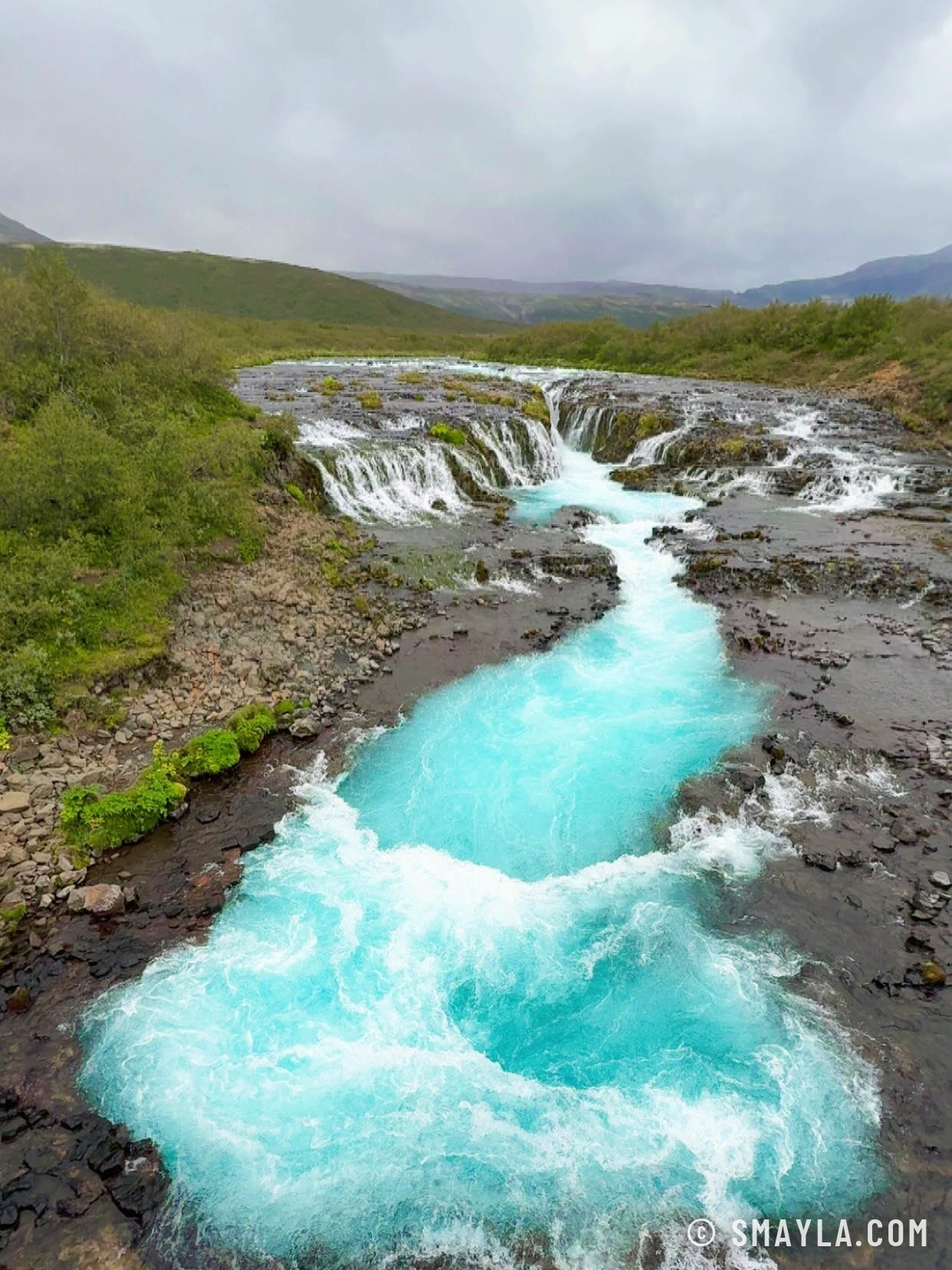
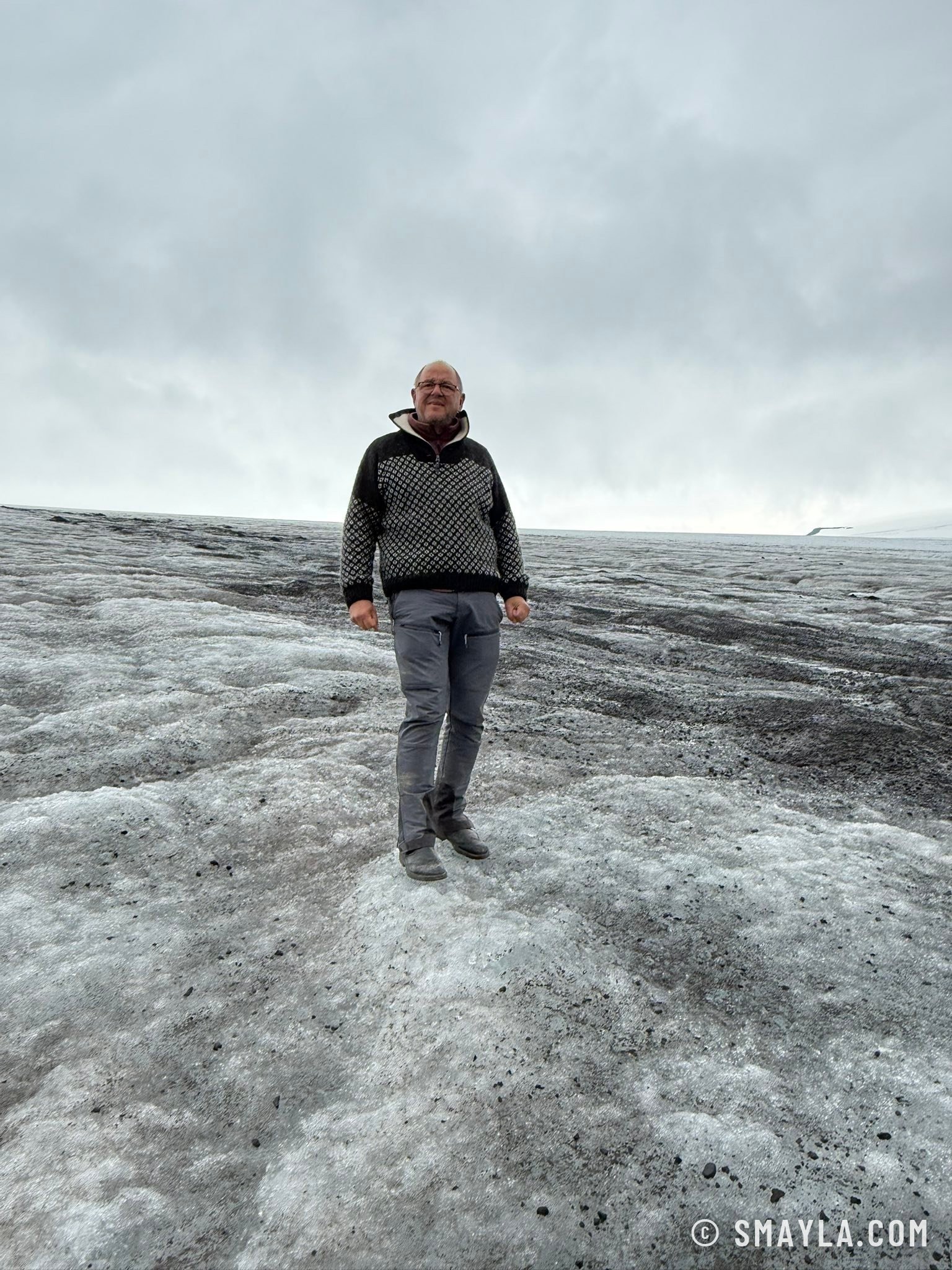
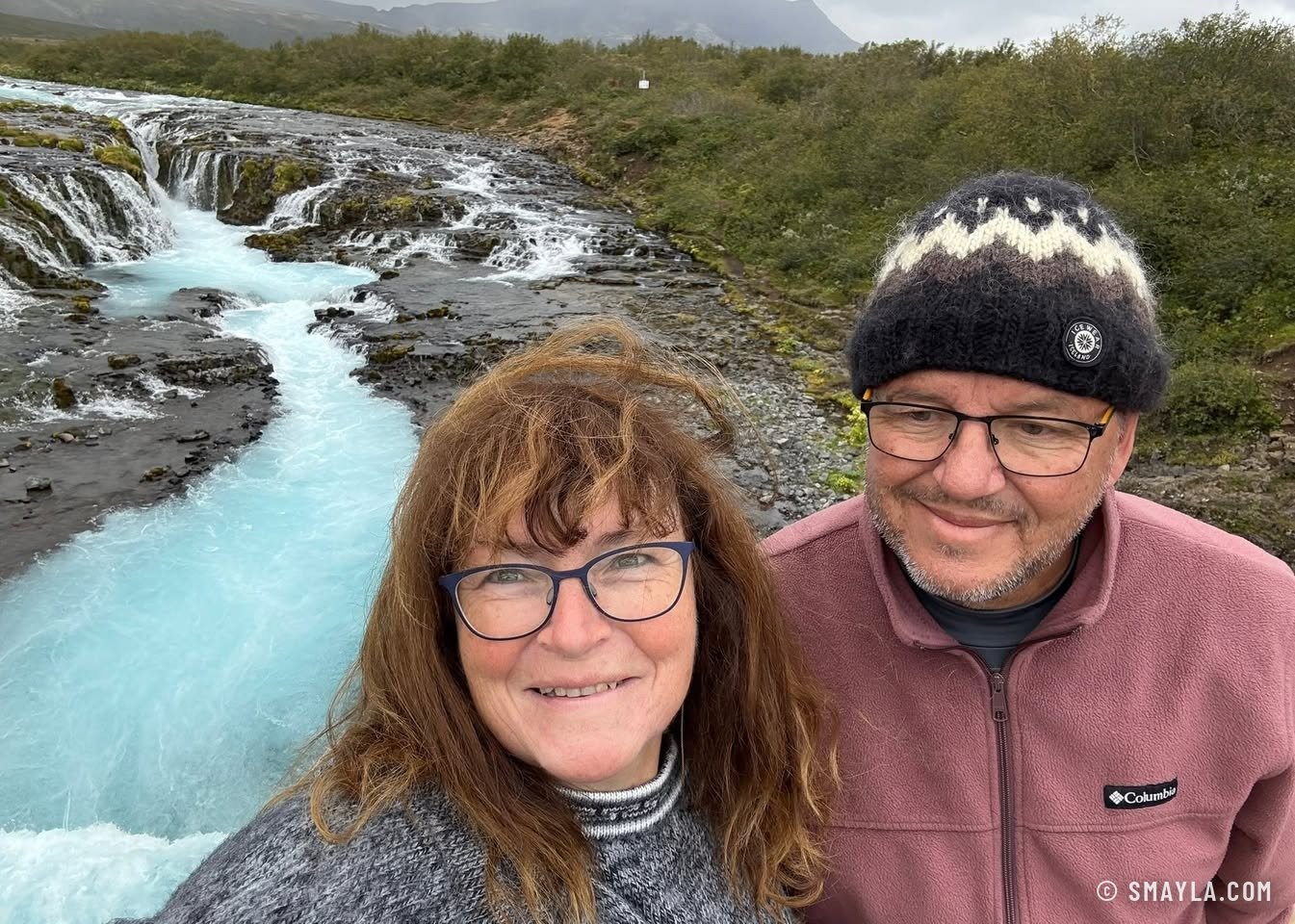
The real Icelandic mix. Deildartunguhver, the hot spring with the strongest flow in Europe, gushes out at 100 °C. Hraunfossar, then the Kaldidalur track along Langjökull, where we climb up for a few steps on the ice. Down to Þingvellir, and to finish, 7 km there and back along a crystal-clear river to Brúarfoss.
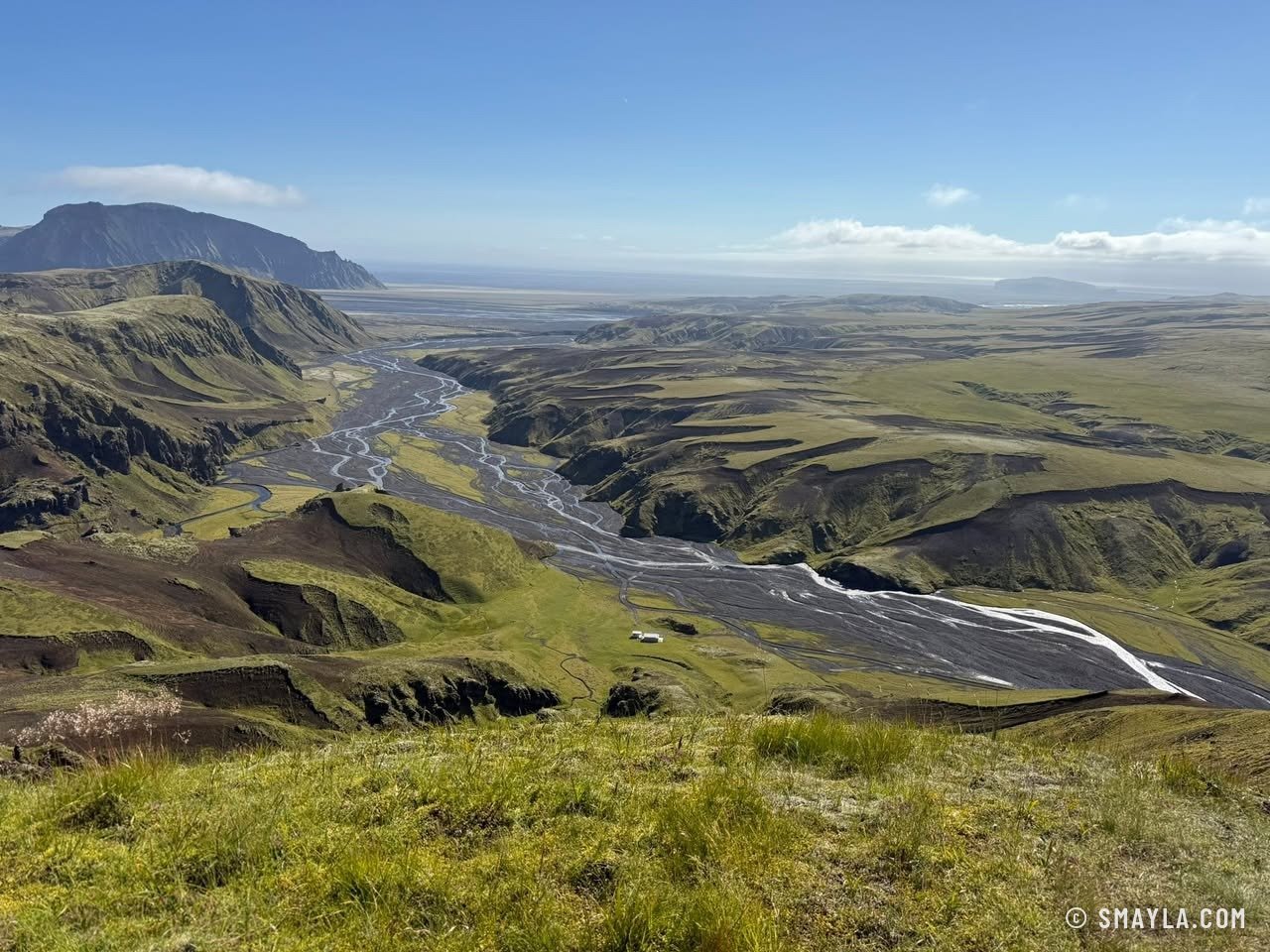
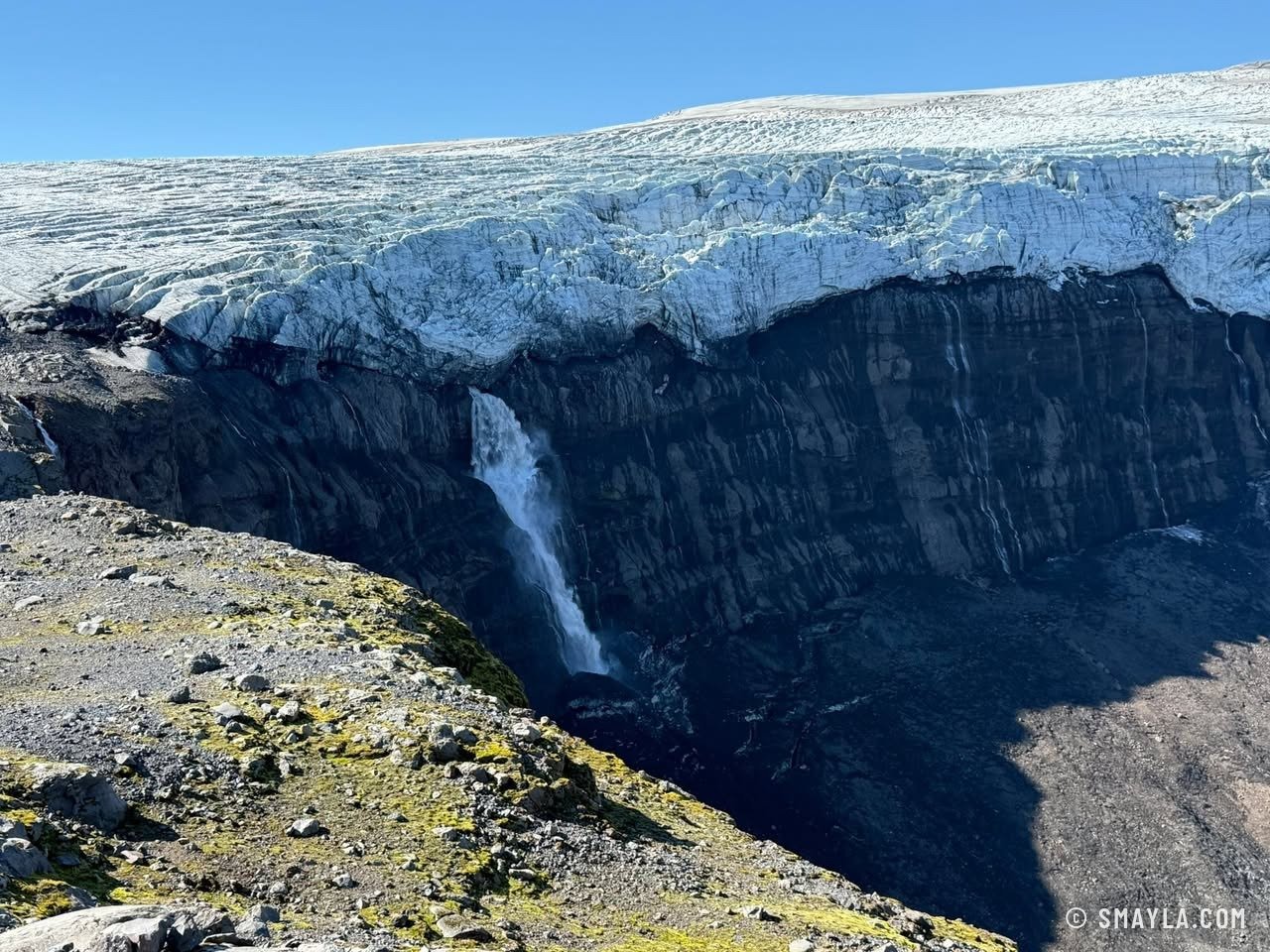
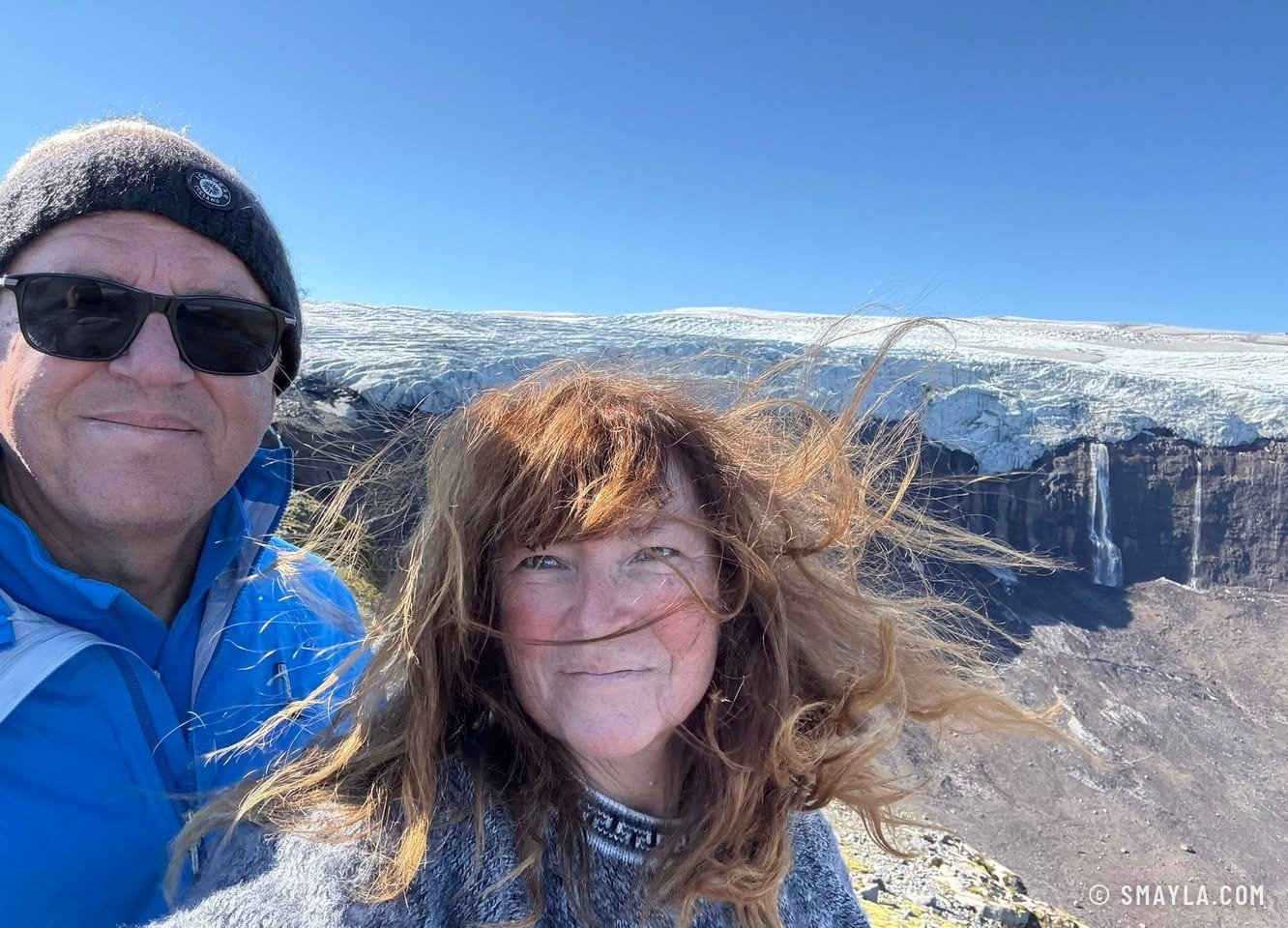
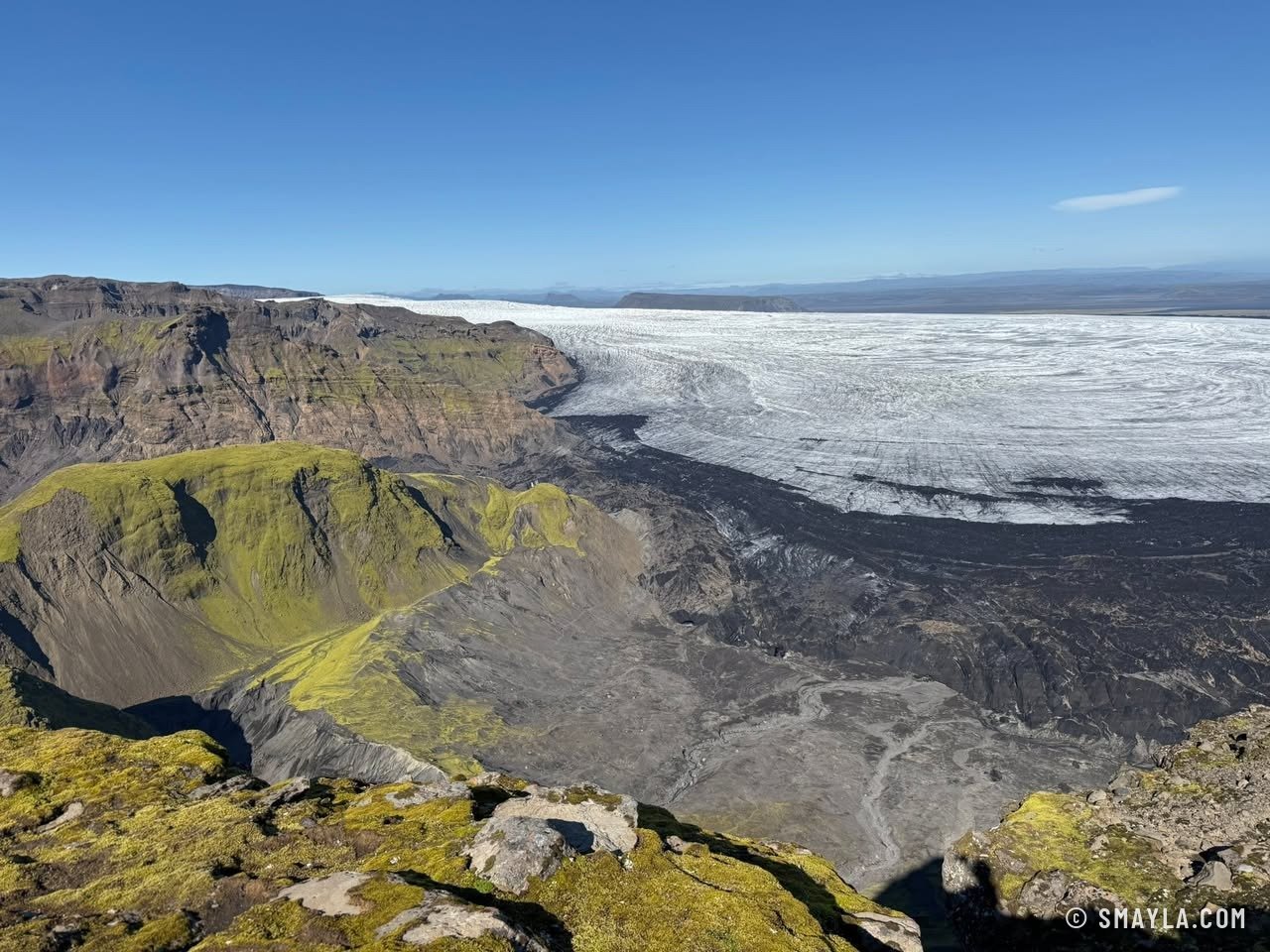
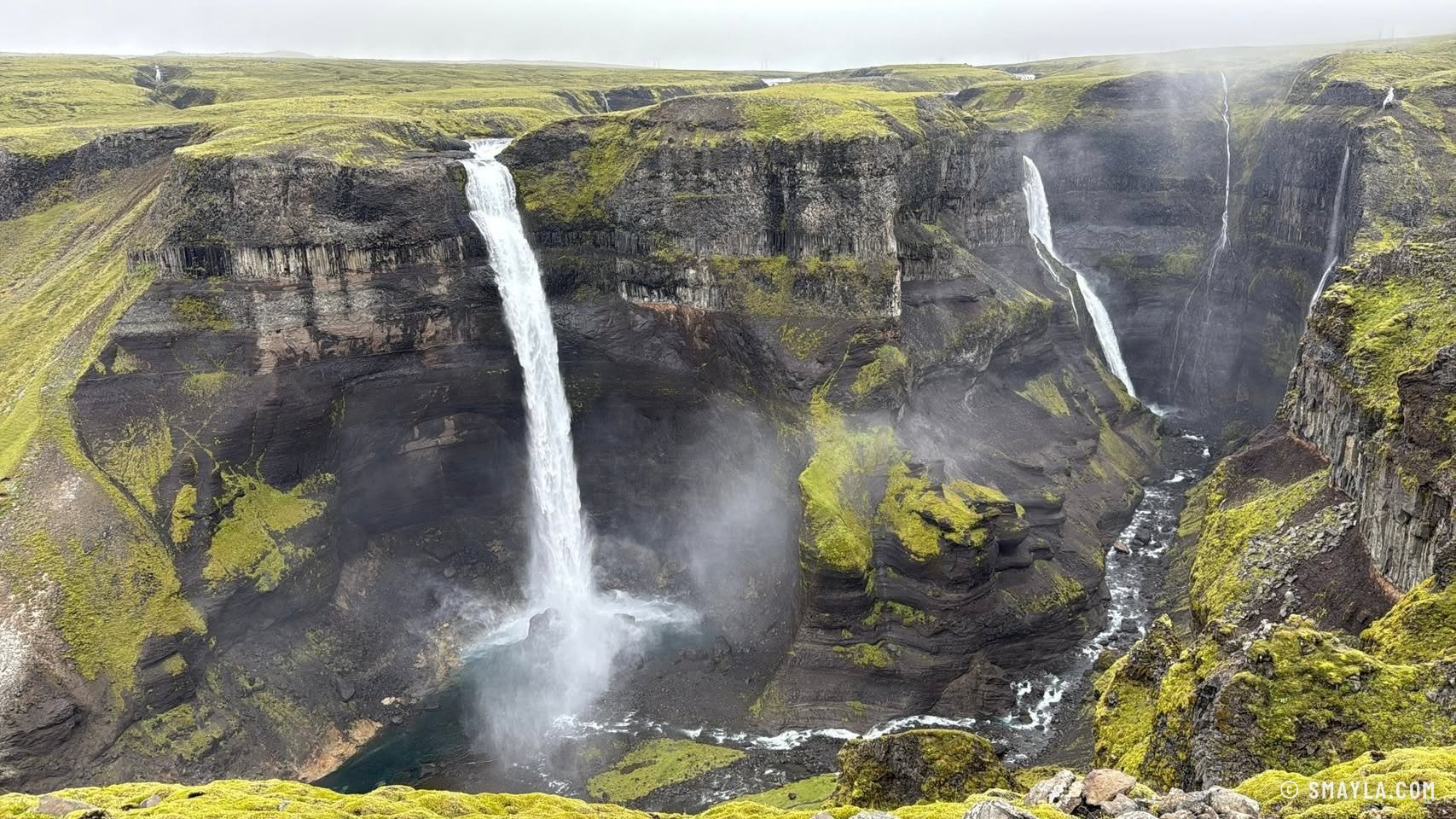
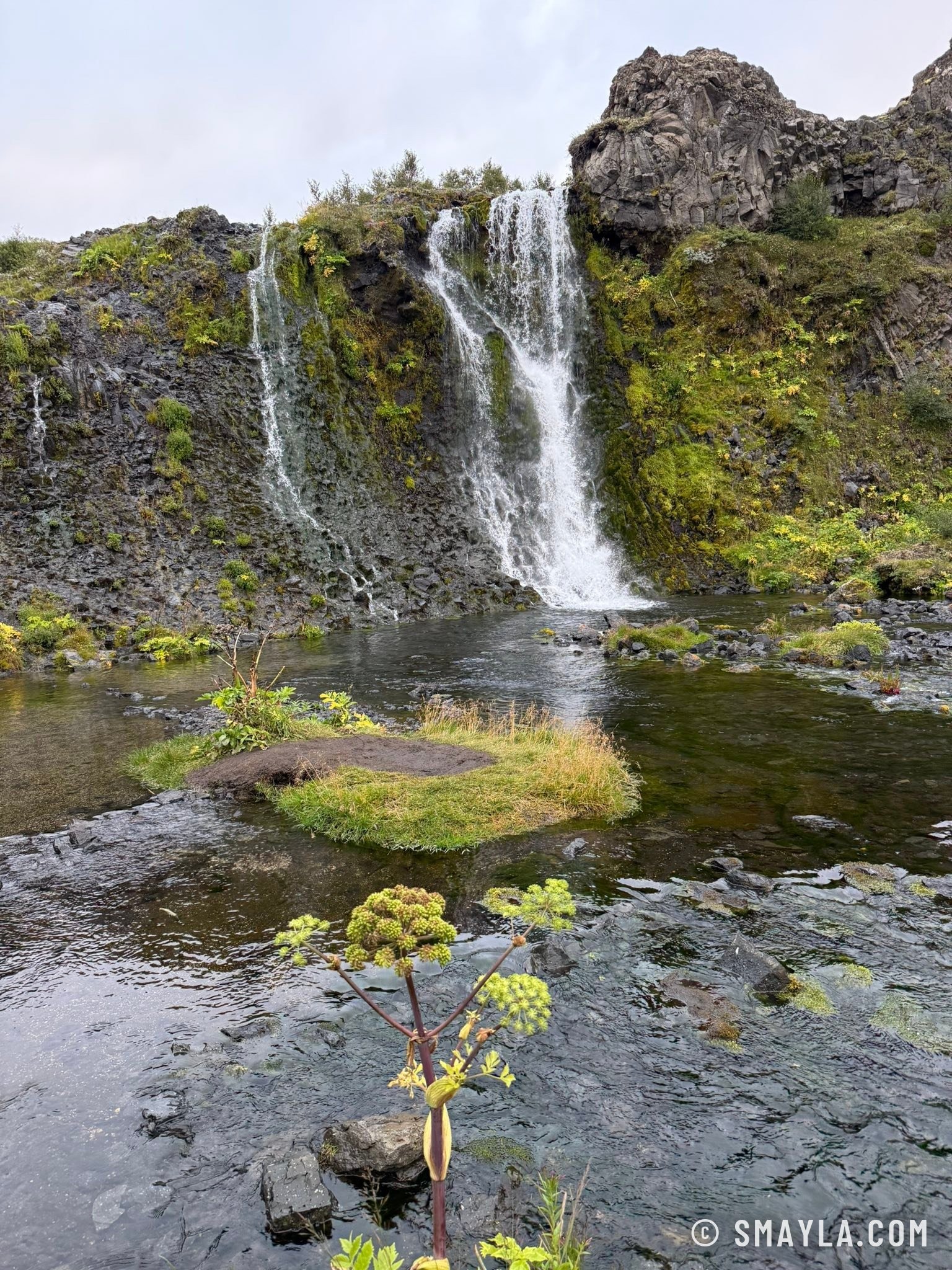
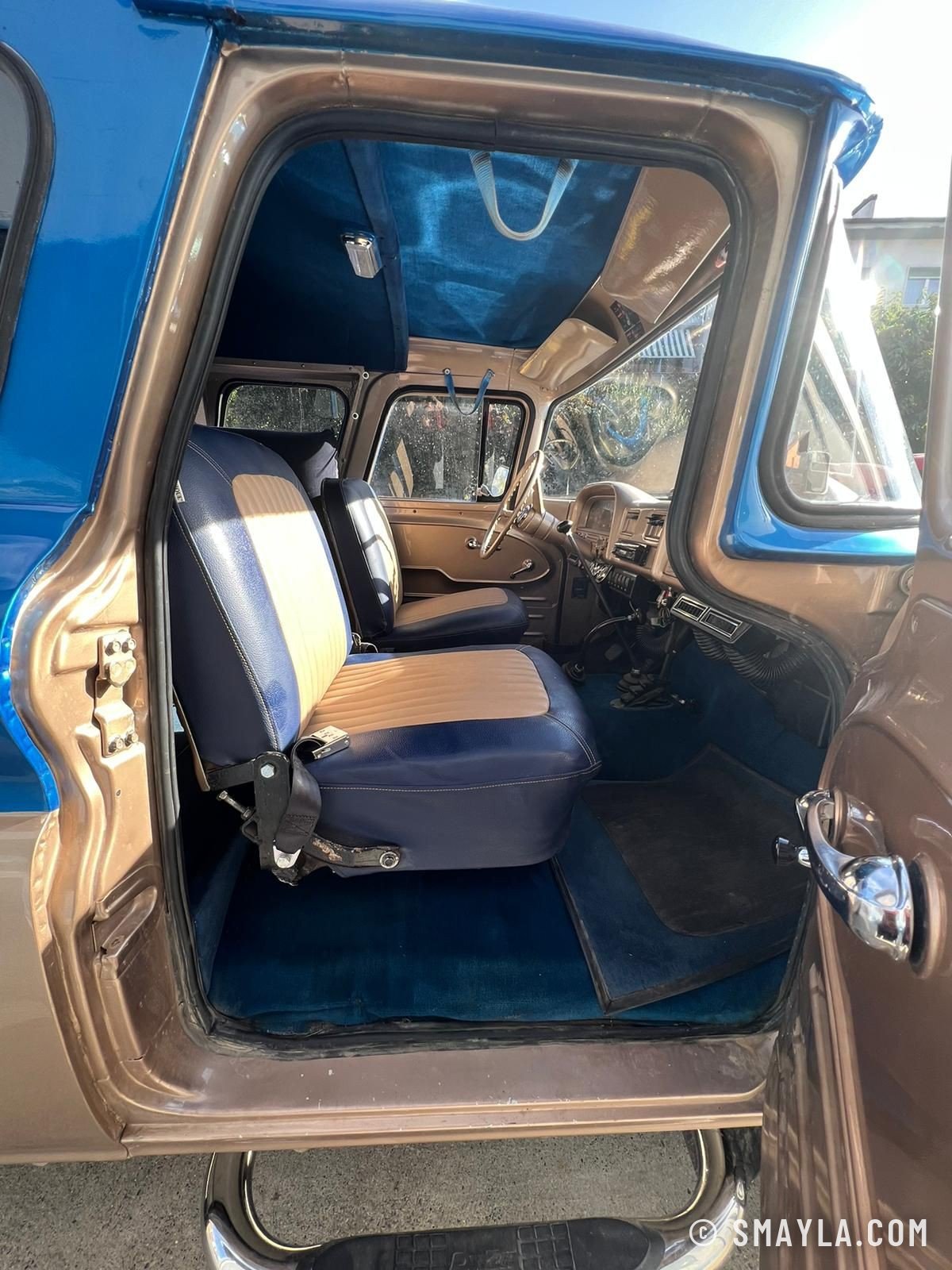
Þakgil, the hike Christian had been talking about for months: more than 18 km and a good 1,000 m of ascent, two fords to start with, dizzying passages, and a show like no other. Then the leak returns, and the Chevy needs water at regular stops. Vík, Skógafoss and its crowds, and two discoveries: Háifoss, one of Iceland's highest falls, and Gjáin.
22–24 August
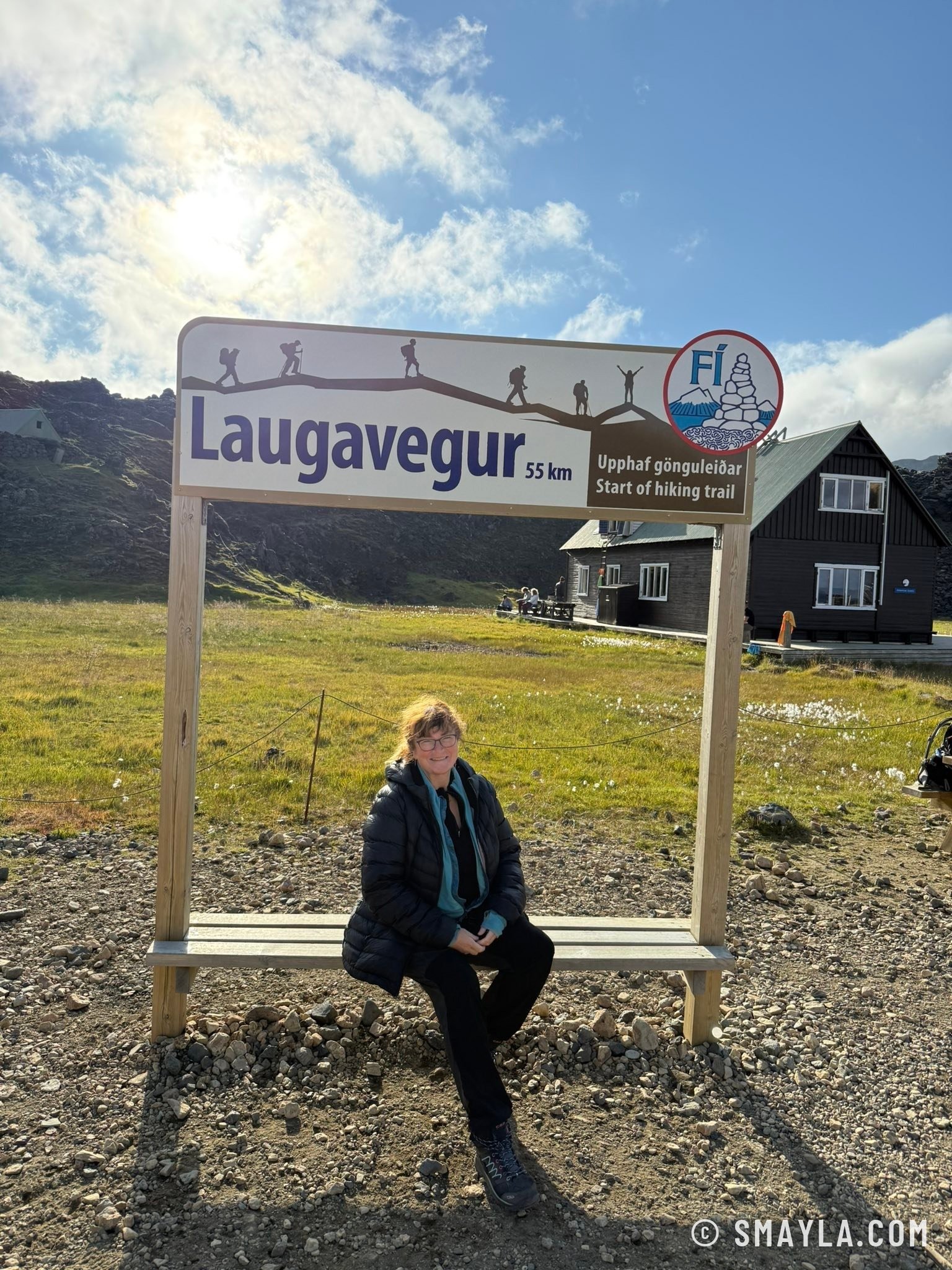
The Laugavegur, 55 km on foot
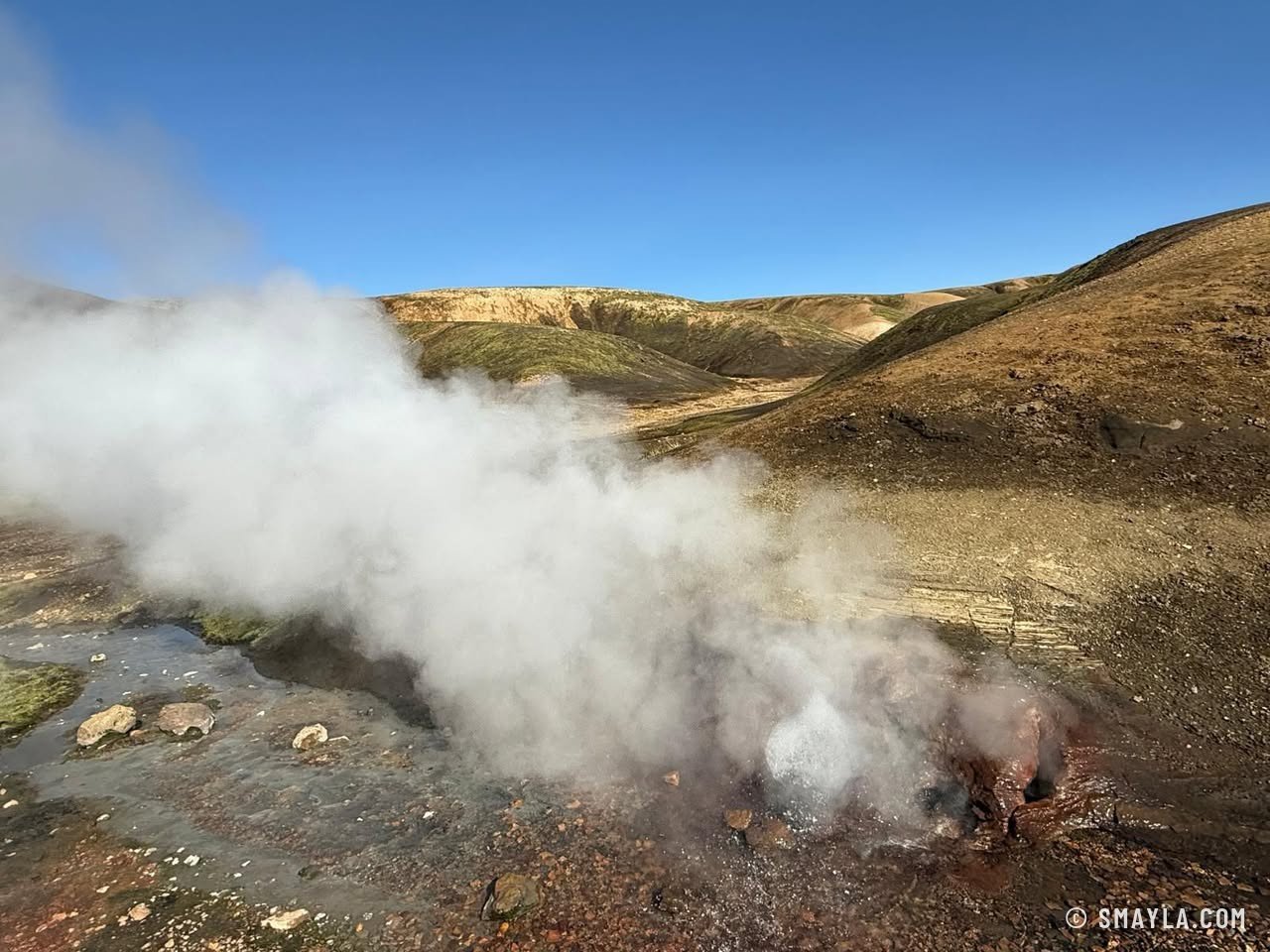
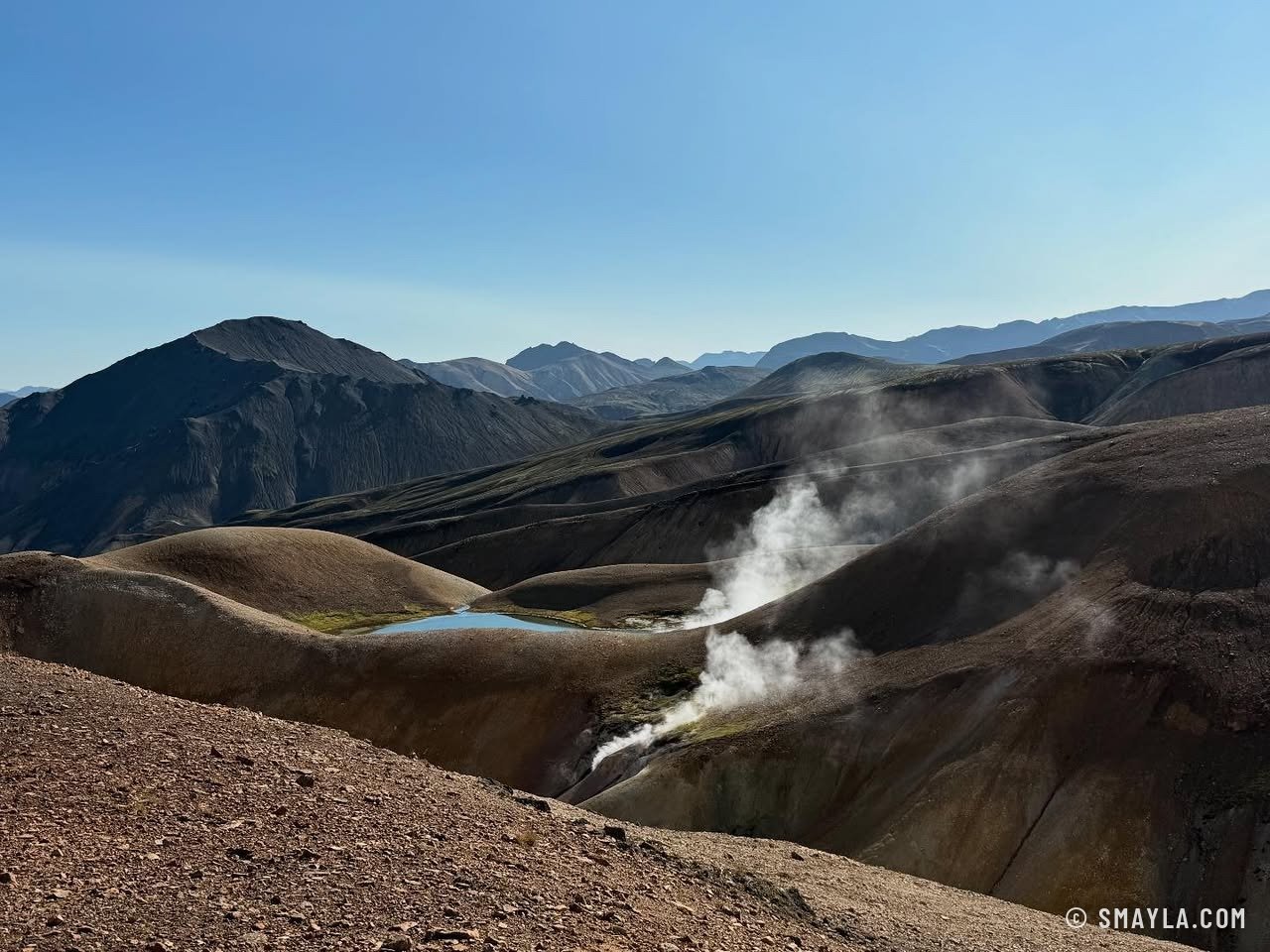
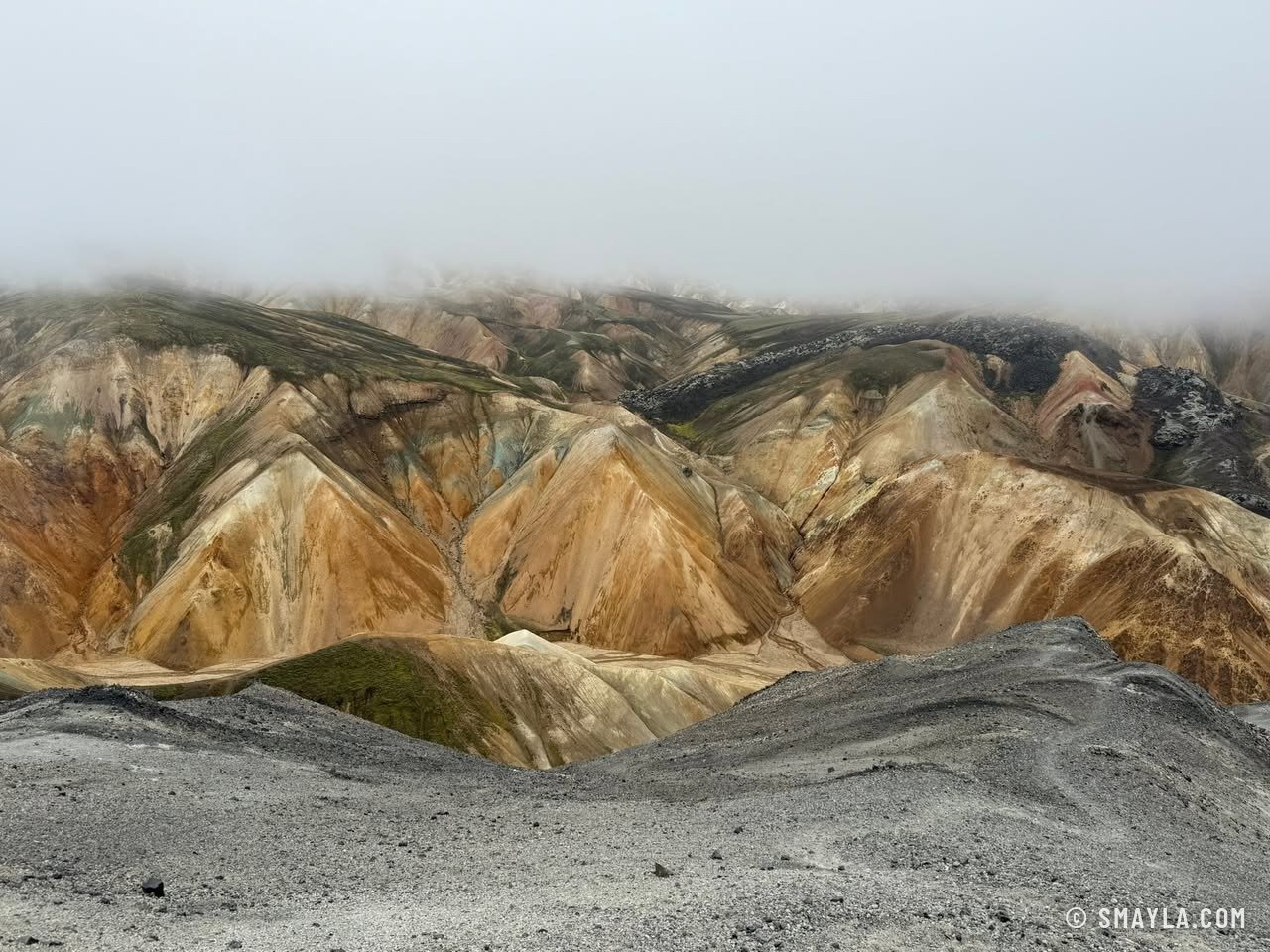
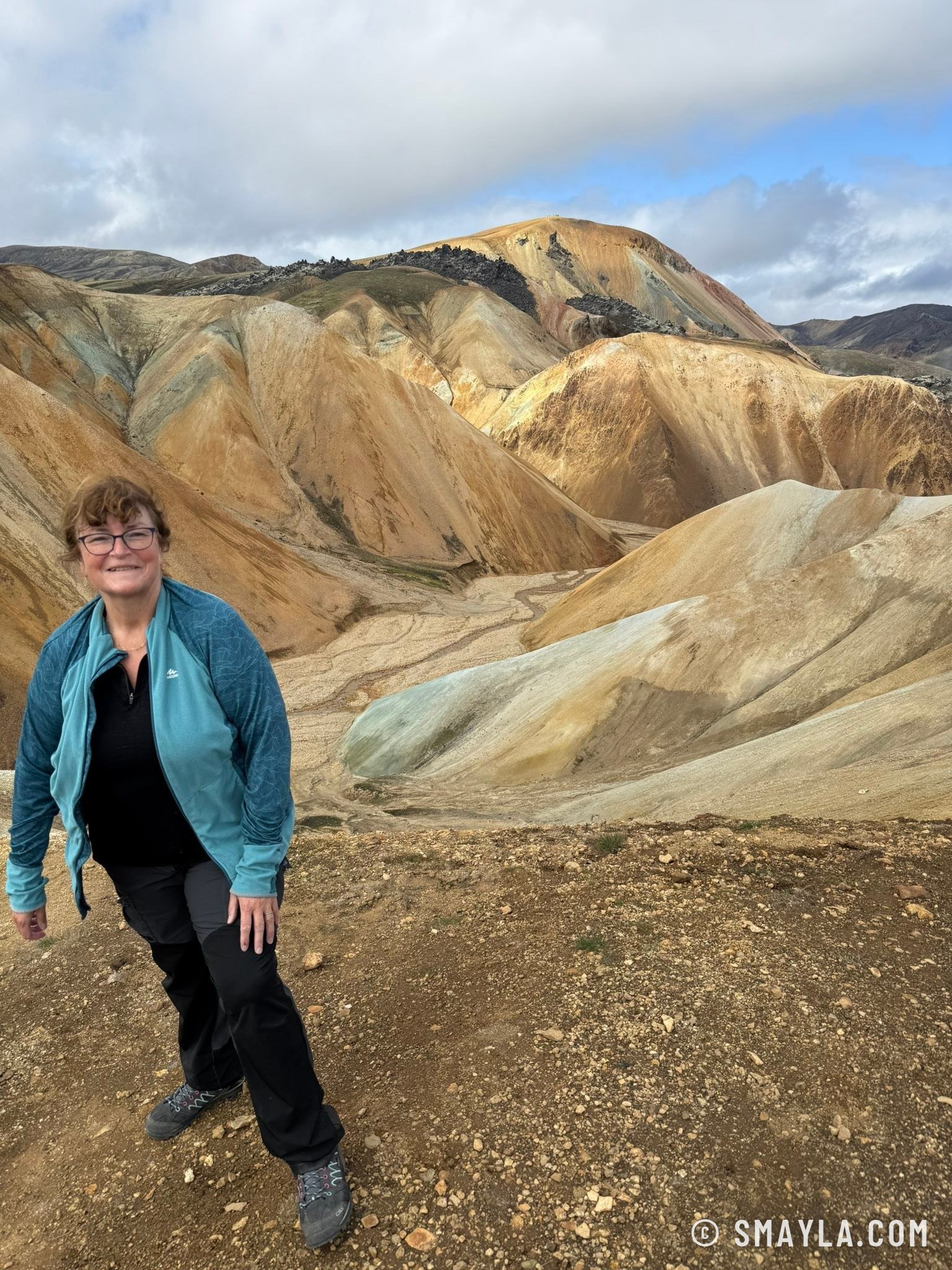
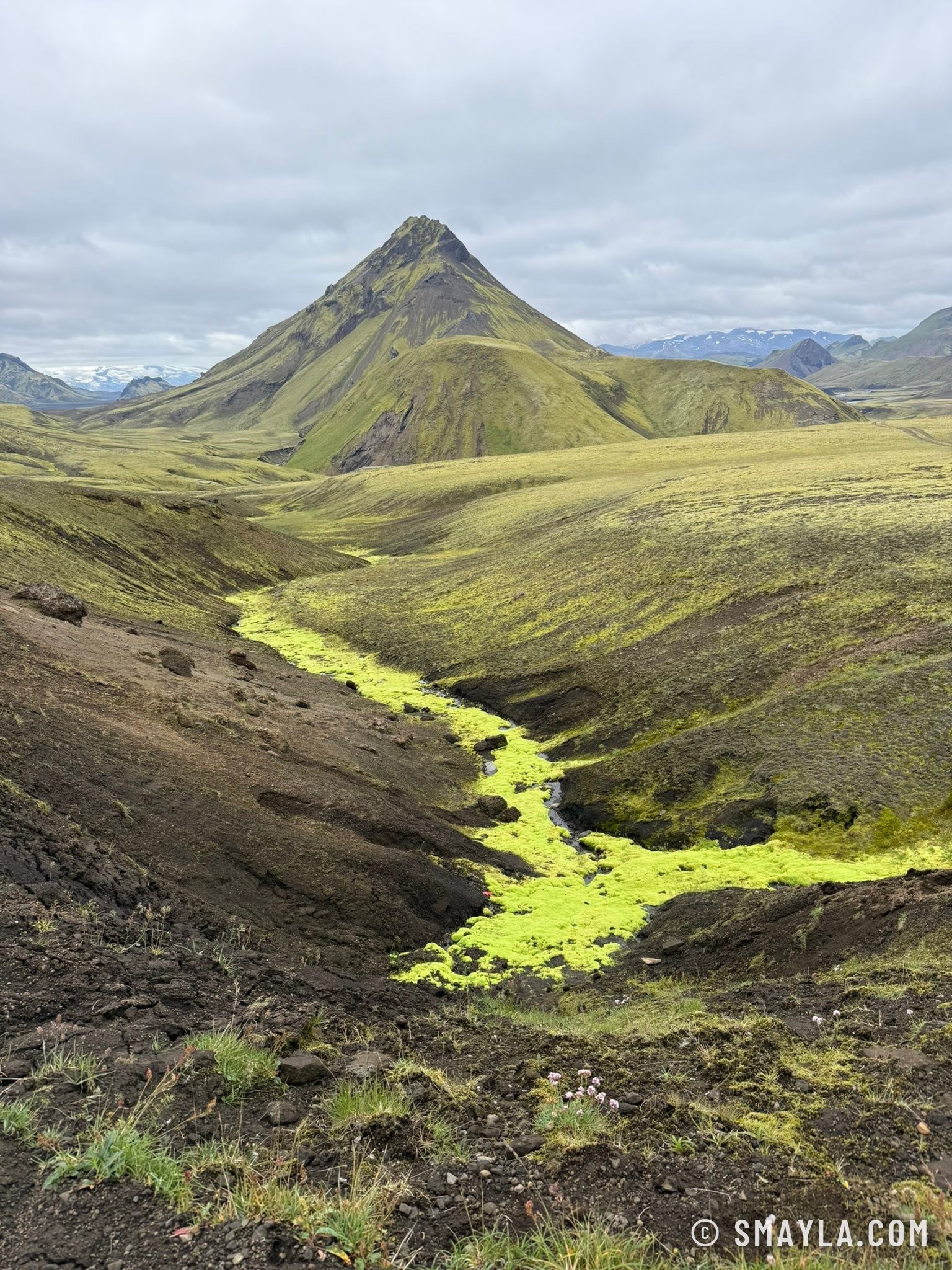
THE great adventure, the one we had talked about for more than ten years, booked at the start of the year. The Chevy stays with the mechanic in Hella, the bus drops us at Landmannalaugar. A first loop over Bláhnúkur, 943 m: fog on the summit, then on the way down the famous coloured mountains open up before us.
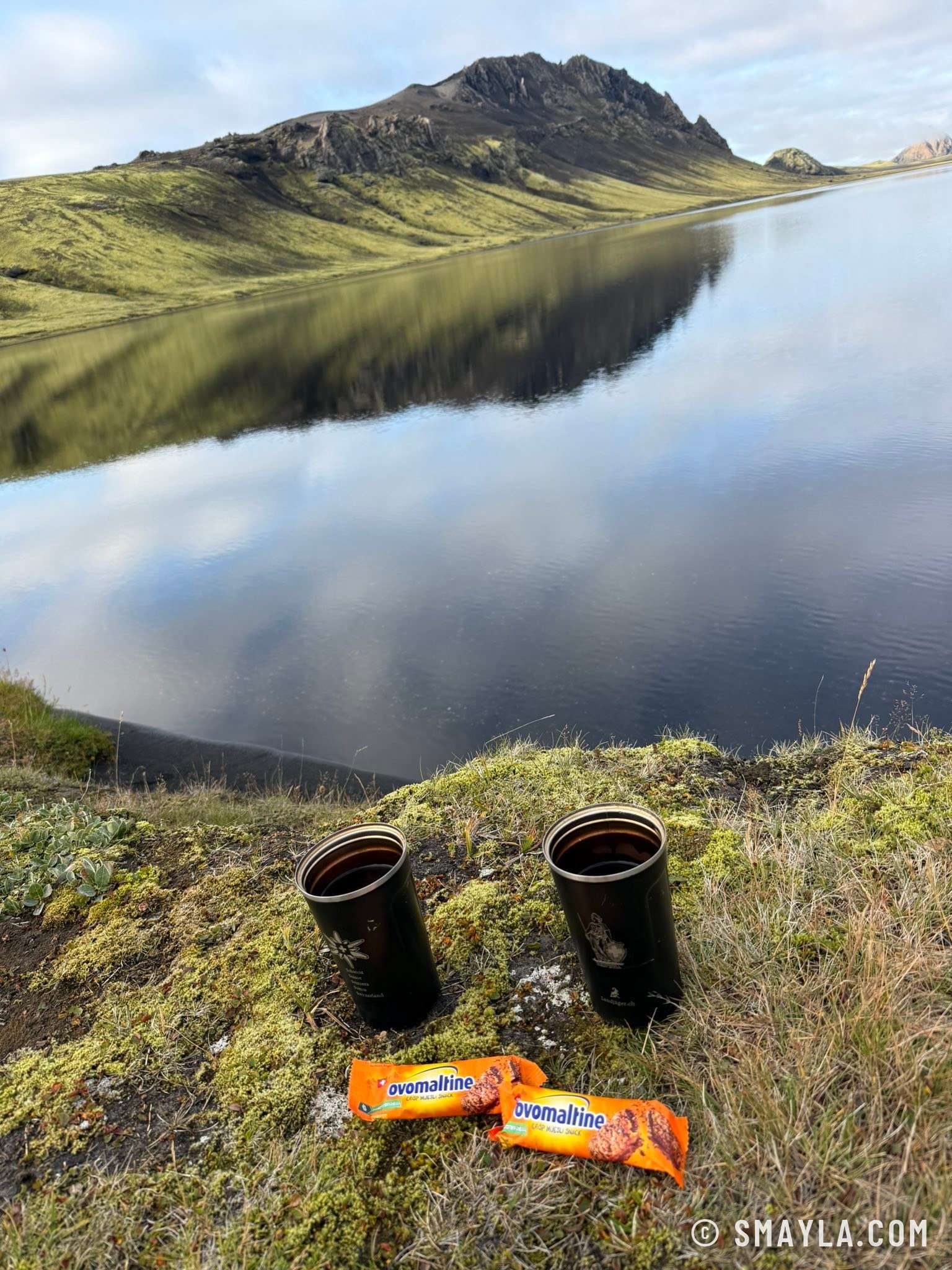
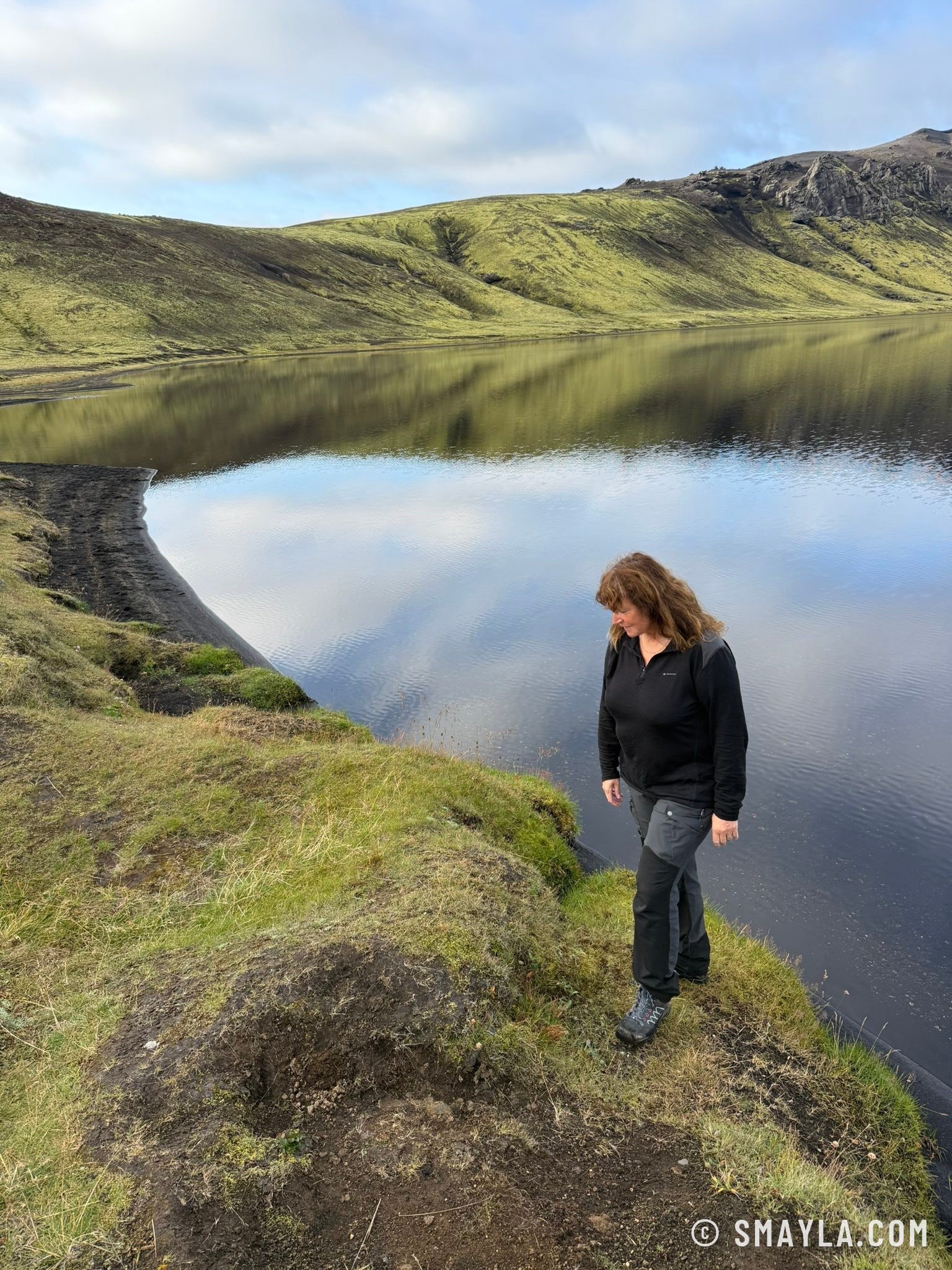
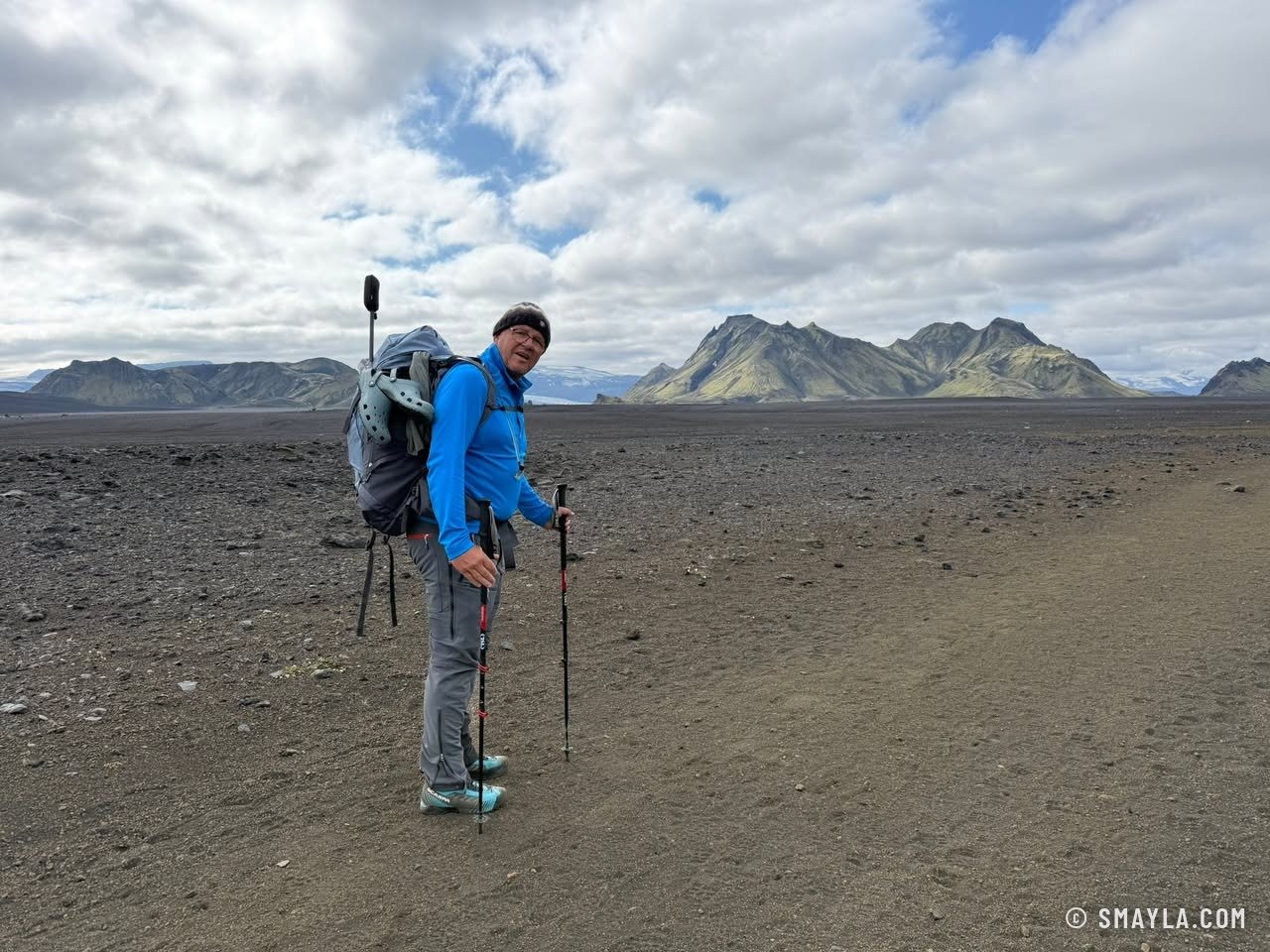
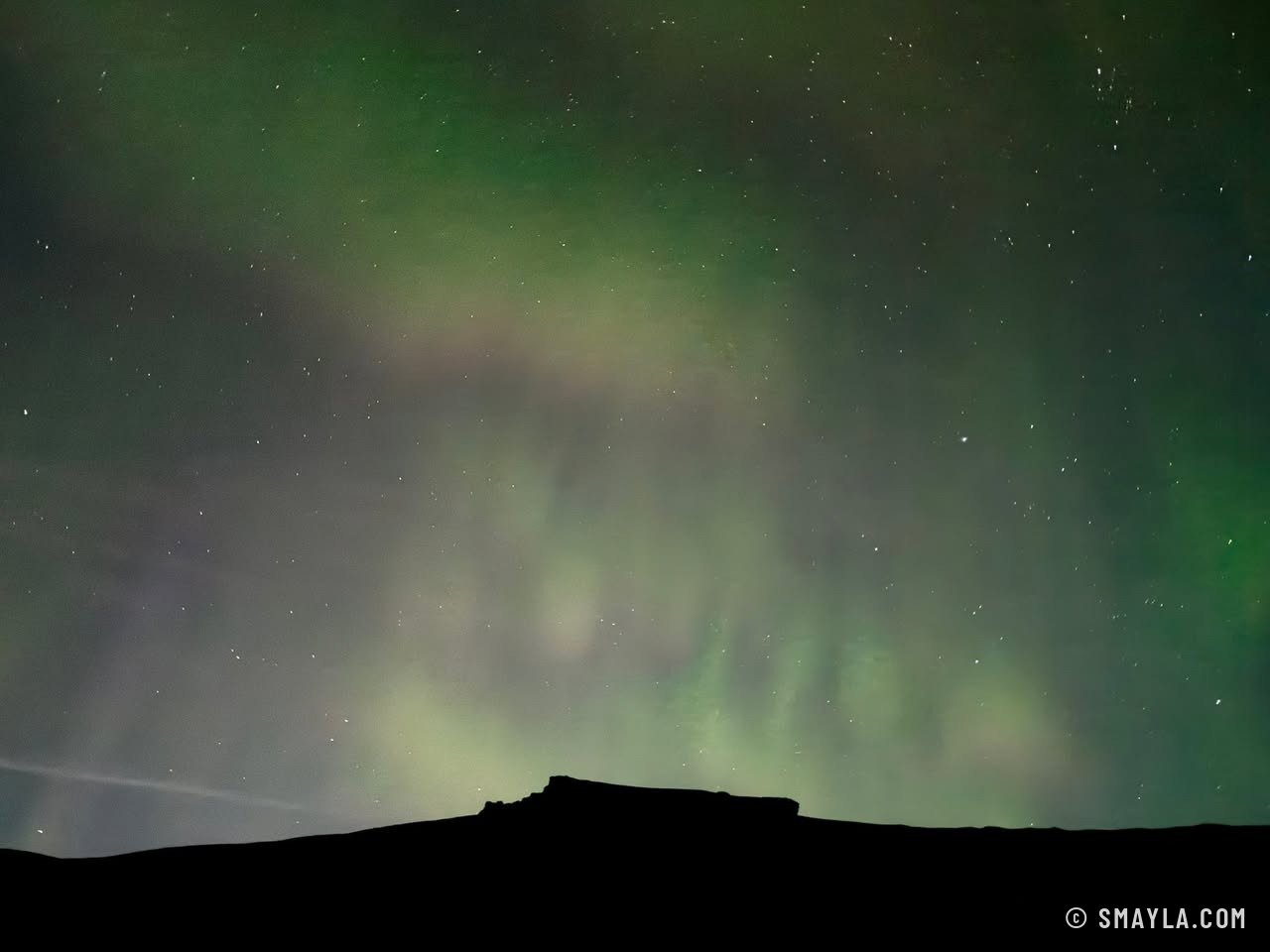
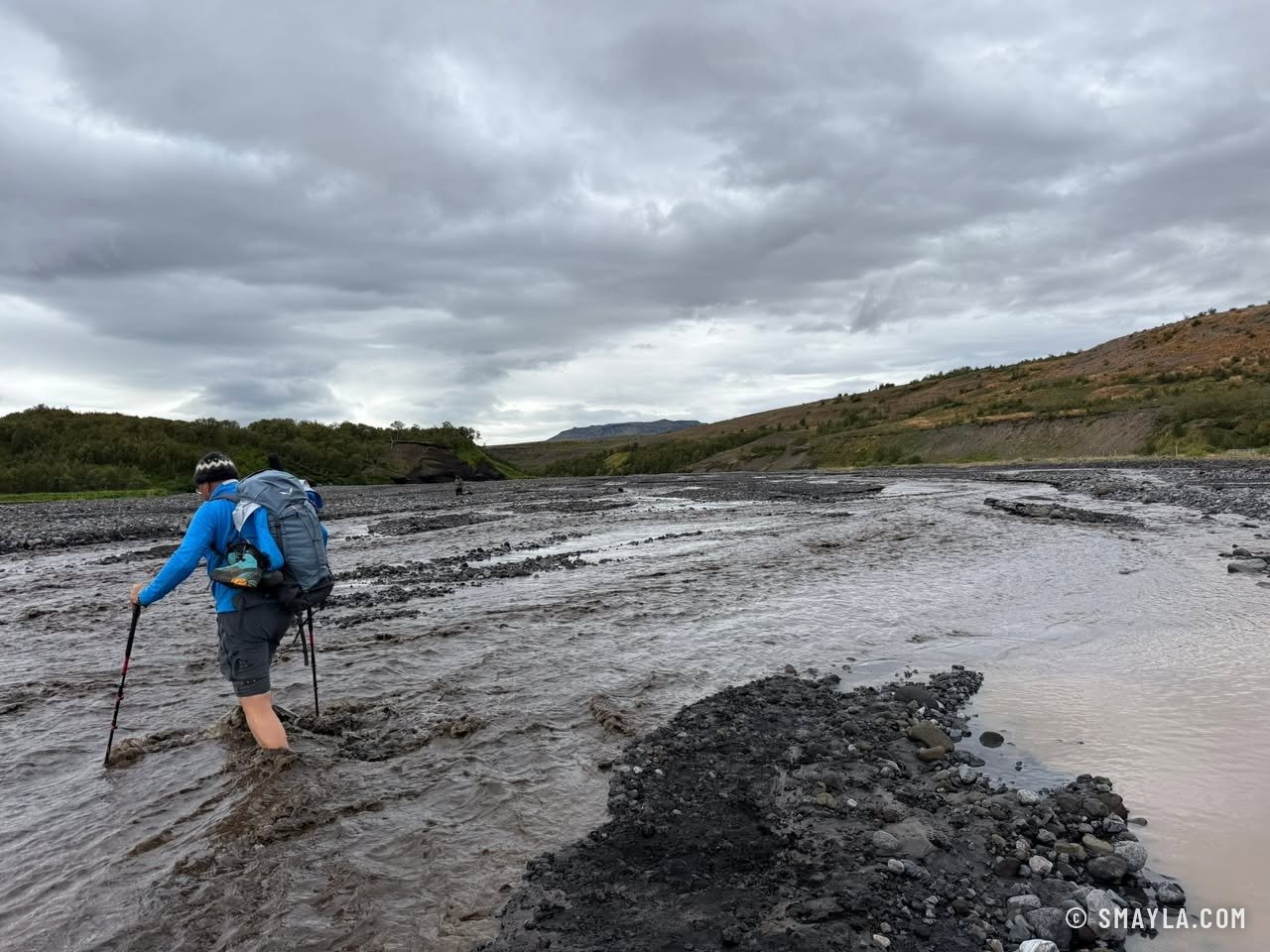
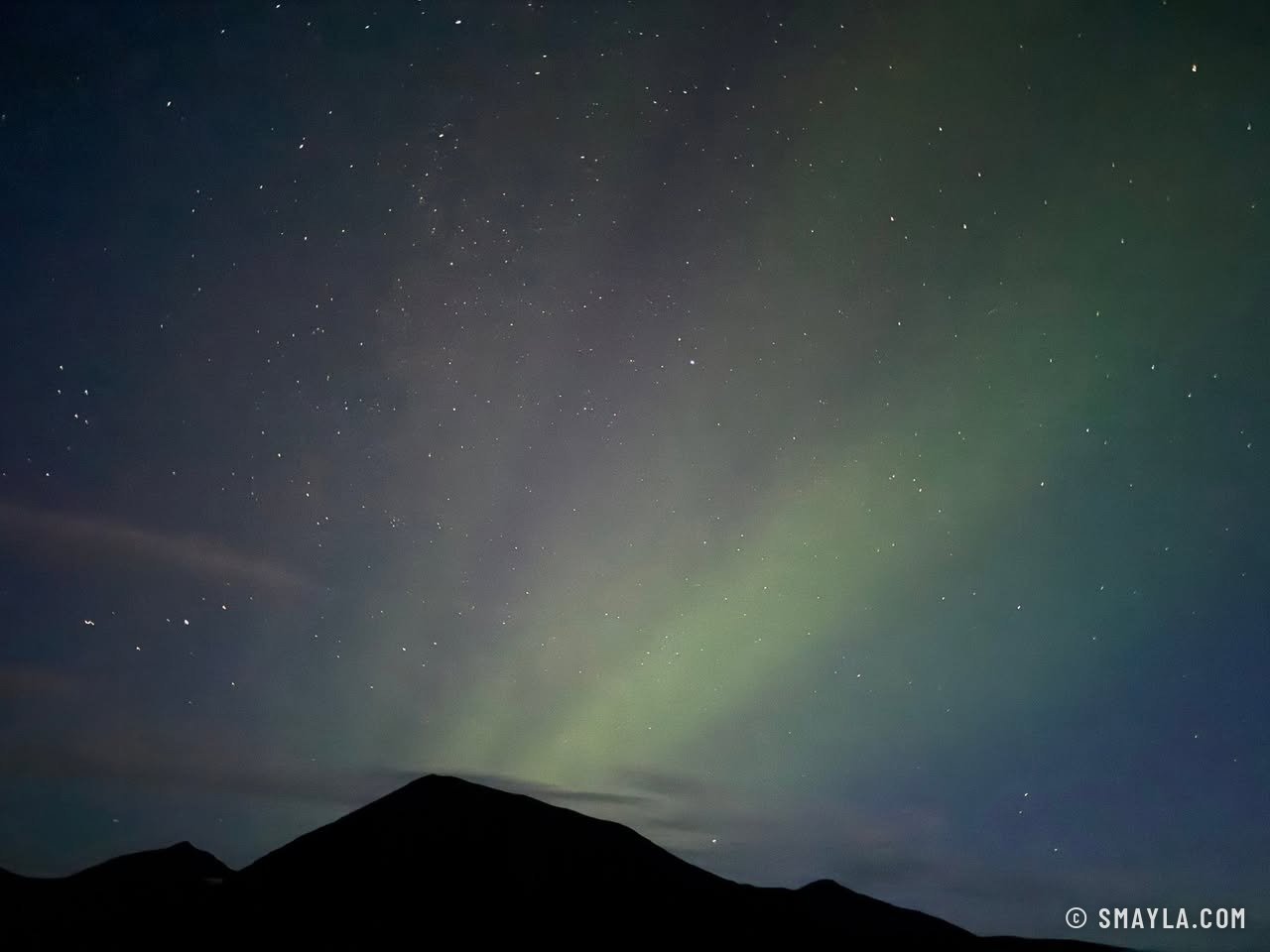
The next day, the first step of the 55 km. The Stórihver hot springs, a detour over Brennisteinsalda, a big snowfield, the pass at 1,050 m, Hrafntinnusker. The day after, breakfast by a mirror lake, then the stage of deserts and icy fords. At 2 a.m., in flip-flops among the scree, Emmanuelle sees the first northern lights of the trip.
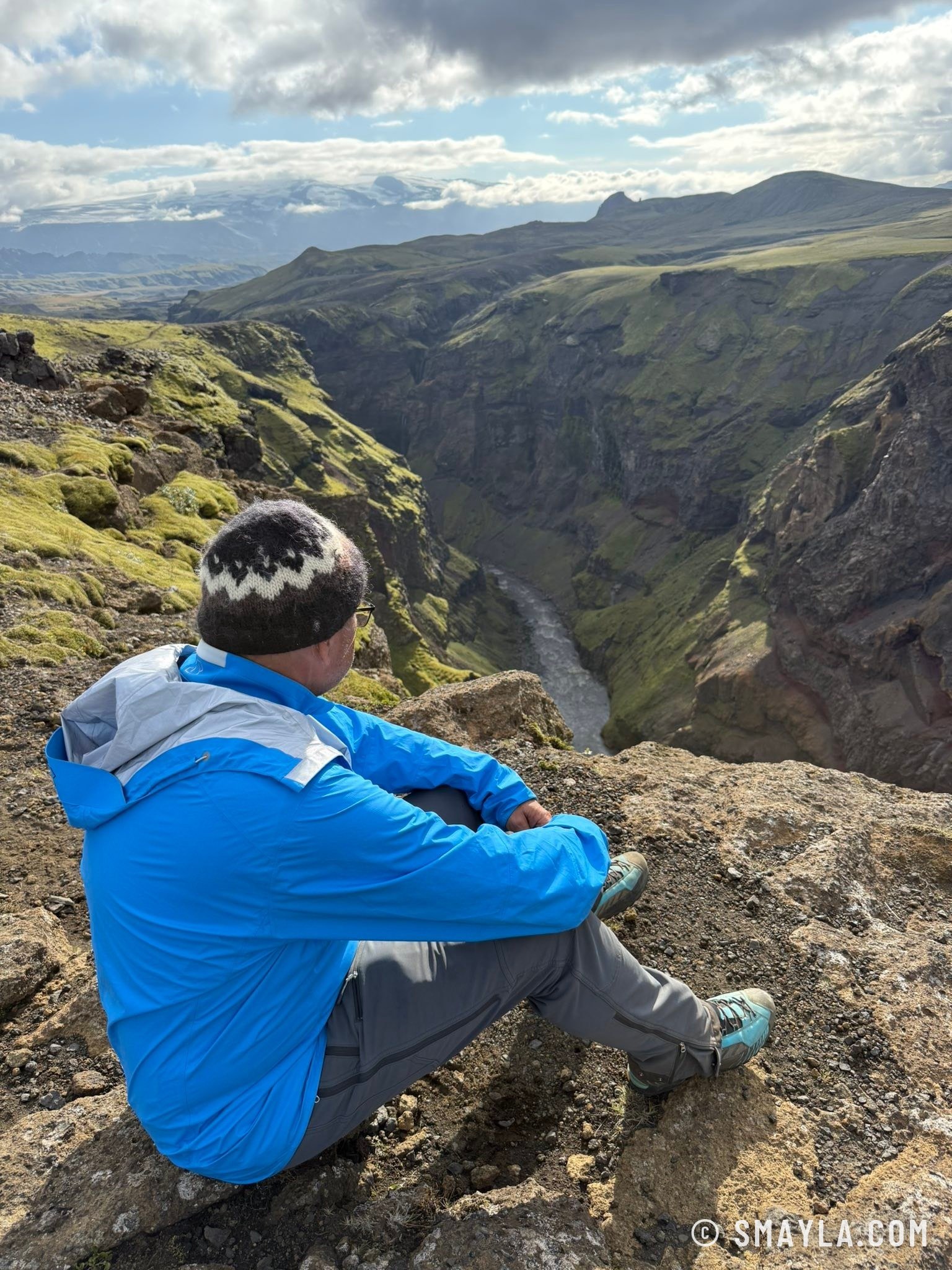
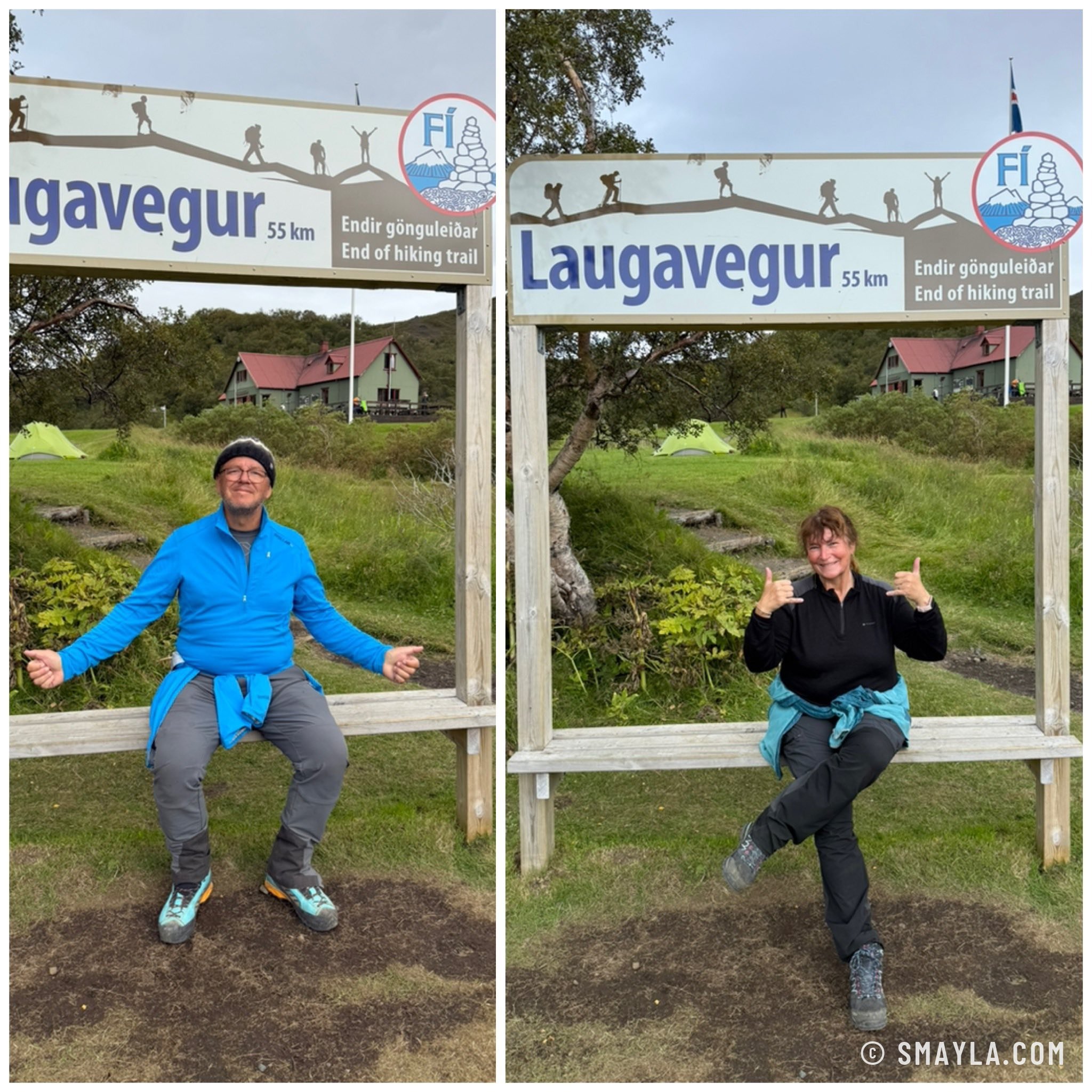
Last day, cold and windy, at the foot of Mýrdalsjökull, one last freezing ford, the birch forest, and Þórsmörk, an incredible end to an incredible adventure. The next day, the short climb up Valahnúkur as well.
 The journalFaroes and Iceland, a summer of ice and fireAbroad · By 4×4 · Summer 2017Read the journal →
 The journalIceland 2021, six weeks in a Chevrolet C30Abroad · By 4×4 · August and September 2021Read the journal →
25–26 August
The F26, waterfalls and Siglufjörður
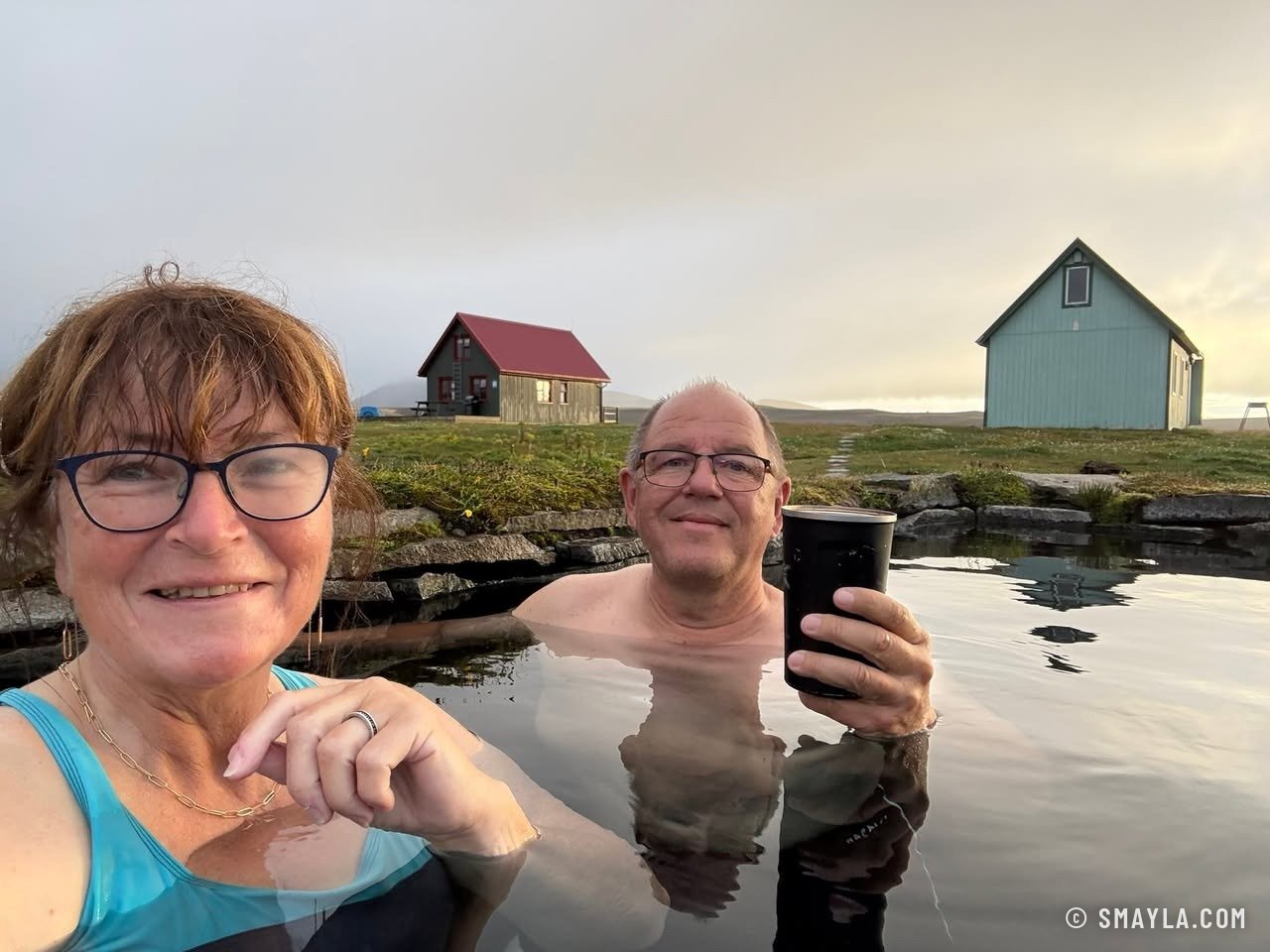
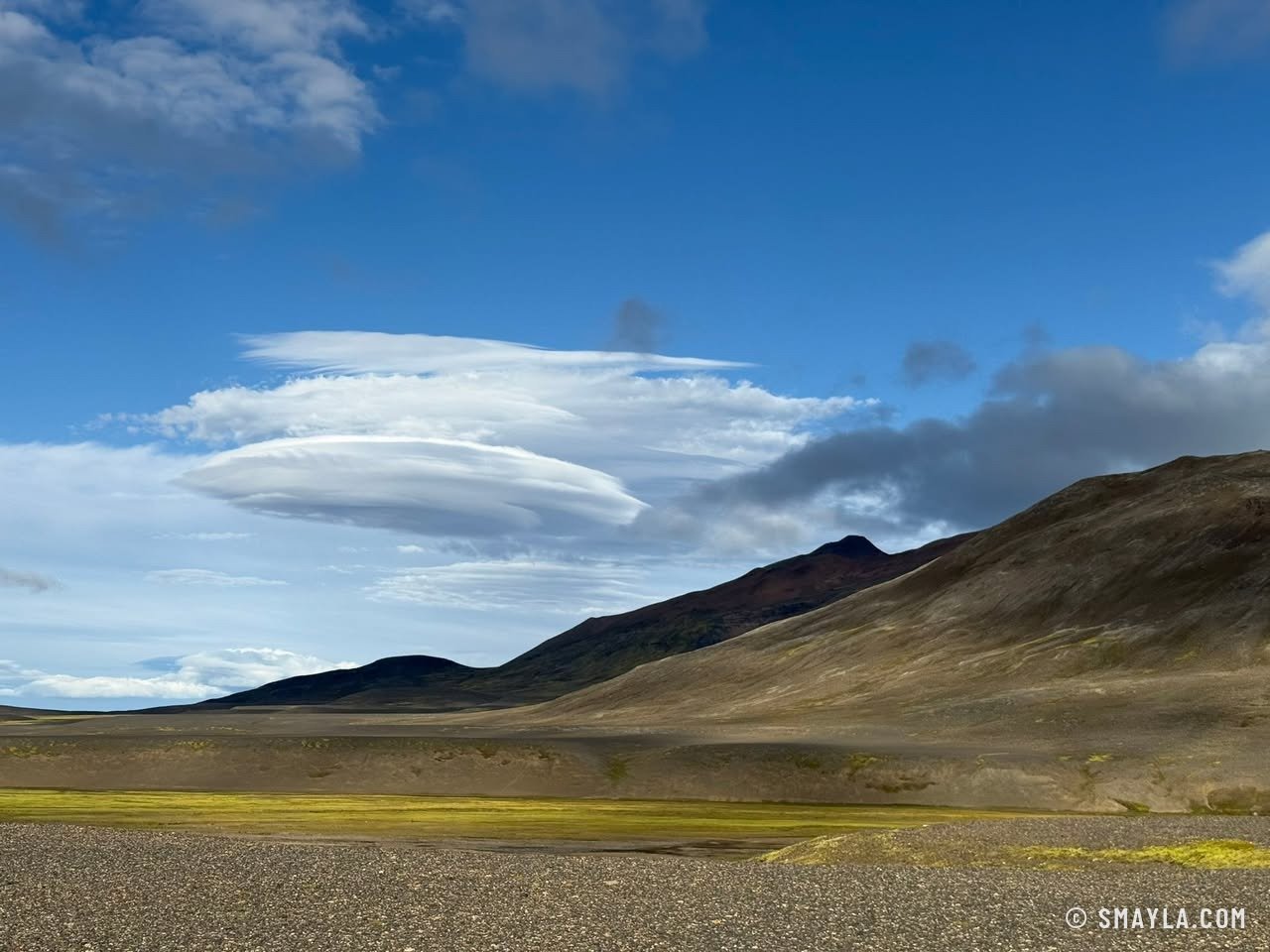
The Chevy collected in Hella, we head north on the F26, far more scenic than the F30 we already knew. Endless desert plateaus, lots of small fords, and Laugafell at the end of the day, with its hot pot.
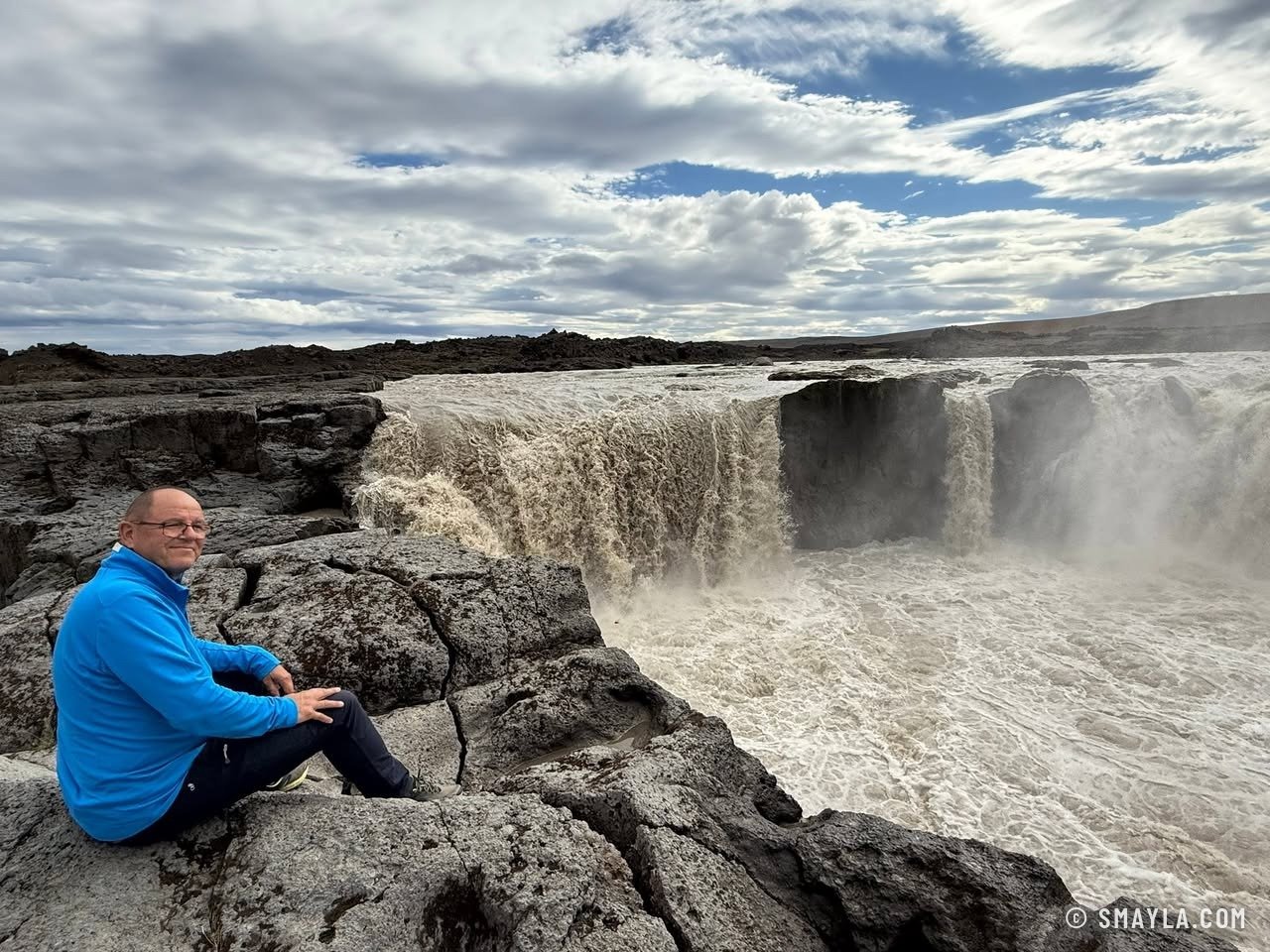
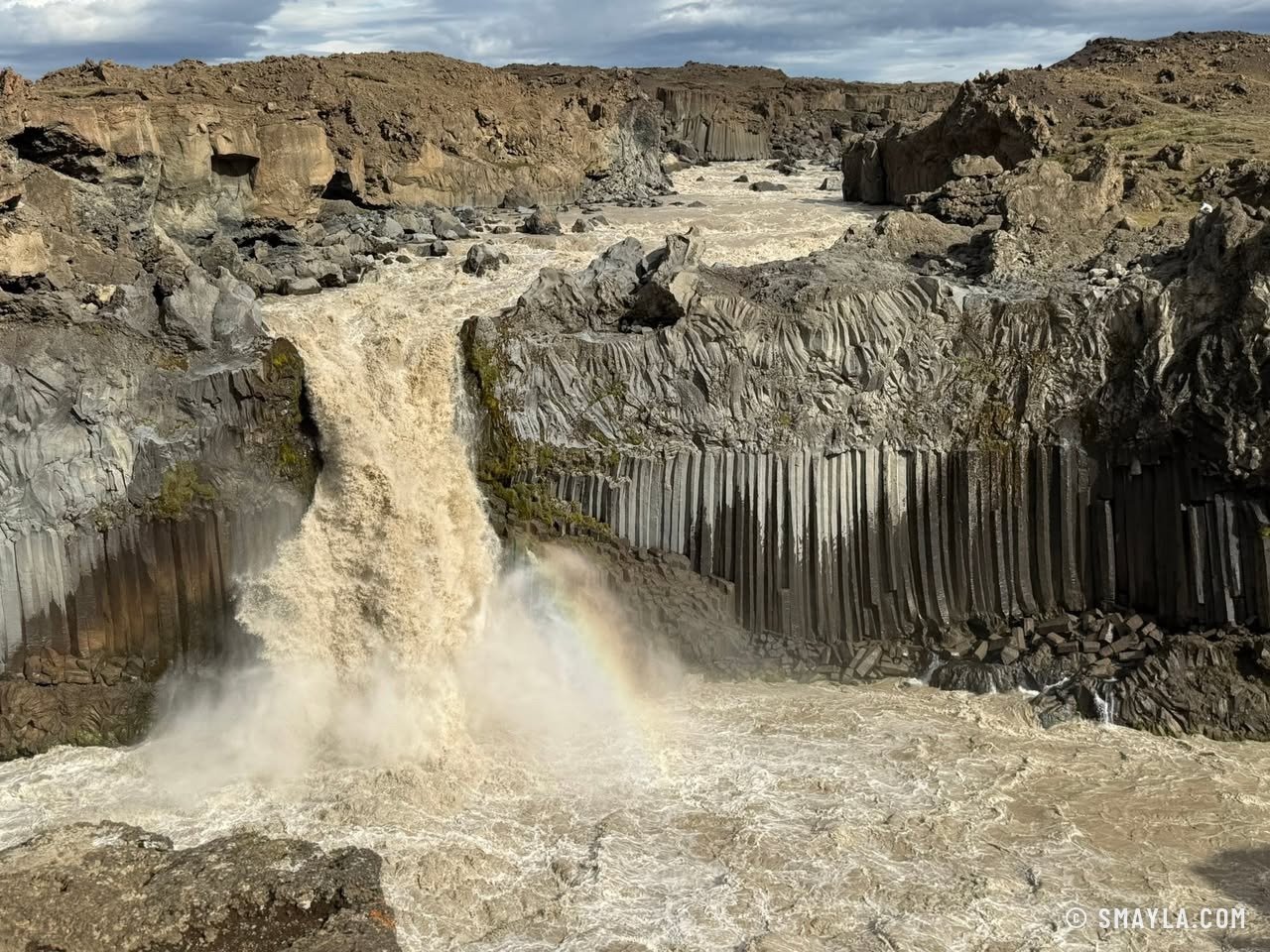
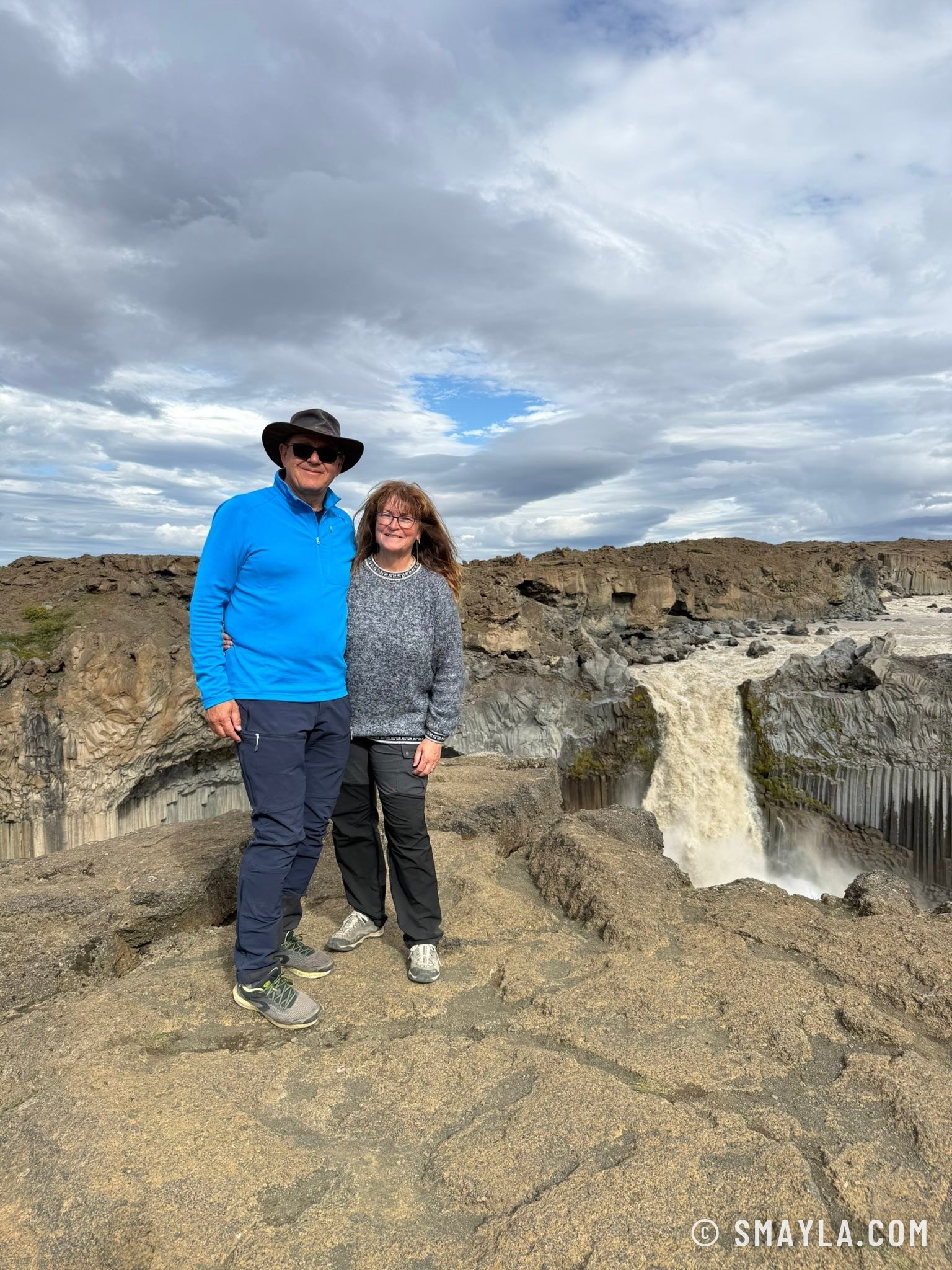
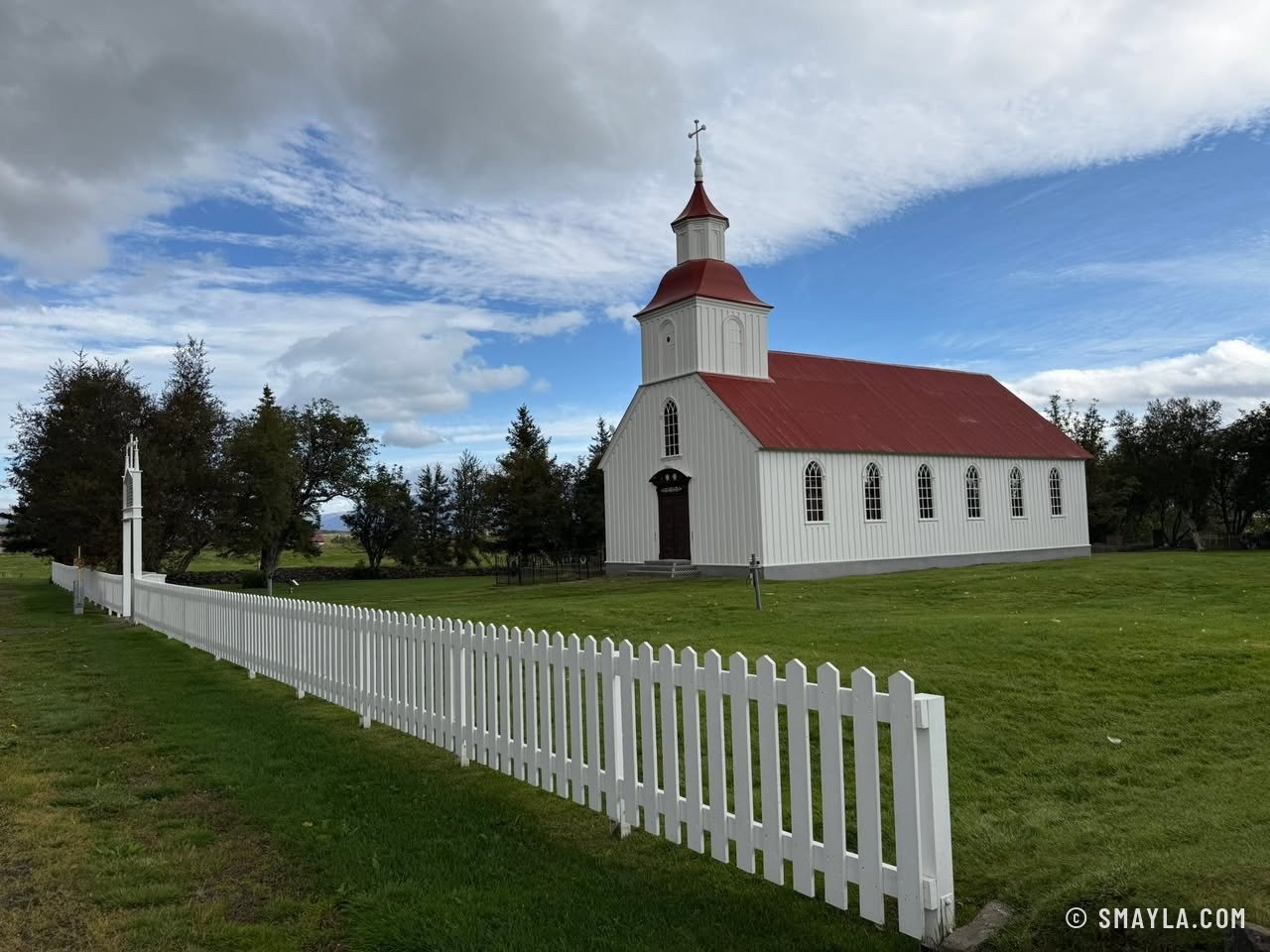
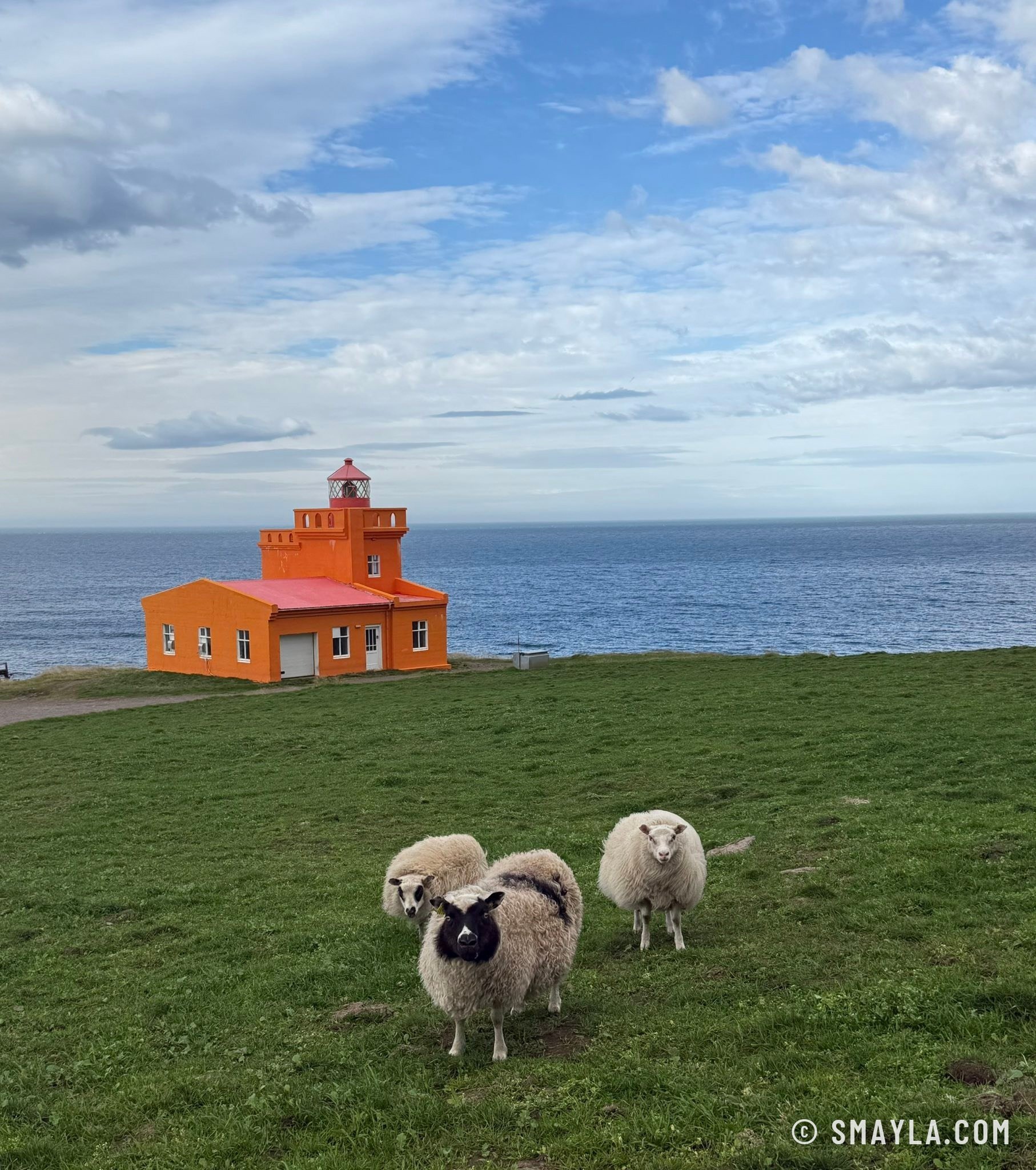
At the end of the track, two underrated waterfalls: Hrafnabjargafoss, in a lava field, and Aldeyjarfoss, a 20 m drop between basalt columns born of an eruption some 9,000 years ago. Then a pretty church, Dalvík and its kaffihus, the mountain track and the orange Sauðanes lighthouse, before Siglufjörður, one of our Icelandic favourites.
27–30 August
Flateyjardalur, the breakdown
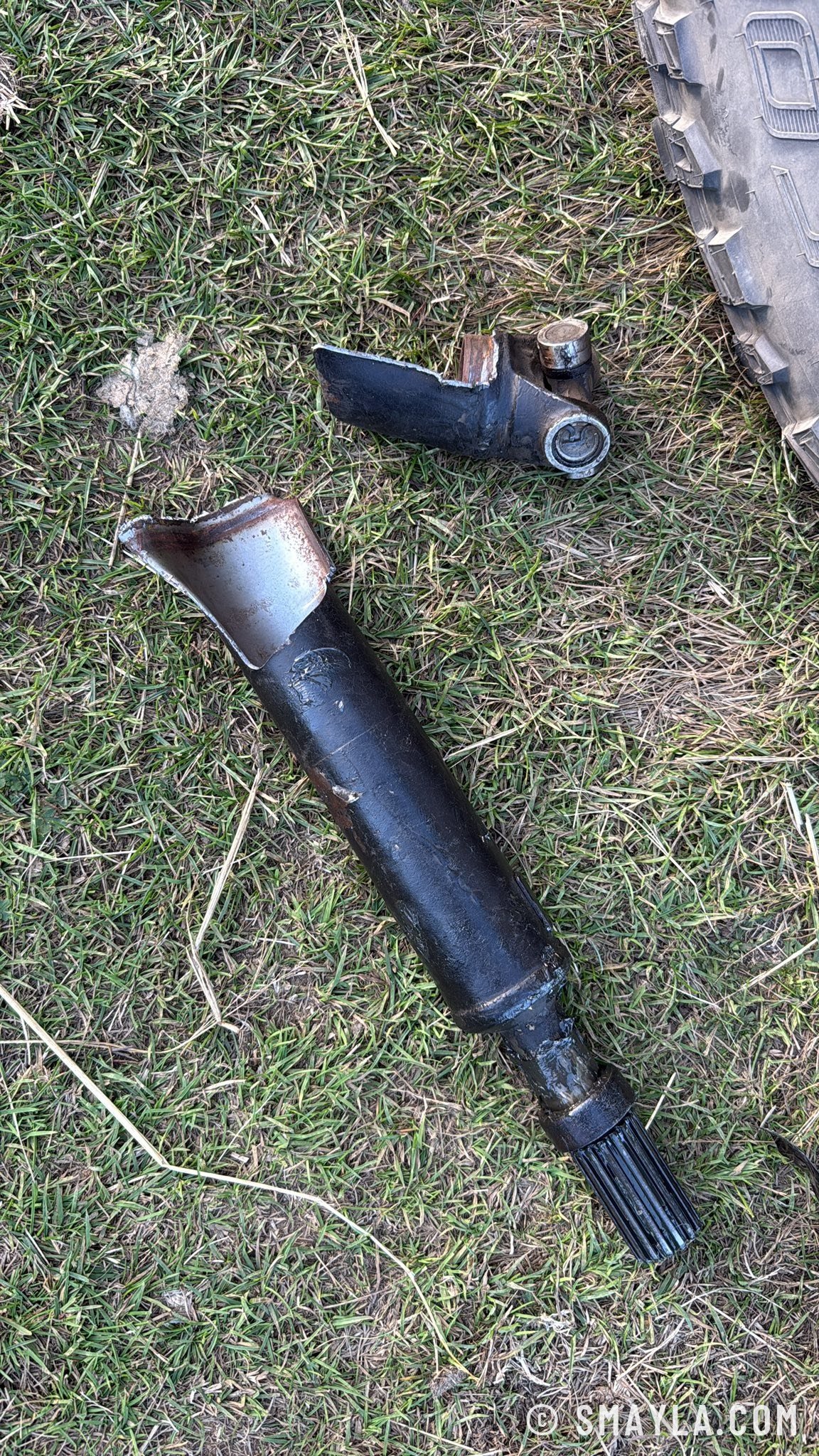
We reach paradise, at the end of the peninsula, 30 km of track, by the sea, and the drive shaft splits in two. Luck in our misfortune: not in the middle of a ford, nor on the descent, a little signal thanks to the island of Flatey opposite, and two cars on the beach, one of them a Swiss couple.
They take us to Akureyri in their camper, two short hours of track. A first workshop turns us away, then begins a string of top Icelandic encounters: the hardware store, the red building, someone who drives us elsewhere, and the part is welded. Back to the beach, Chevy fixed.
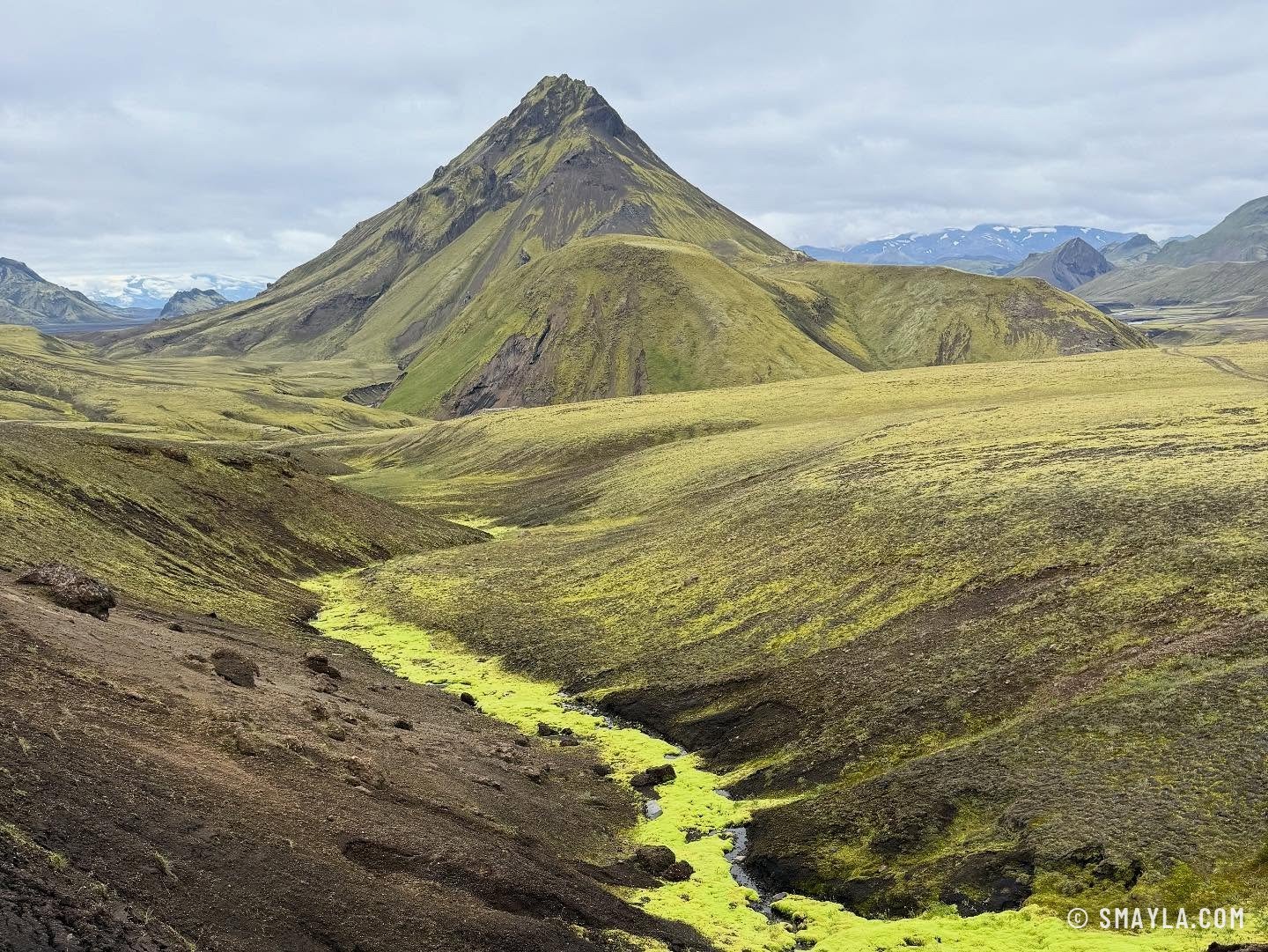
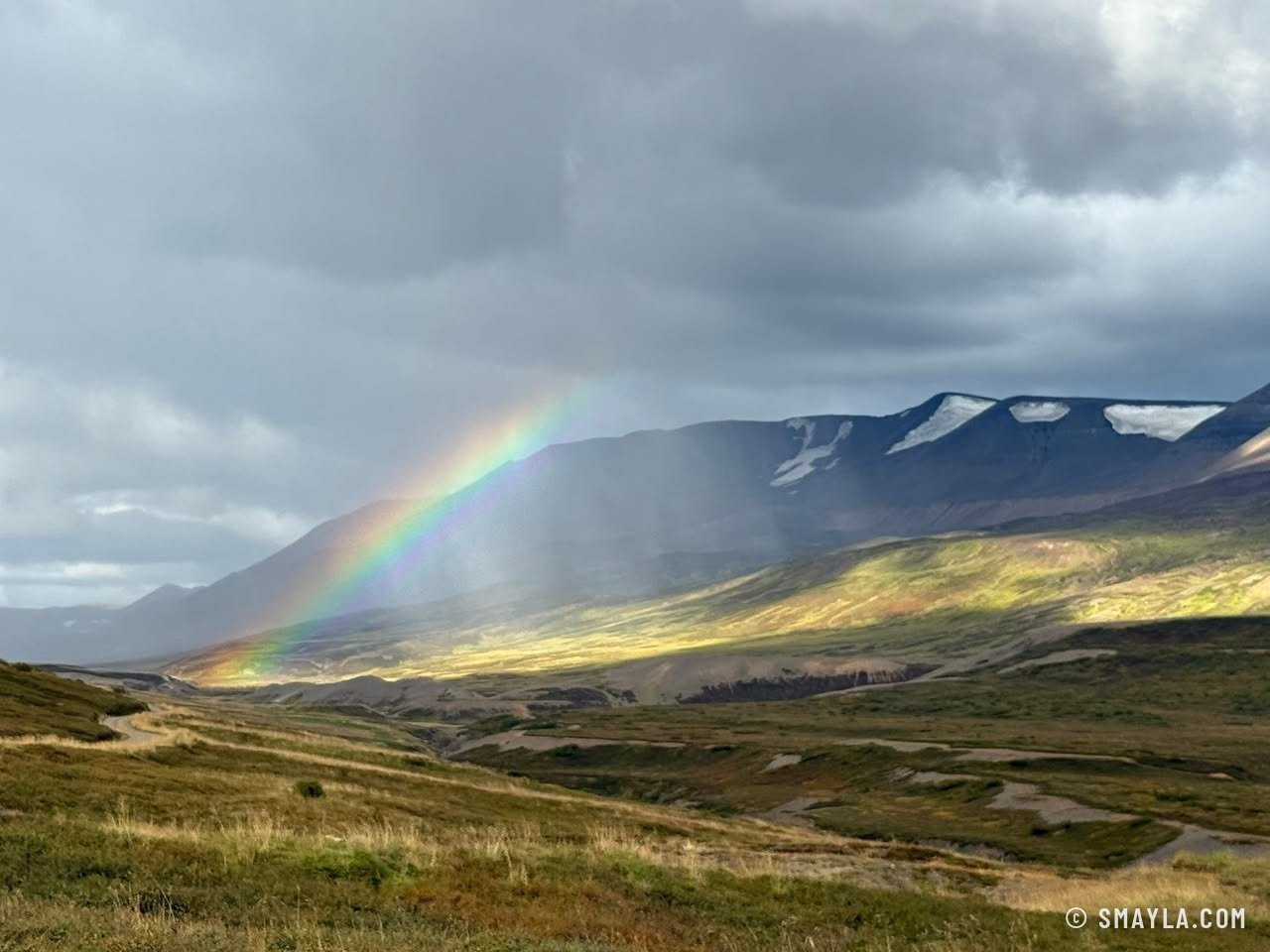
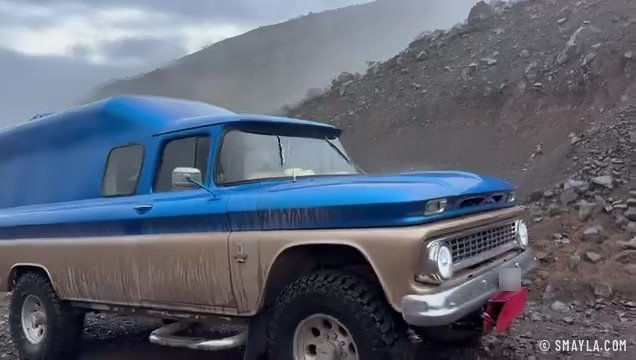
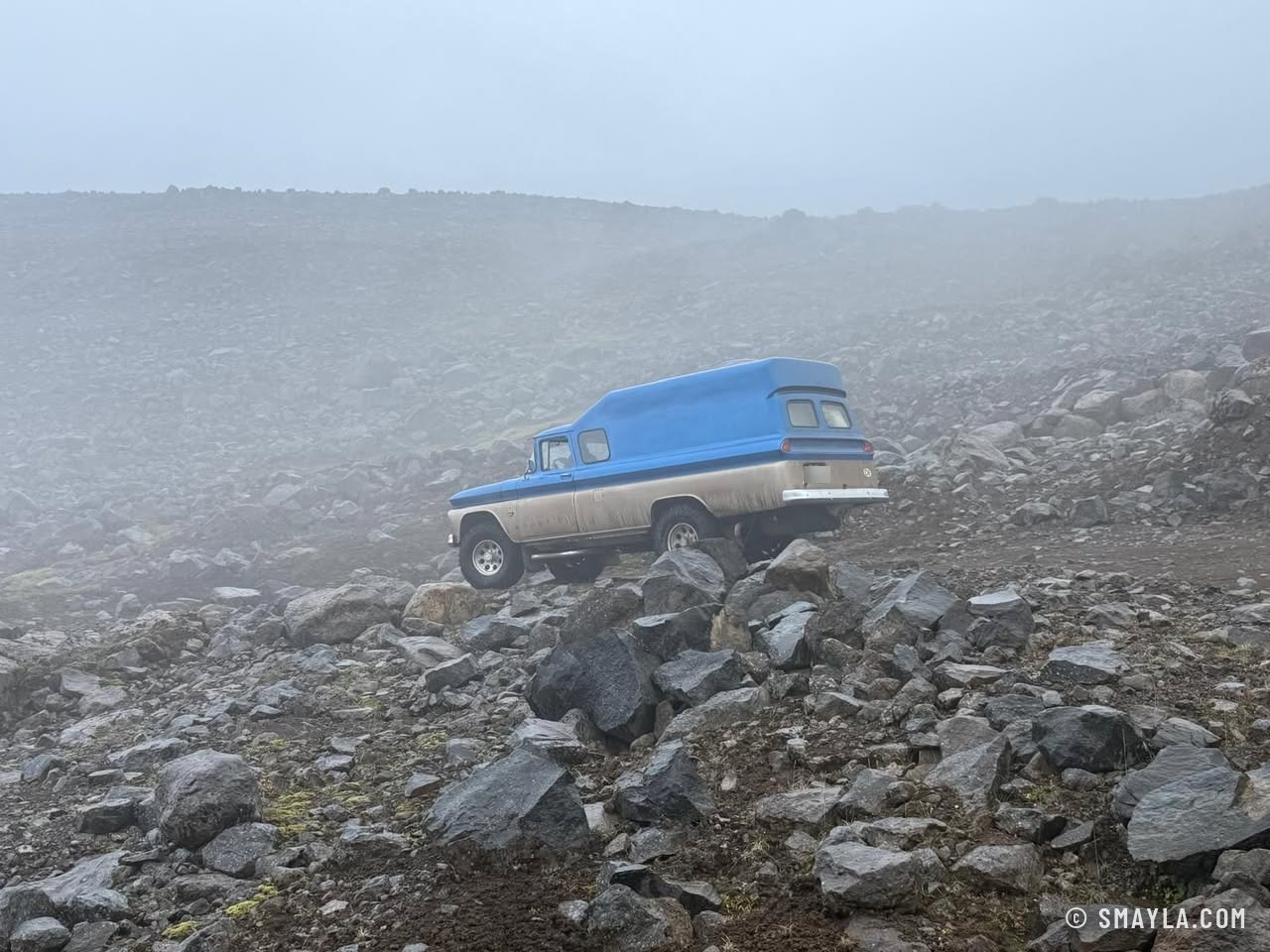
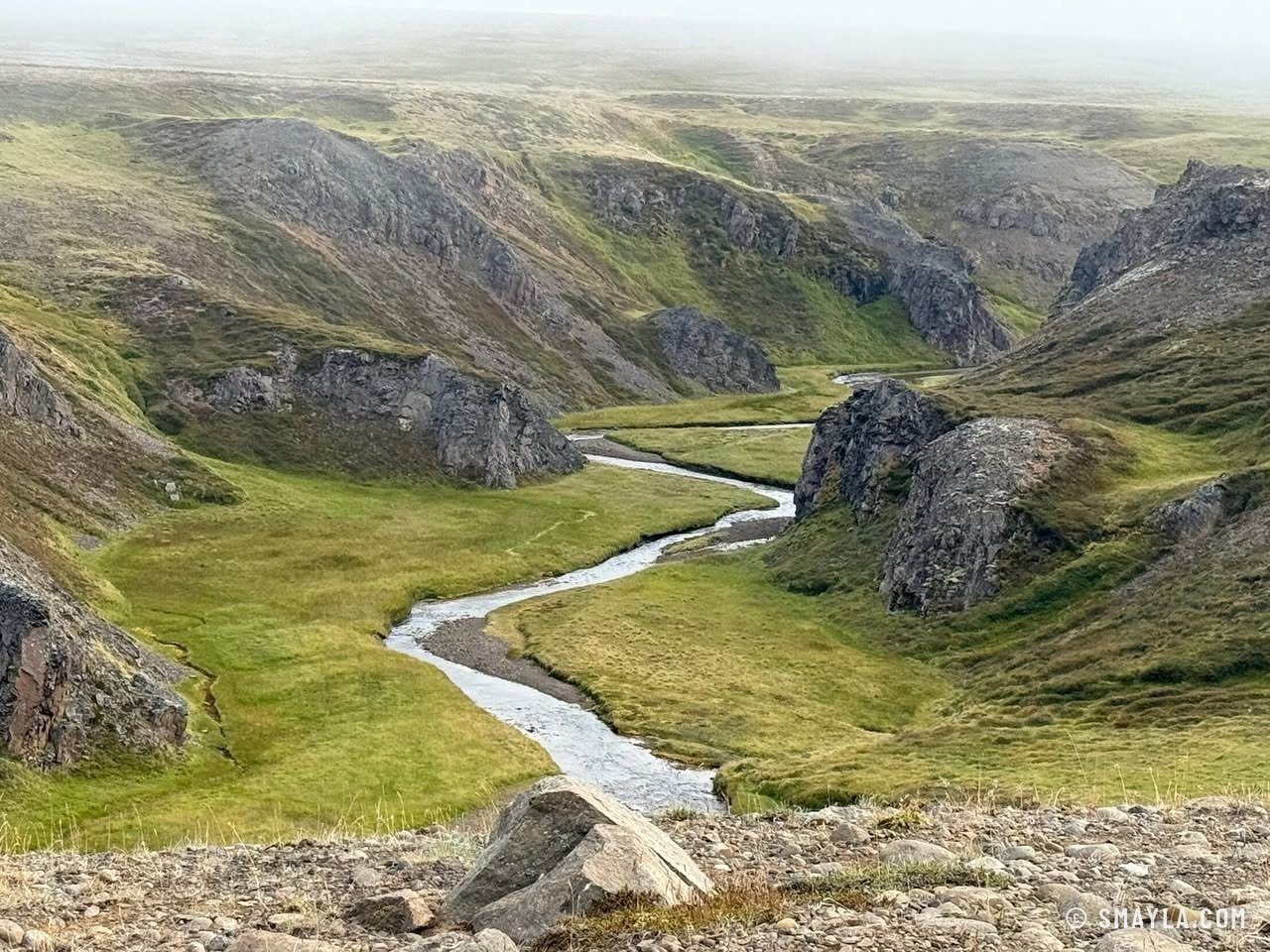
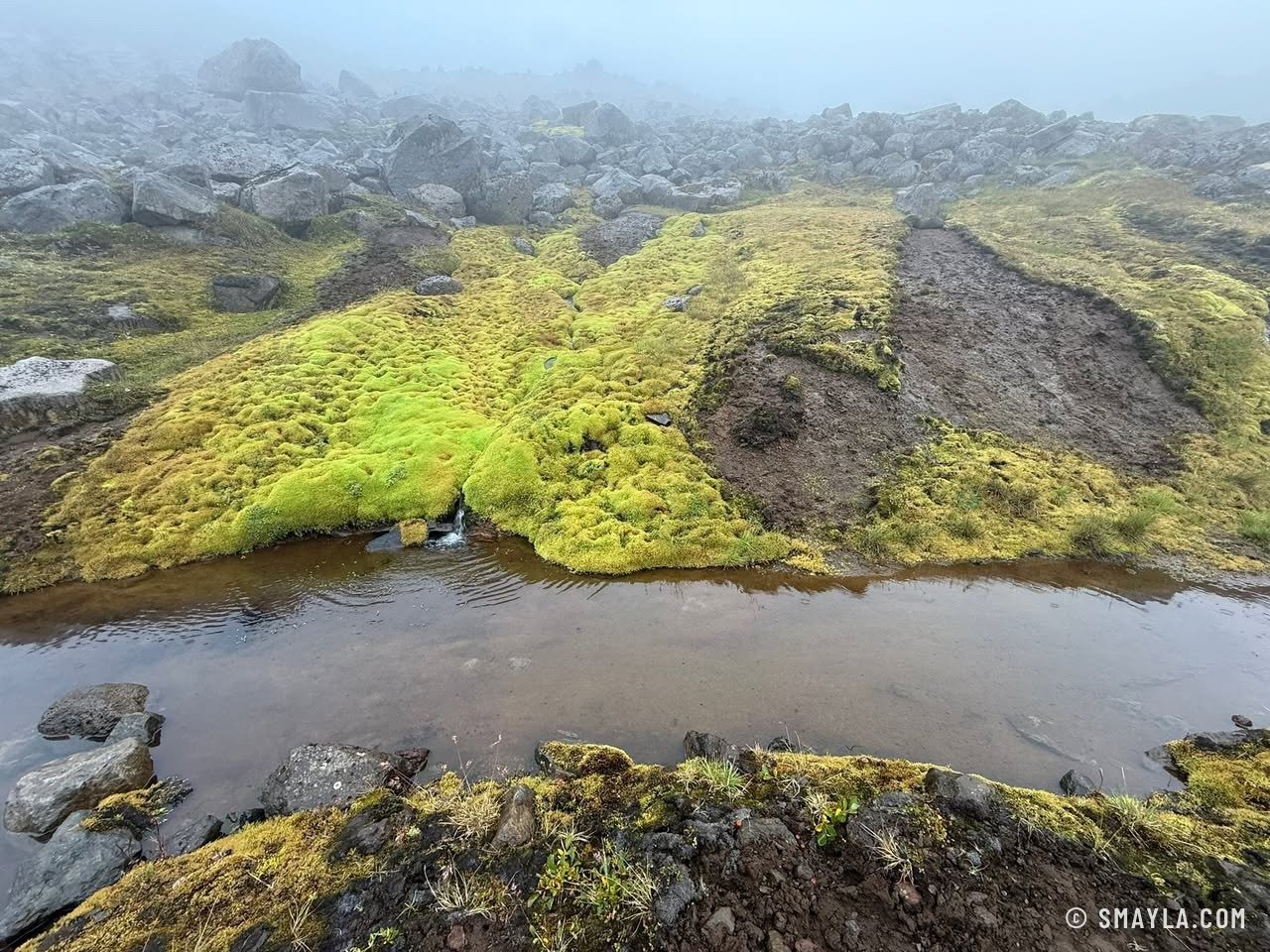
To cross back south, we climb a whole valley from sea level to about a thousand metres, in the fog, along a stream lined with moss. At the top, three hairpins in first gear, and Laugafell.
31 August – 3 September
Craters, Langisjór and Eldgjá
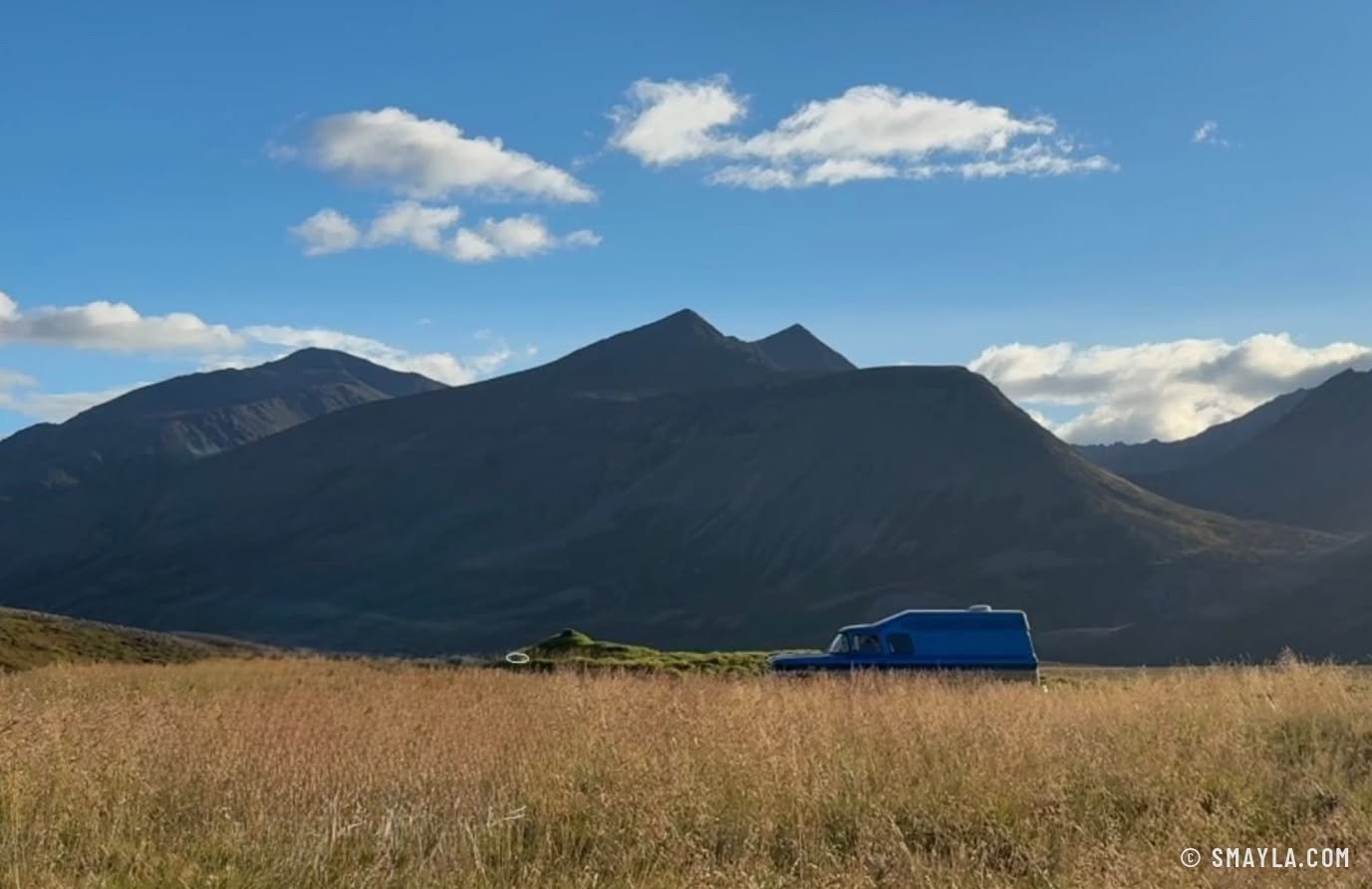
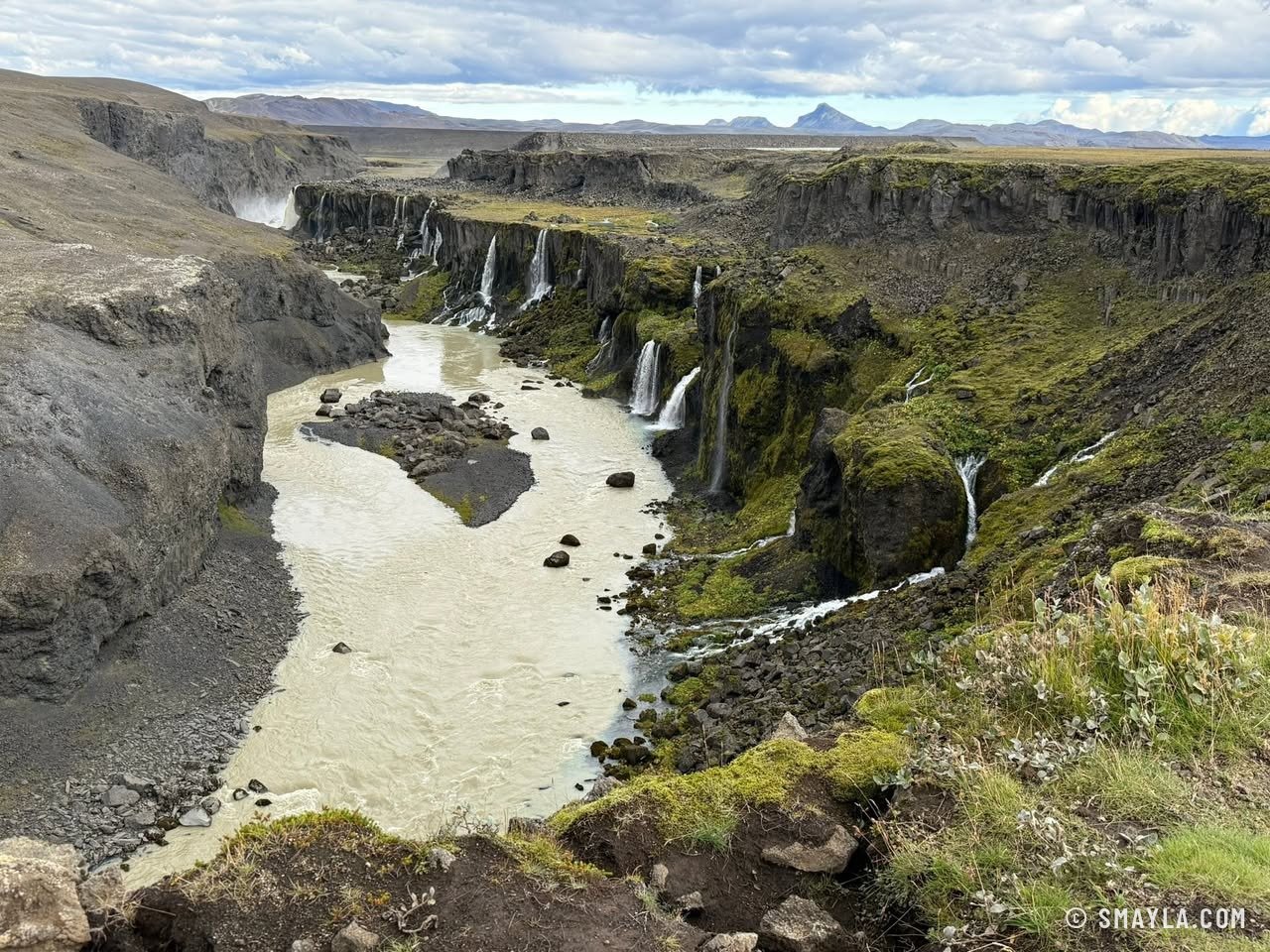
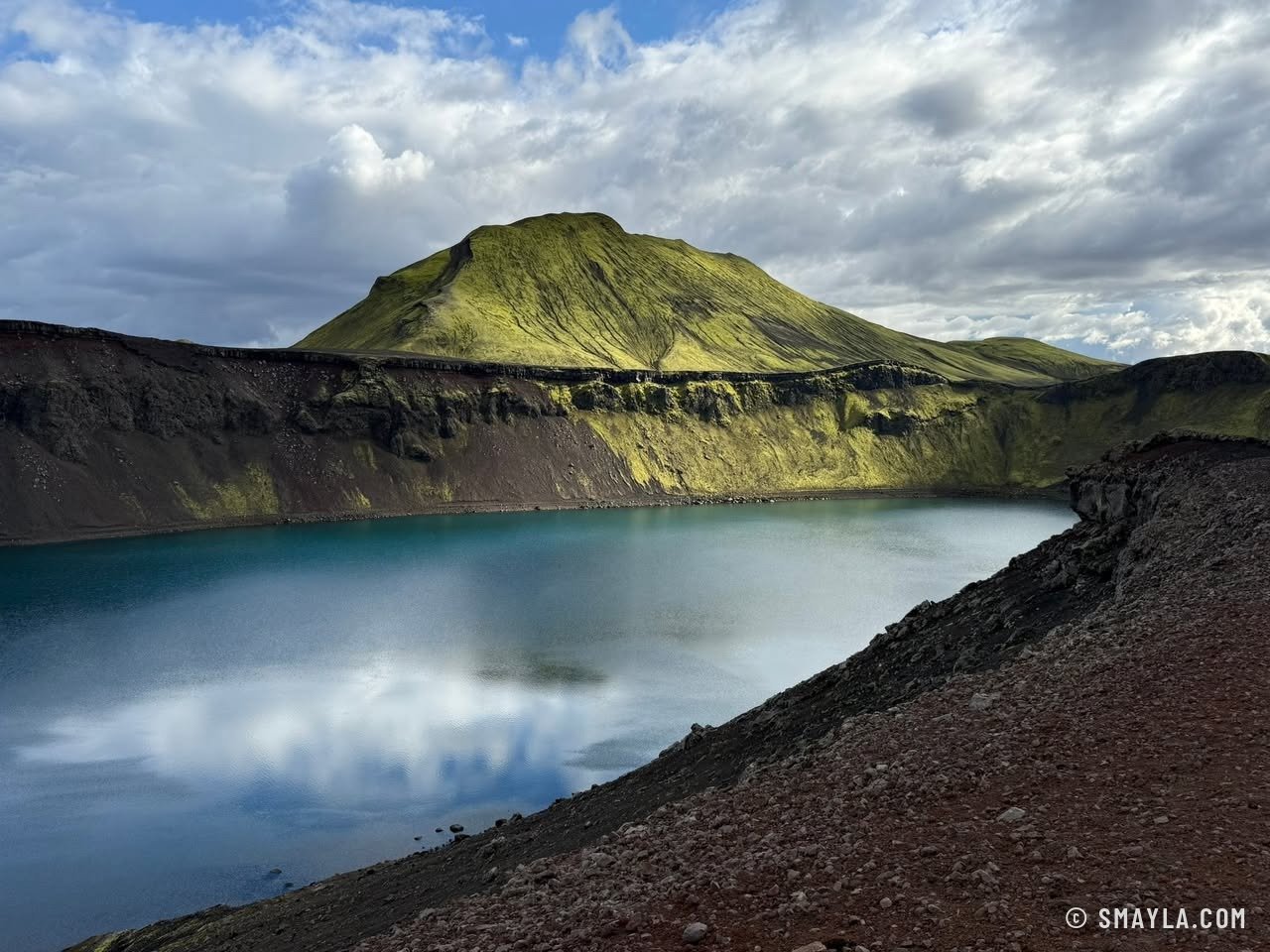
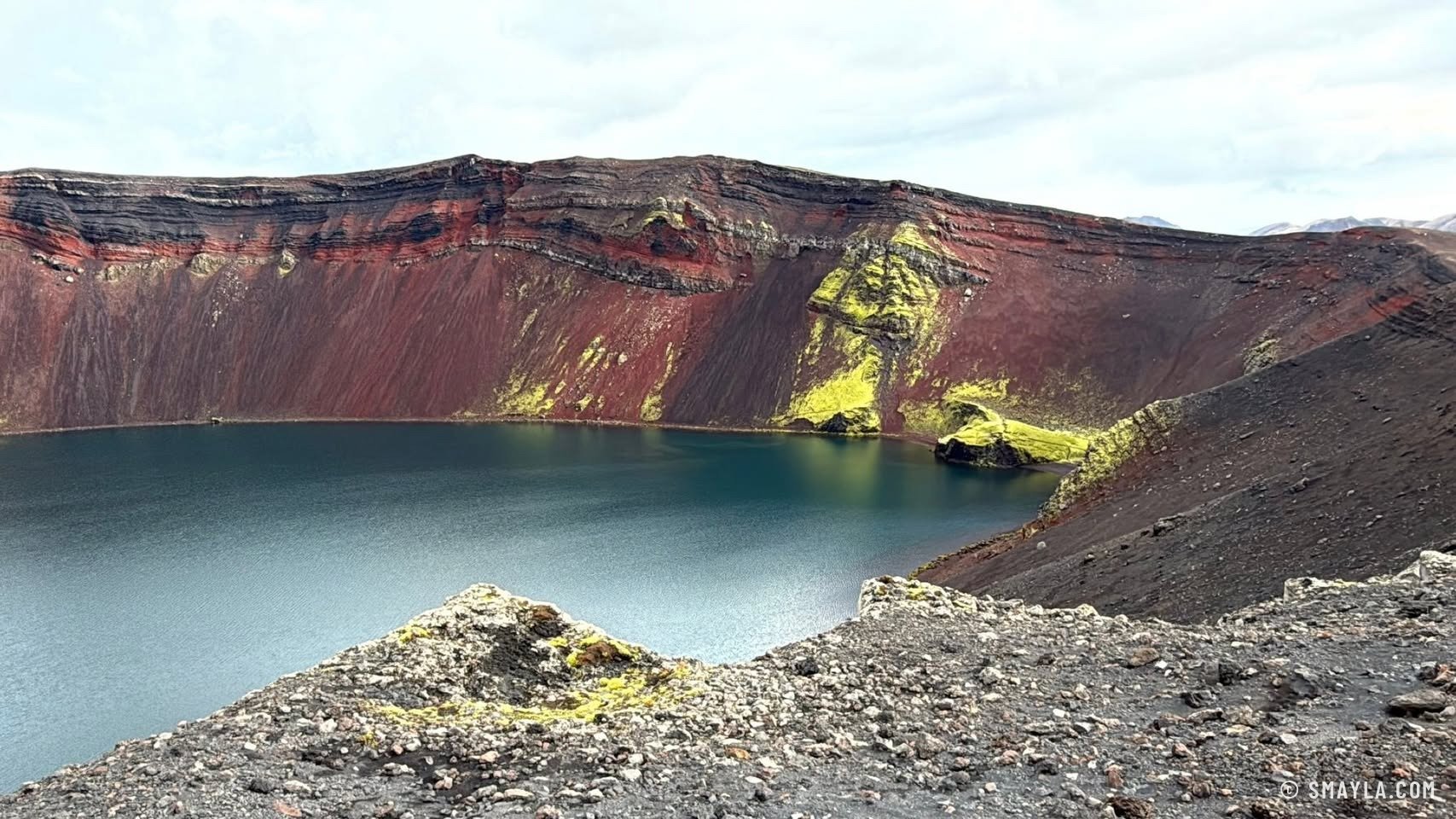
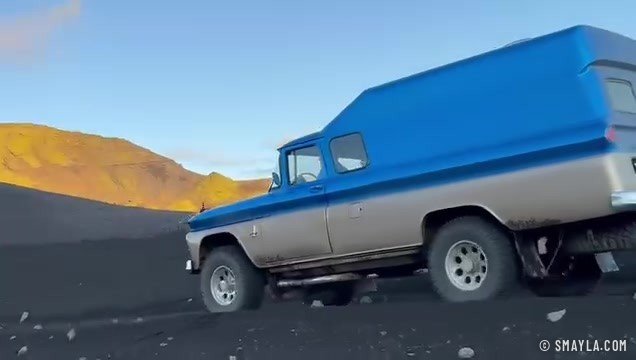
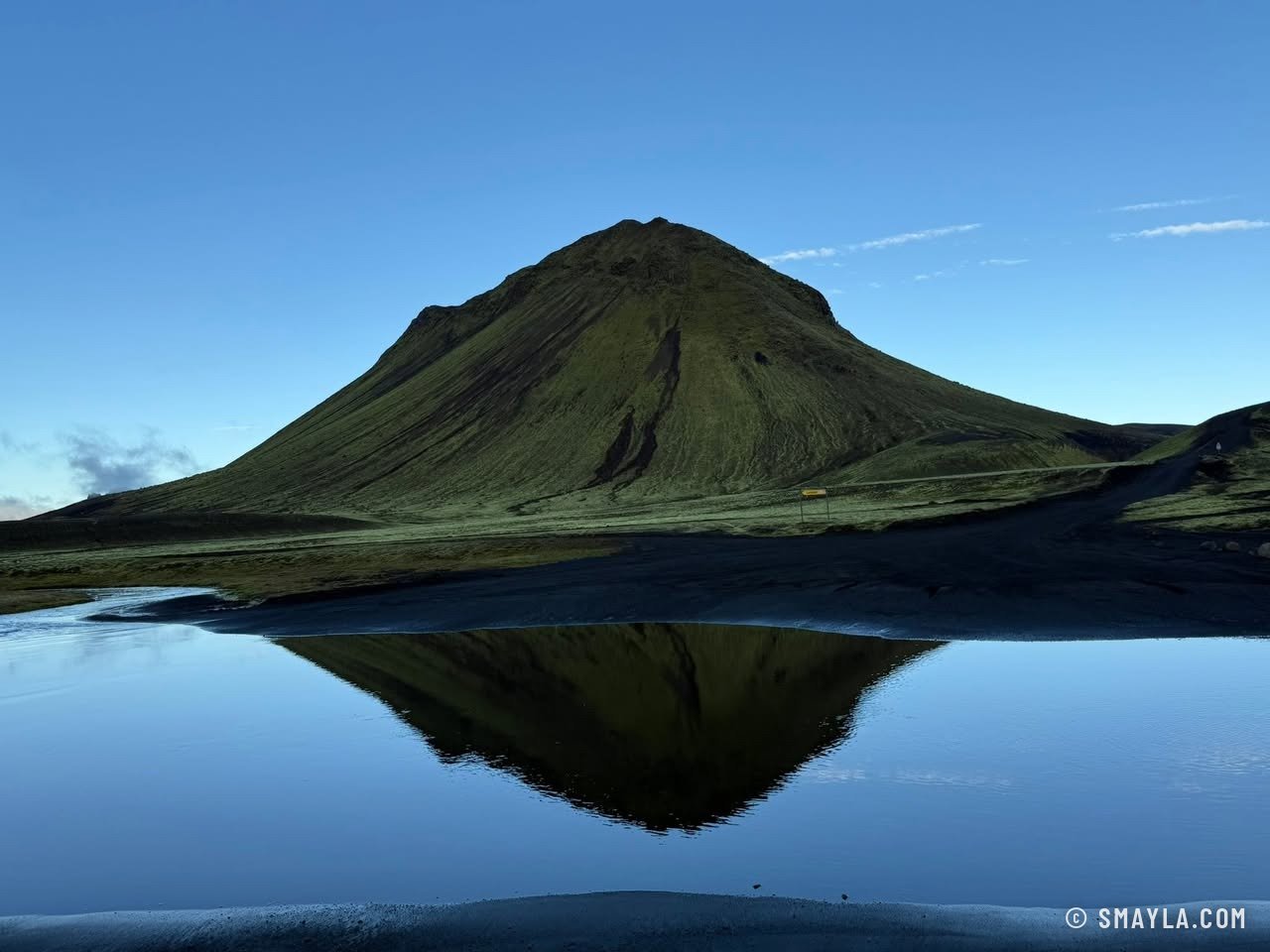
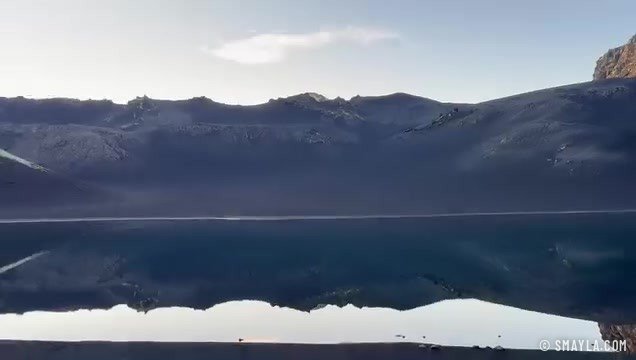
The F26 again, then the F208. The little Sigöldugljúfur canyon, the Hnausapollur crater lake lit up by the sun, Ljótipollur. Then kilometres of green on black ground in fabulous evening light, all the way to Langisjór, a glacial lake some twenty kilometres long.
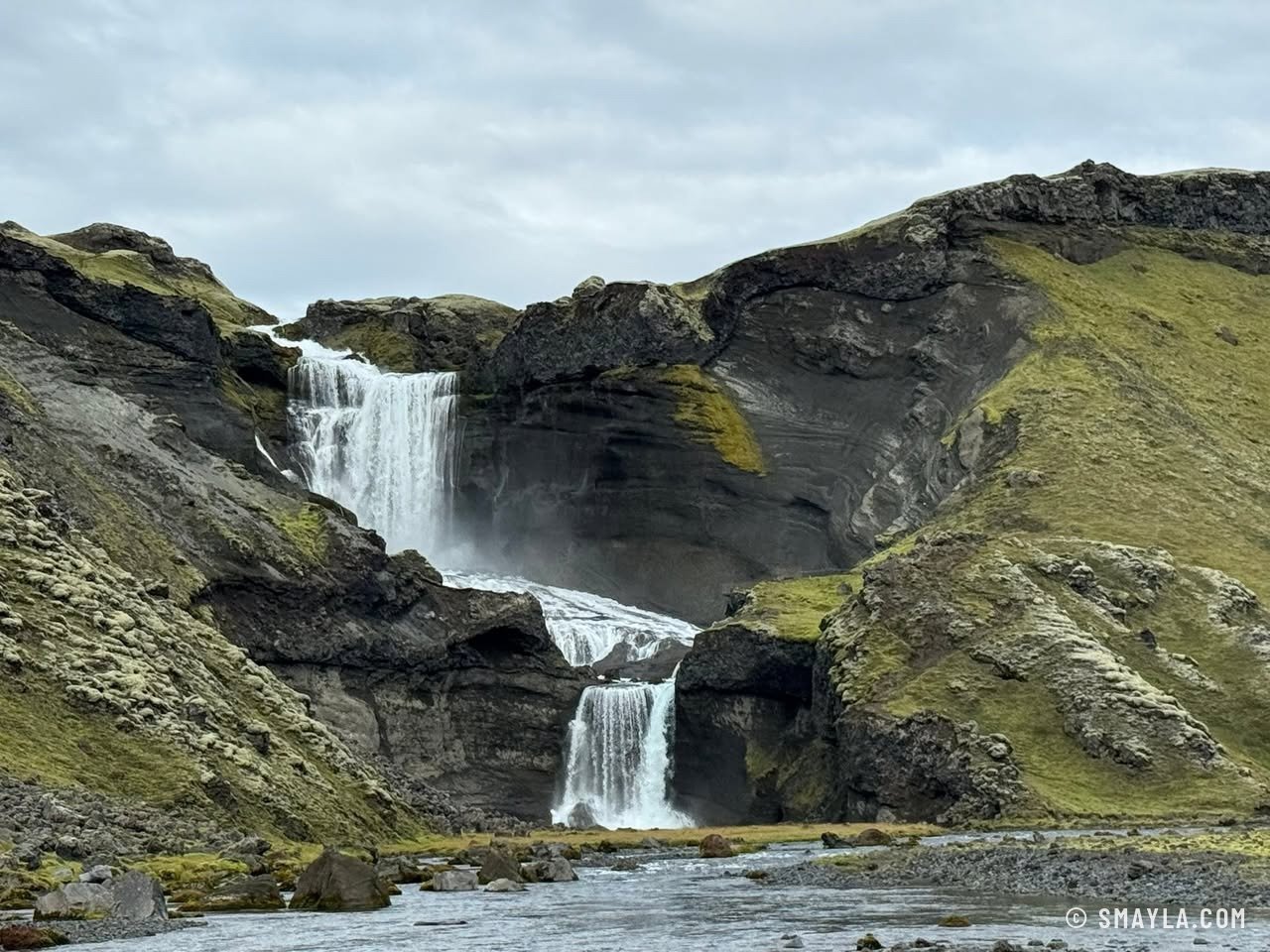
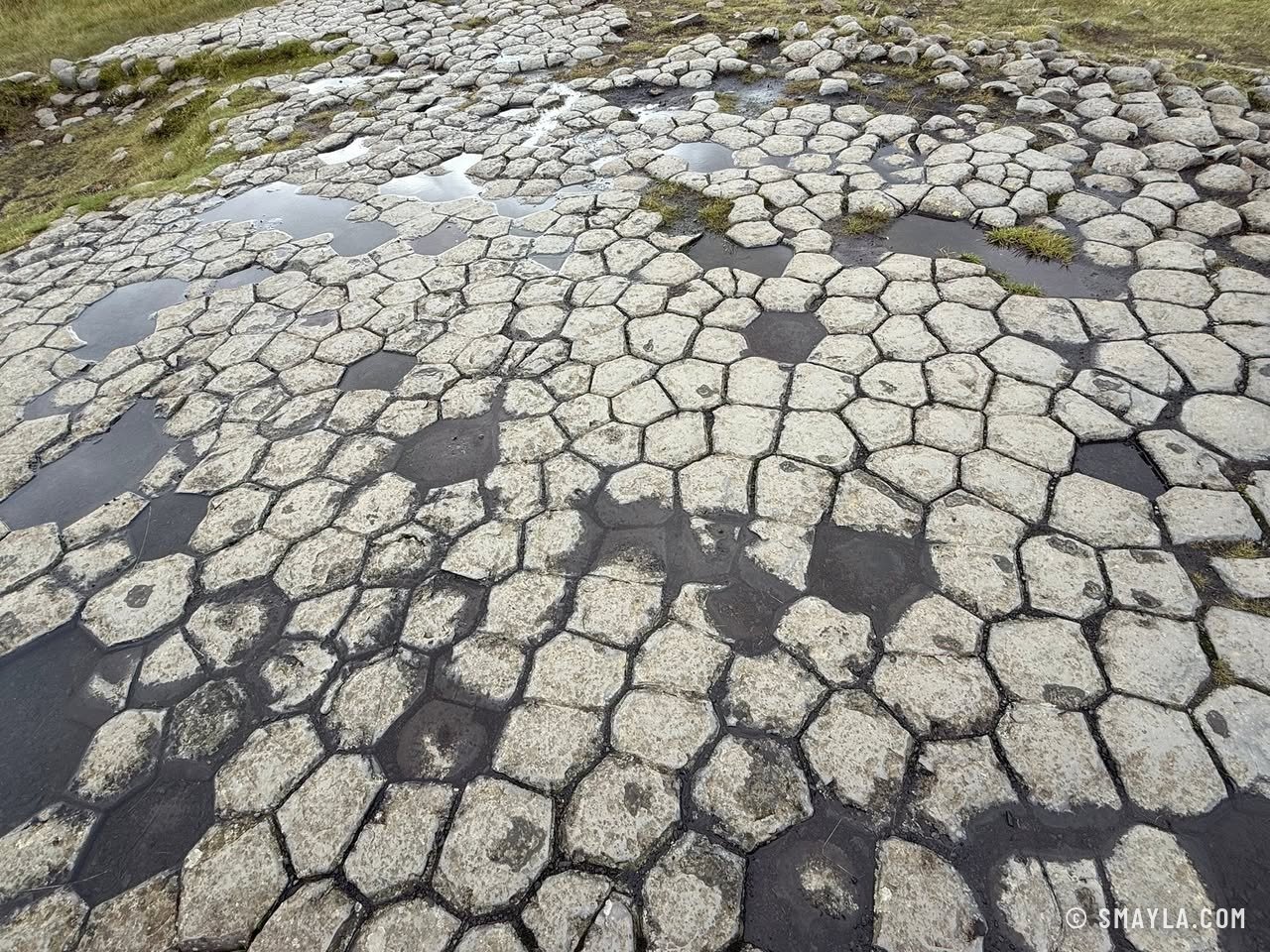
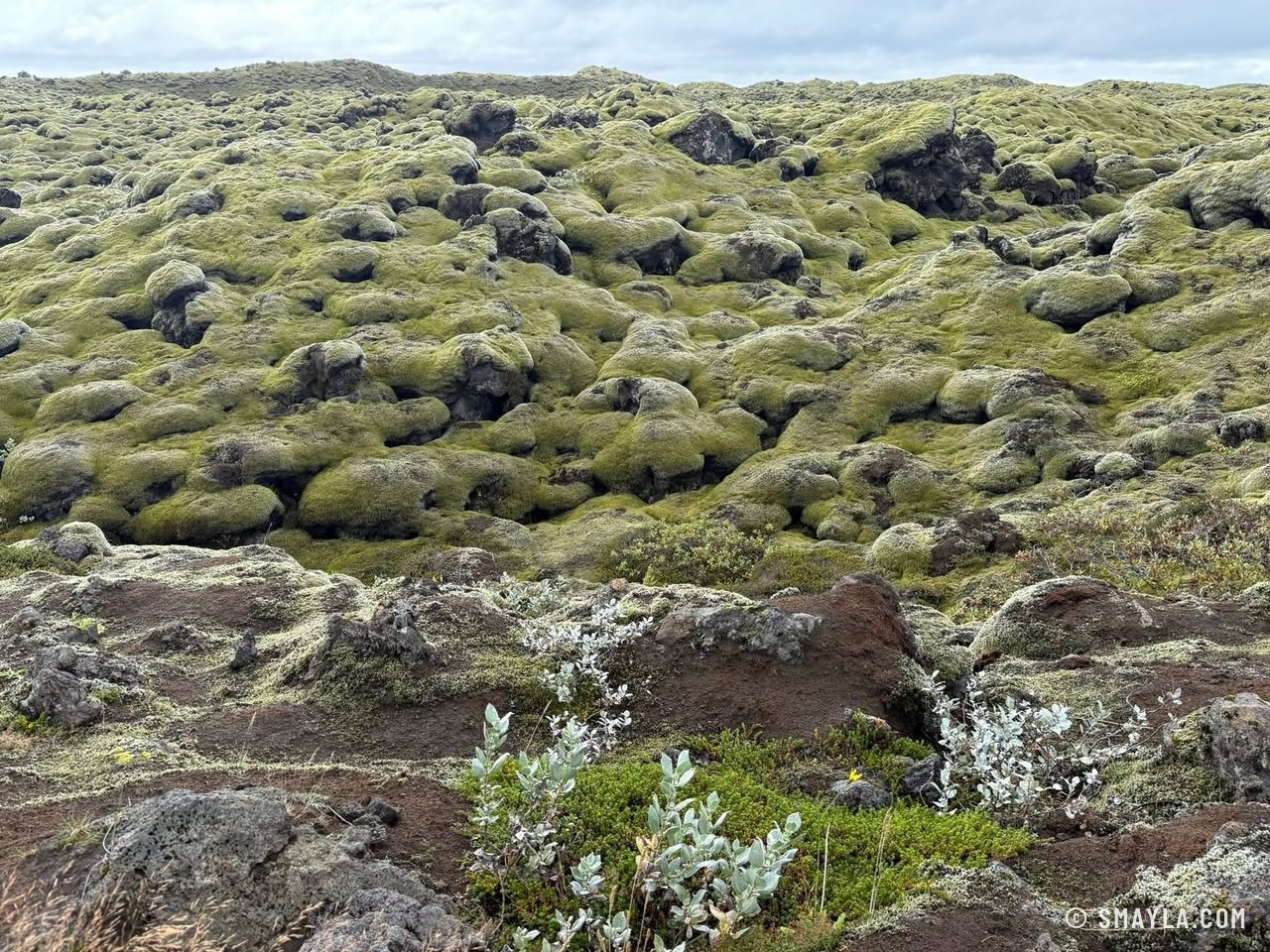
We wake facing the lake. Sveinstindur is on the plan, but the wind is so strong that we wisely stop at the first viewpoint, 200 m up. Out of caution, we give up the Blautulón track. That leaves Eldgjá, the fire gorge, an 8 km fissure born around the year 934. The next day, Kirkjugólf and its basalt paving, and the moss-covered lava of Eldhraun.
4 September
Snæfellsnes and Borgarnes
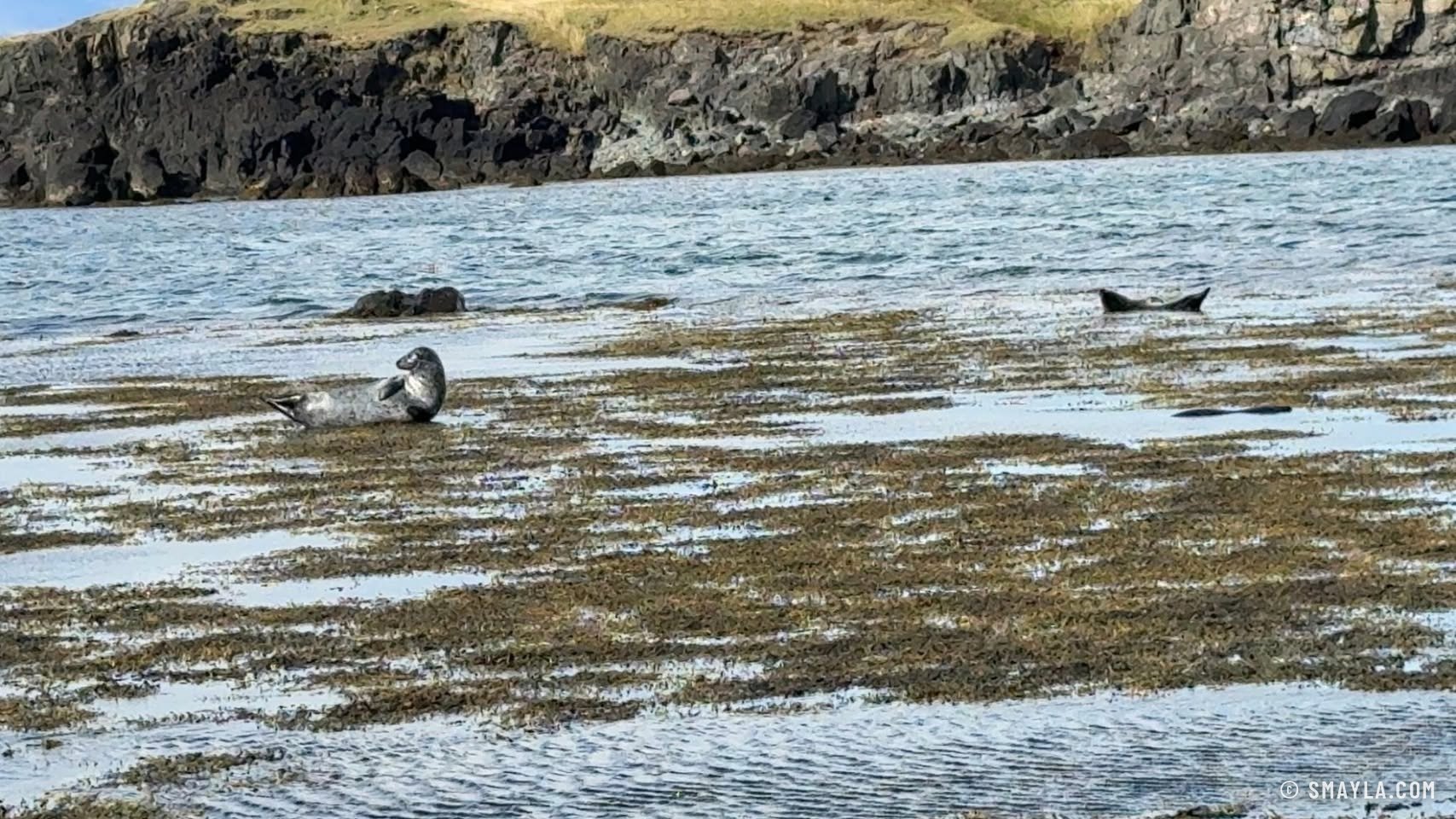
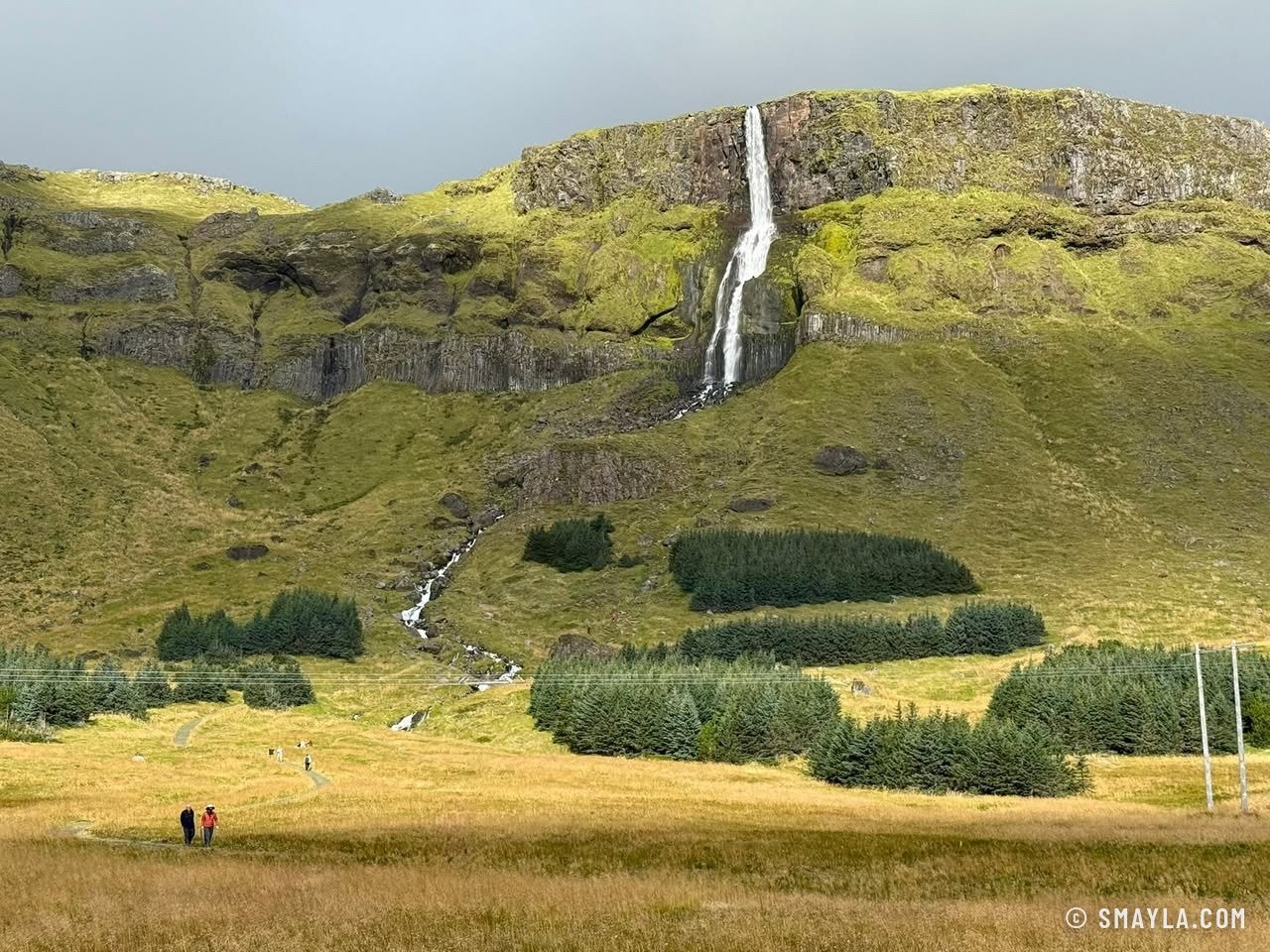
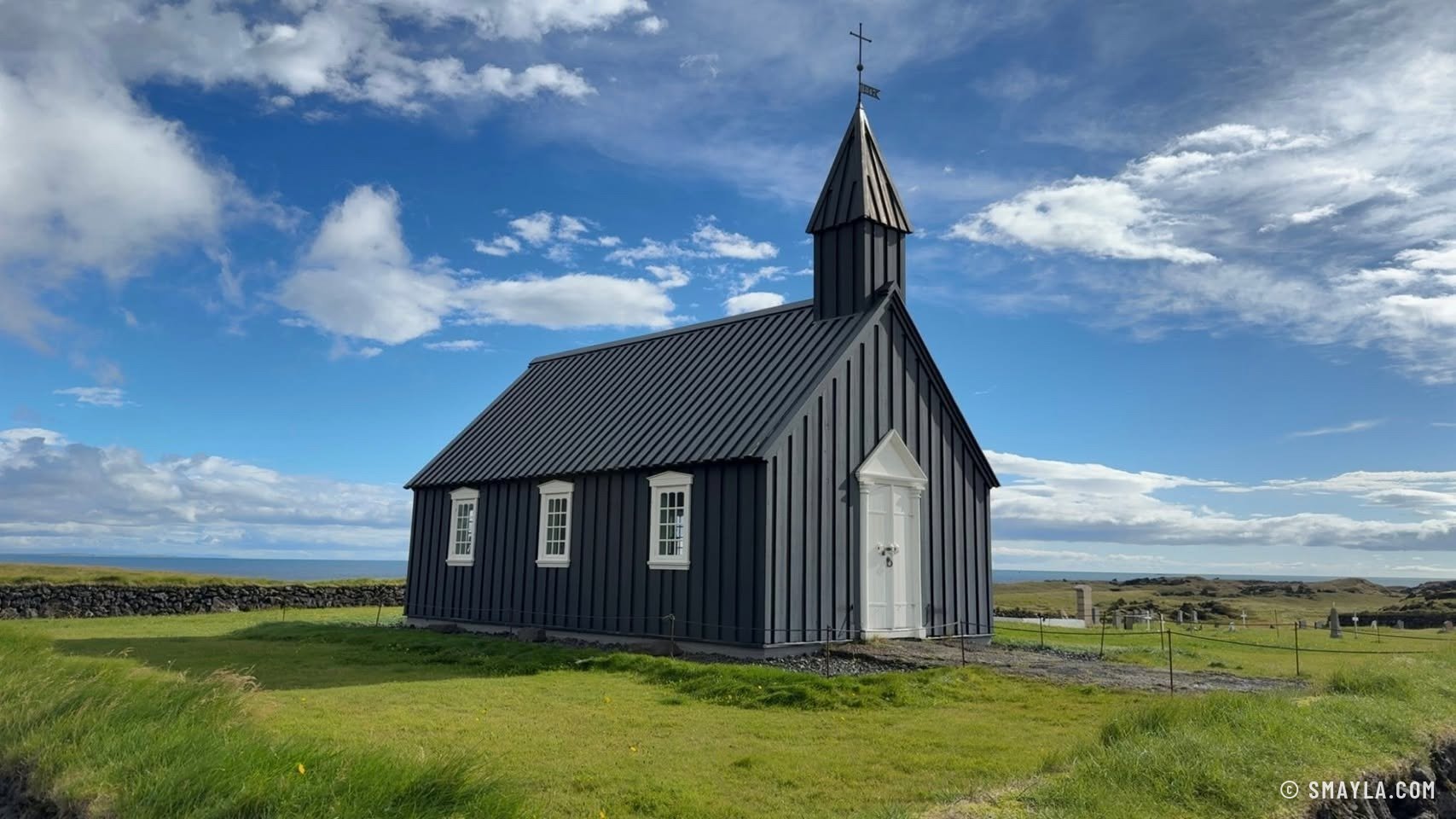
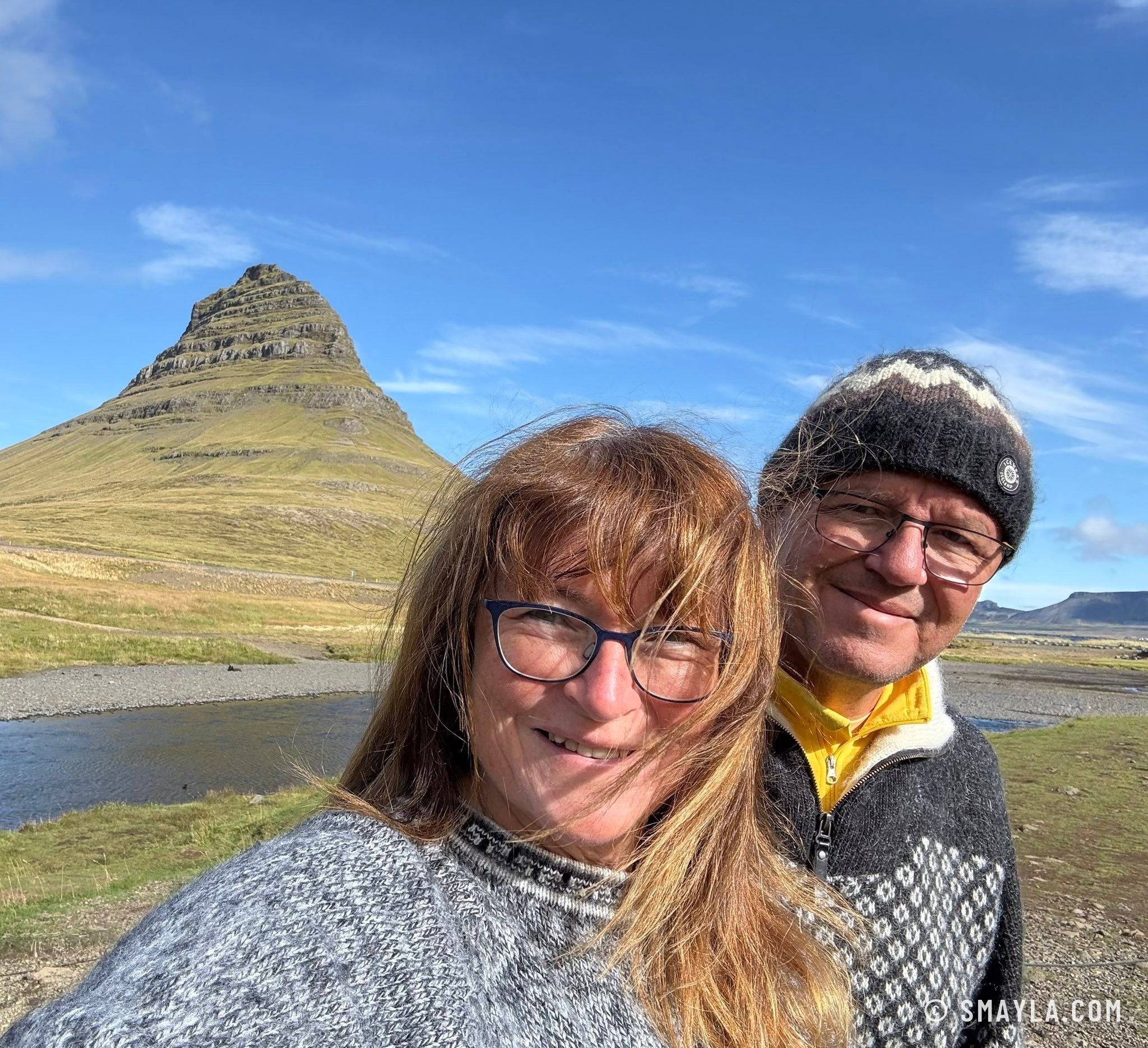
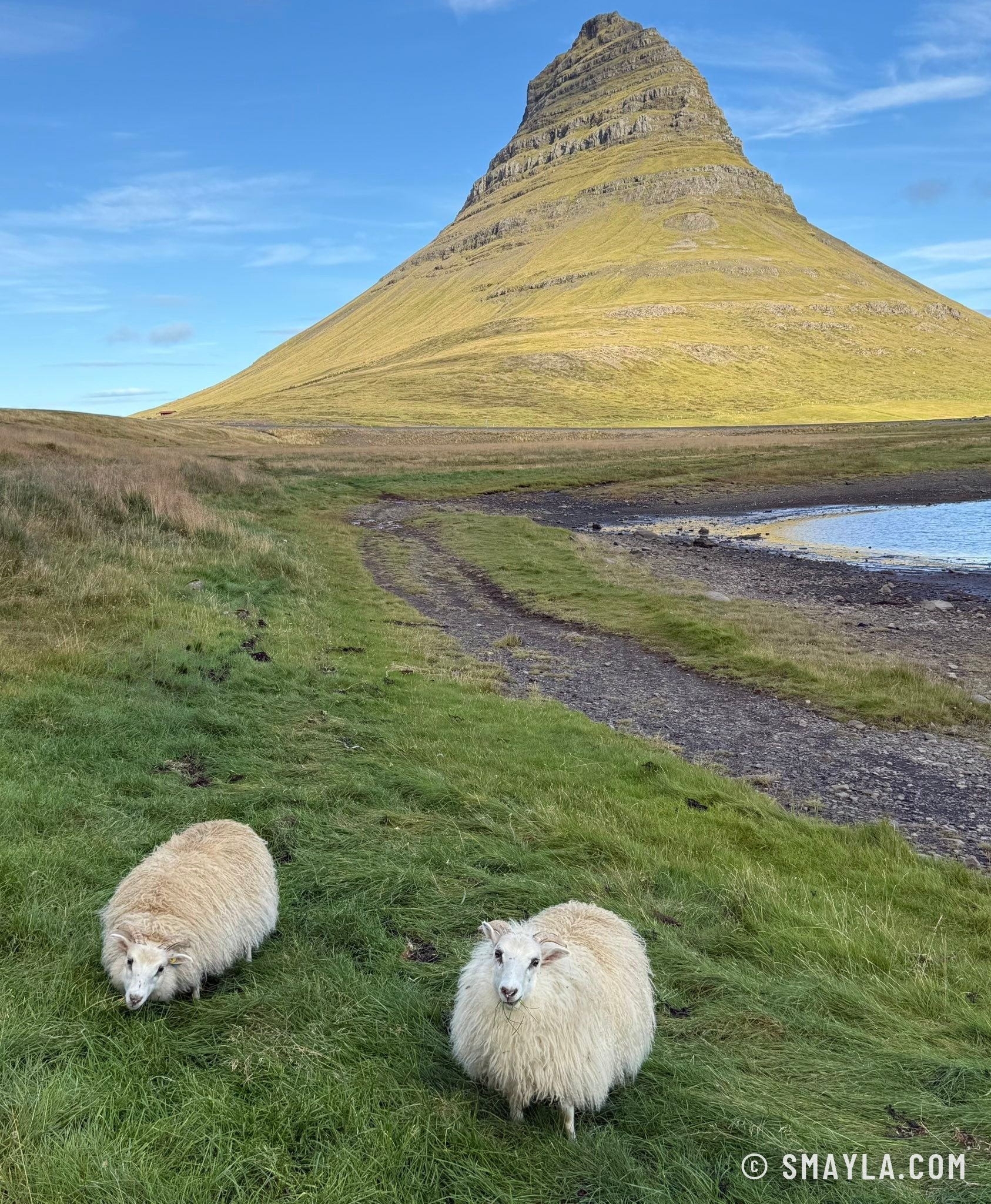
The weather leads us onto the Snæfellsnes peninsula. The seals of Ytri-Tunga in the low-tide pools, Bjarnarfoss and its 80 m over basalt columns, the black church of Búðir. Kirkjufell on foot from the campsite, from every angle, with horses or sheep, and the church of Stykkishólmur, its bell tower like a whale's vertebra.
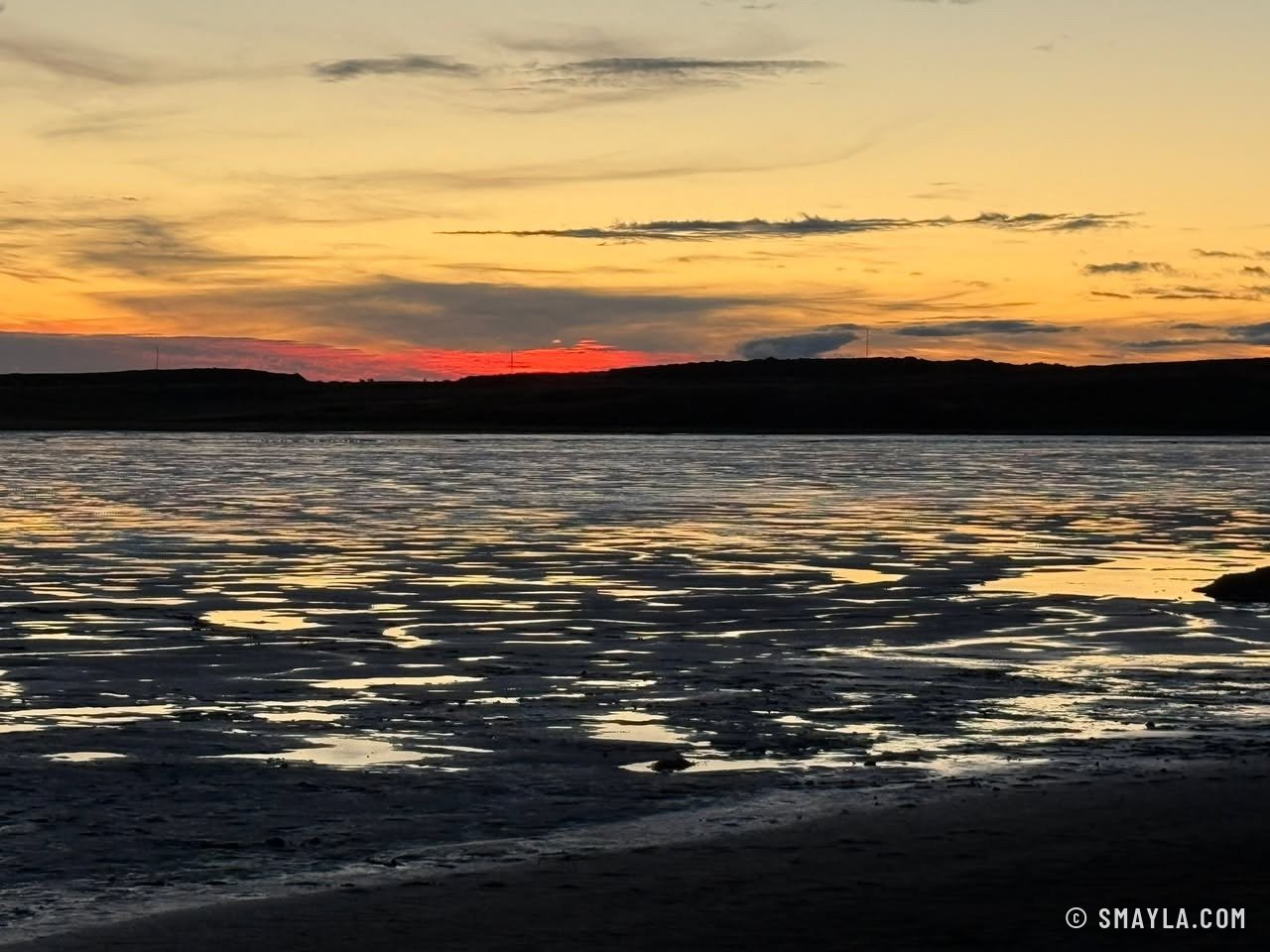
In the evening, in Borgarnes, the Chevy facing the sea: sunset, low tide. A gift of an evening.
7–12 September
Rain in the east, then the Norröna
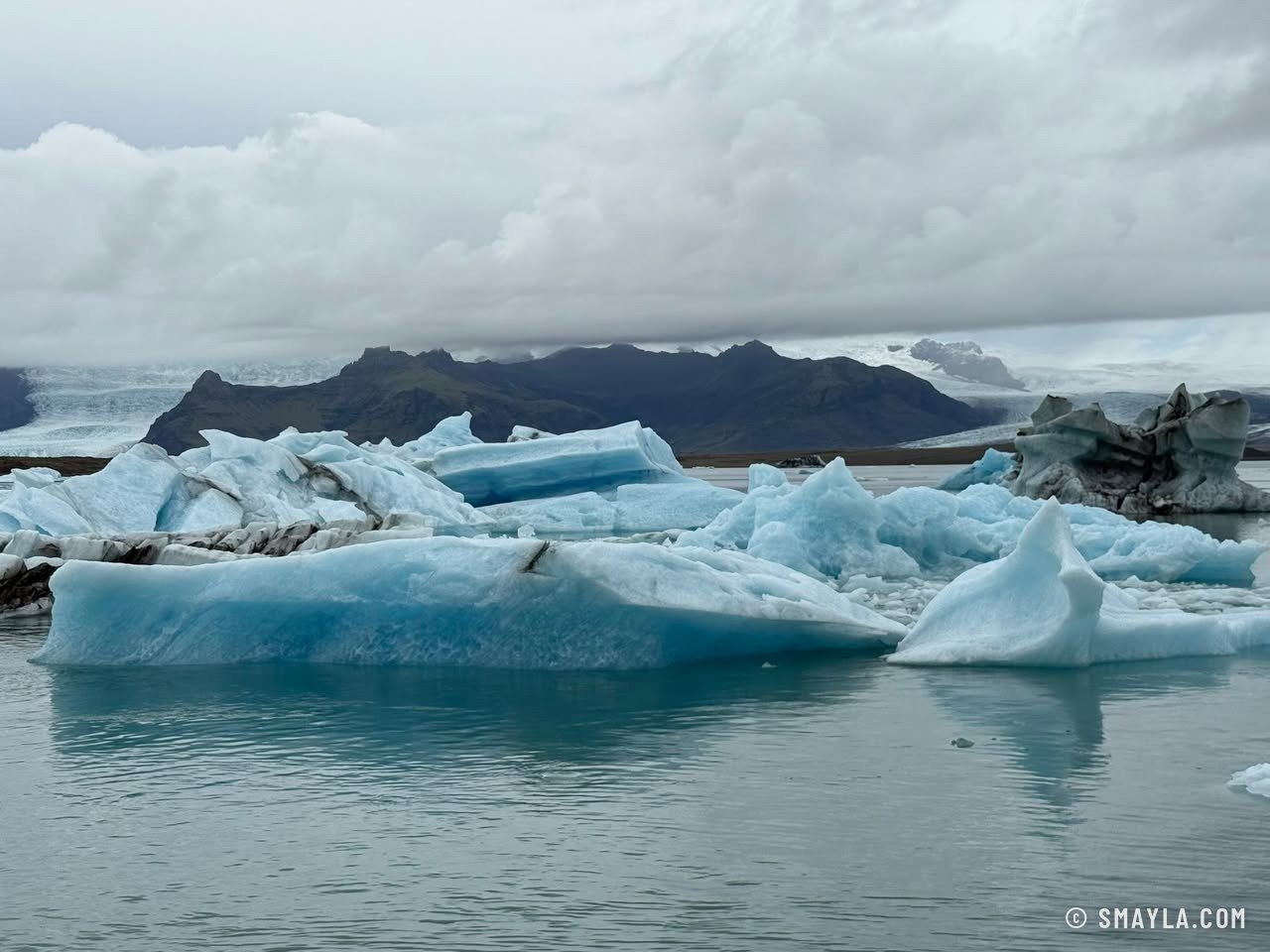
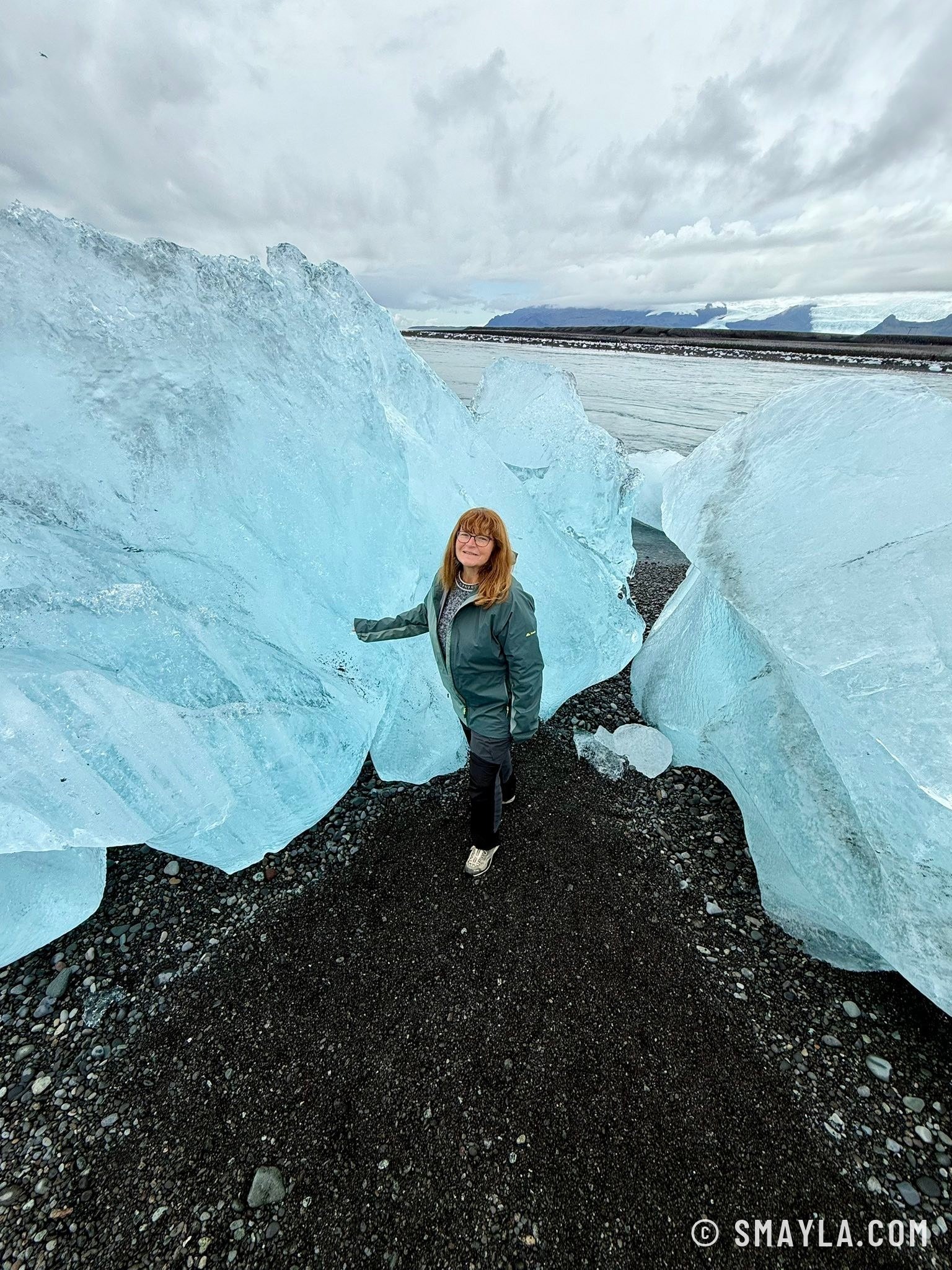
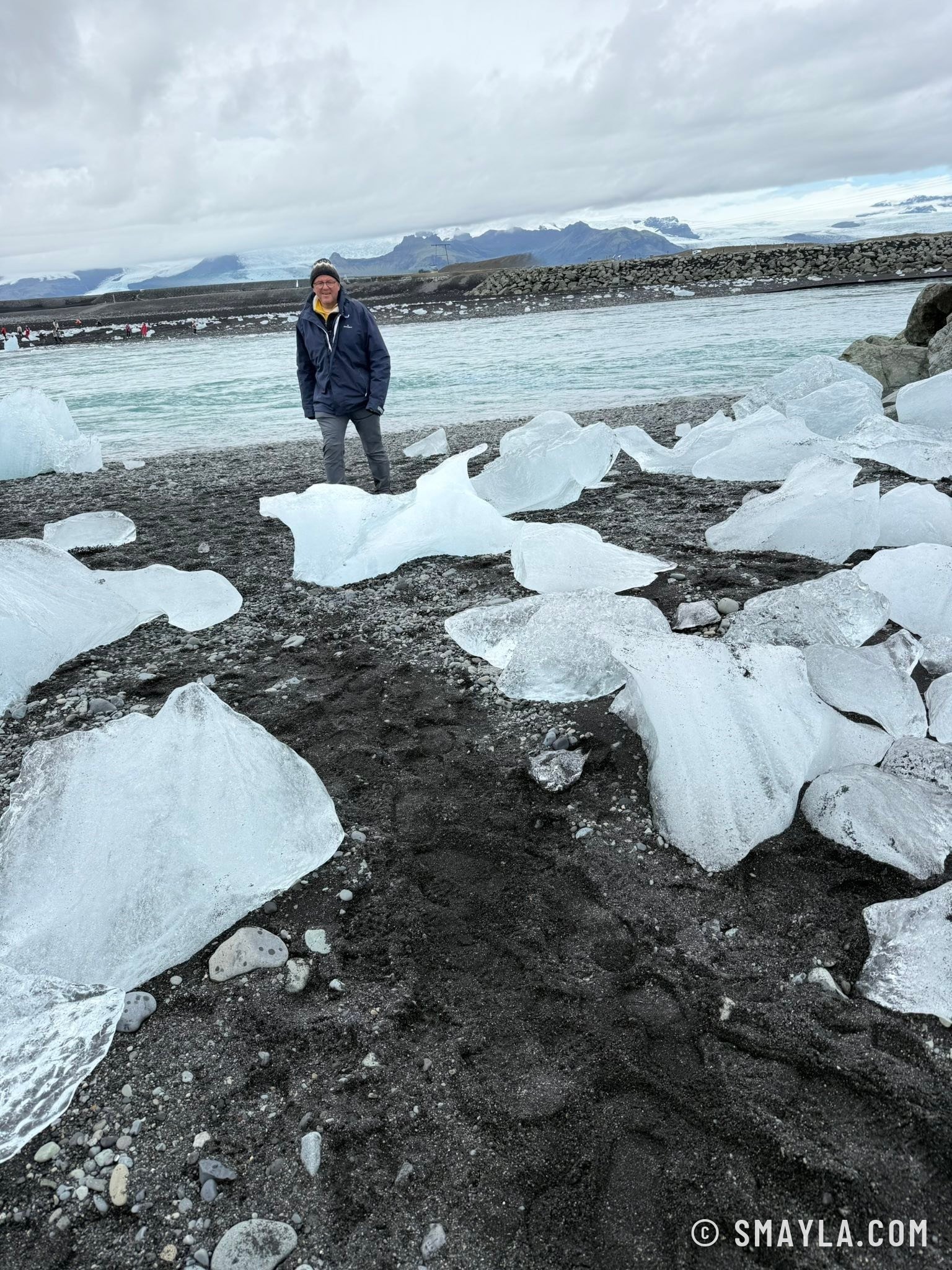
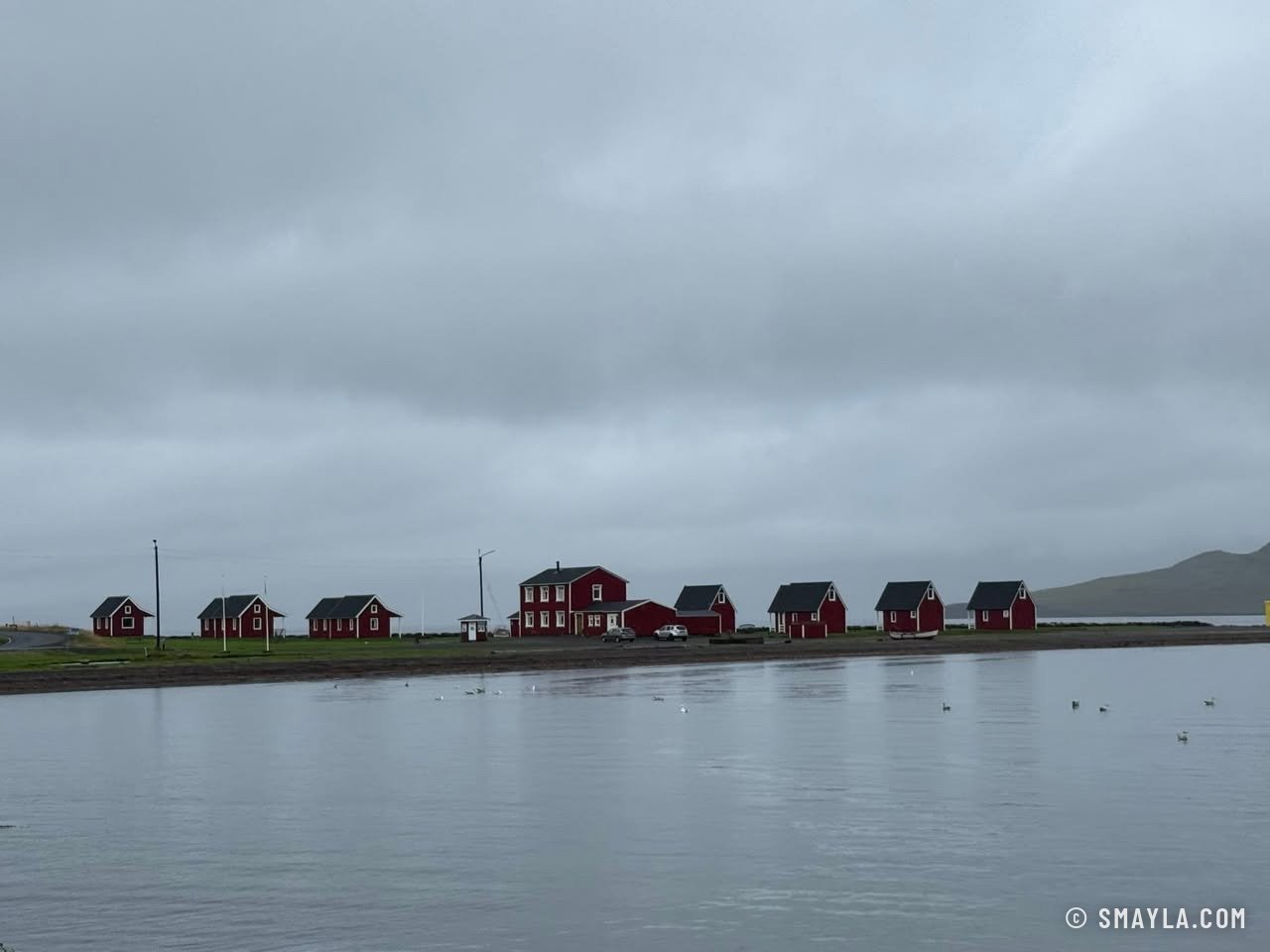
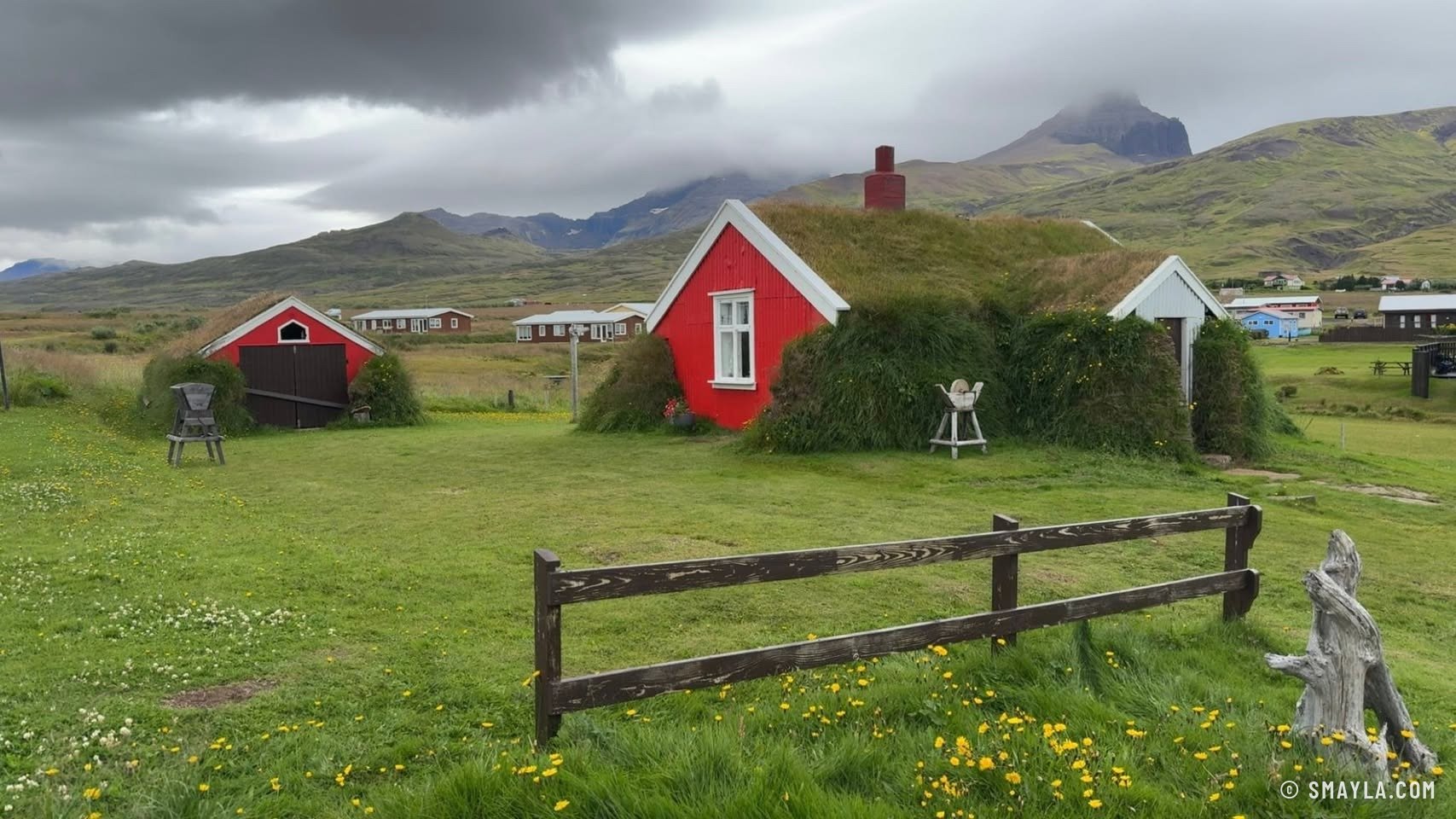
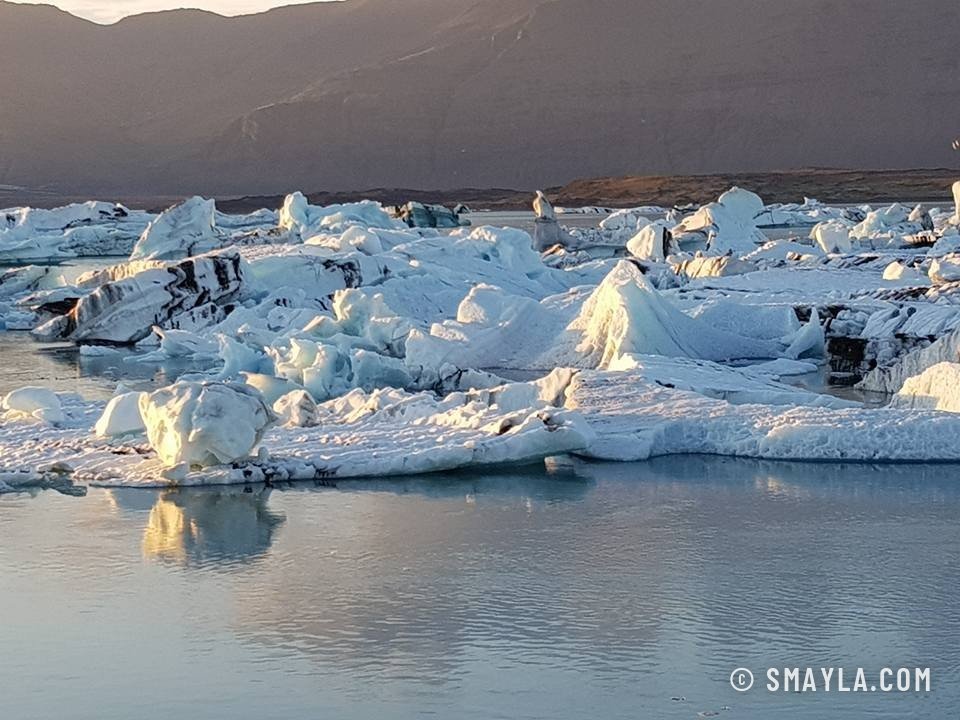
Back east via the south, under a forecast of bad weather. Jökulsárlón and its icebergs, the black sand of Diamond Beach, dry and under a fine sky. Then the Eastfjords in driving rain and a fierce wind, and two nights in one of the little red cottages of Eskifjörður.
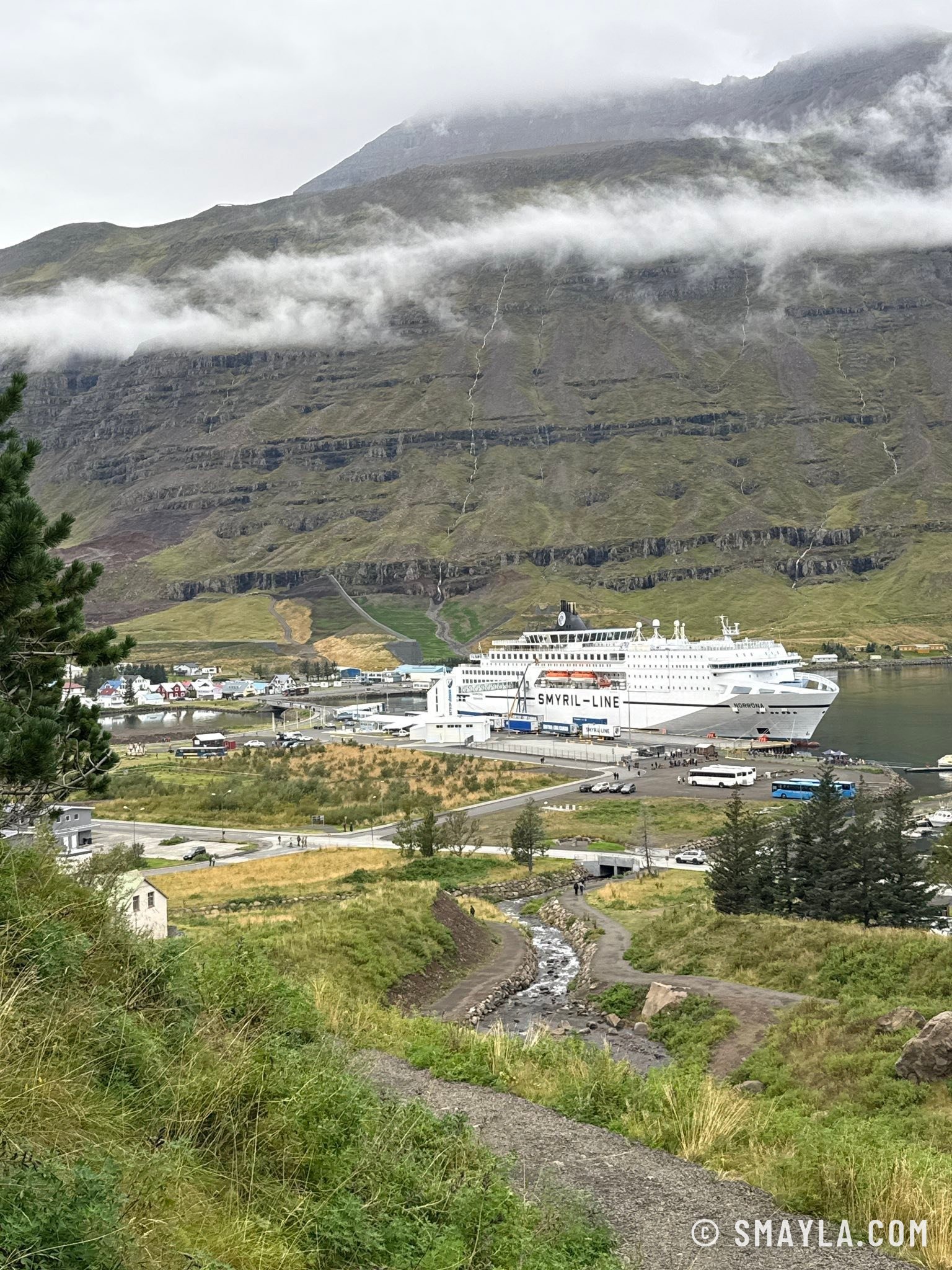
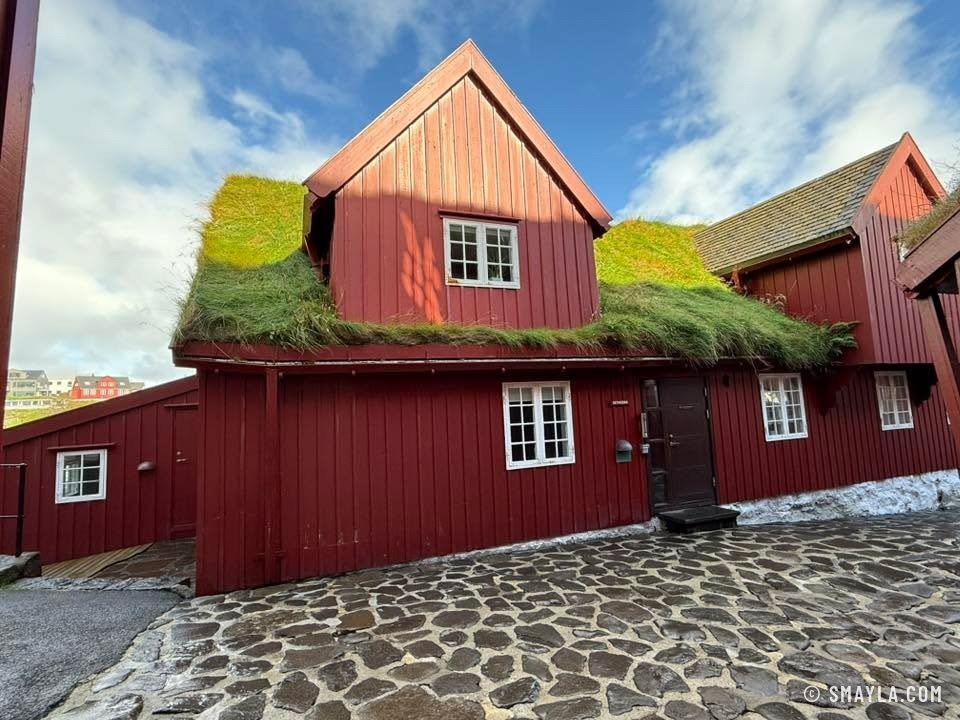
A few hours in Seyðisfjörður, one last walk in the dry, one last coffee in an old boat turned kiosk. Then the Norröna, a stop in the Faroes, a long walk in Tórshavn. In all: 5,500 km for the Chevy, 120 km for our feet, 36 days on the island.